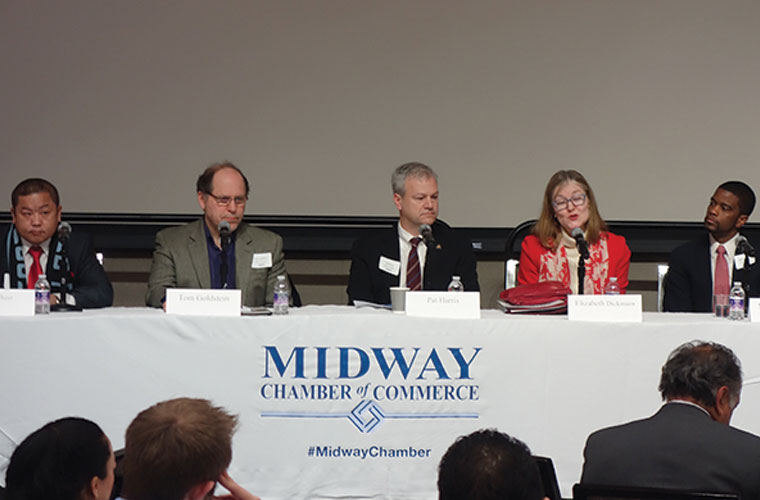
That was the takeaway from Saturday's forum at Shiloh Temple for the nine candidates for Minneapolis mayor.
Politics + Public Policy
Gov. Mark Dayton and Republican leaders have found agreement on a handful of major issues so far. But things are about to get a lot tougher.
The two Minn. institutions combined for more than $500M in NIH funding last year.
The little cannabis industry on the prairie is pioneering a new model for medical marijuana. But its future is up in the air, given its high costs and restricted access.
A college education is a popular credential in Minnesota, but it isn’t needed to perform most jobs.
The mayor of the Iron Range city said the two parties should “go their own ways” as it moves to evict the movie studio from its basement due to unmet payments.
The final vote won’t come until Friday. But the ordinance received enough votes during a joint committee meeting Wednesday to assure passage.
The state added 3,800 jobs.
Four of the candidates are seeking the DFL endorsement. The other is going Green.
Proposal would make angel credit permanent and boost annual funding to $20 million.
The store won't be able to sell liquor for 30 days starting July 2—just as other stores can begin opening Sundays.
While medical device manufacturers have something to celebrate, they also have a lot of questions — about the Republican plan and the Trump administration in general.
More than 100 restaurants in the city have joined the group to call for concessions in the ordinance that's expected to arrive this summer.
New research suggests the state leans heavily on immigrants when it comes to growth of the workforce, overall population, and the economy.
While the national political climate has grown hostile to immigrants, Minnesota needs them more than ever, says a U of M study.
The northeastern Minnesota city could be the third in the state to mandate the benefit.
The so-called “border adjusted tax” overhauls the way U.S. companies pay taxes by easing the tax burden on exports while making companies pay up for imports.
Subsidies are notoriously difficult to track, but here’s what we know.