


Founders Over 50
They have families and 401(k)s, mortgages and the occasional backache. They don’t pull all-nighters. Their garages are reserved for cars, not makeshift offices, and their actual offices are air-conditioned and well-appointed. Yet these Minnesotans are starting businesses in their 50s and beyond, and they’re not as unusual as Silicon Valley might have us believe.
An oft-quoted Harvard Business Review study from 2018 pegged the average age of a successful startup founder at 45, which has remained fairly consistent since then. Minnesota is home to the nation’s largest startup competition, MN Cup, which includes a youth division, but the 2025 entrants include many founders closer to grandparent age—the oldest is 87. Median age in the Education & Training division is 56; for Energy, Clean Tech & Water, it’s 43.
“There are some real advantages to starting a company in the later career chapters,” says Mary Grove, managing partner of Minneapolis-based Bread & Butter Ventures. “We look for founders who bring interesting points of view and lived experiences.”
Particularly in complex or heavily regulated industries like health care, energy, and financial services, experience at a larger organization is helpful, says John Stavig, managing director of the Gary S. Holmes Center for Entrepreneurship at the University of Minnesota Carlson School of Management. That’s why we see so many Minnesota founders coming out of Medtronic, General Mills, Target, and the like.
But more trips around the sun don’t necessarily make it easier to blaze a new business trail, Stavig warns. “Many believe that, while competence increases over time, average confidence for entrepreneurs declines.”
Meet four later-career founders who over-index on confidence and ambition.
Sally Mueller, co-founder and CEO, Womaness
 Elevator pitch: Supplements, skin care, and sexual health solutions that “make aging easier.”
Launched: 2020
Age: 61
The benefits of age: “You correct your mistakes faster and rely on your gut instinct more. You have better instincts.”
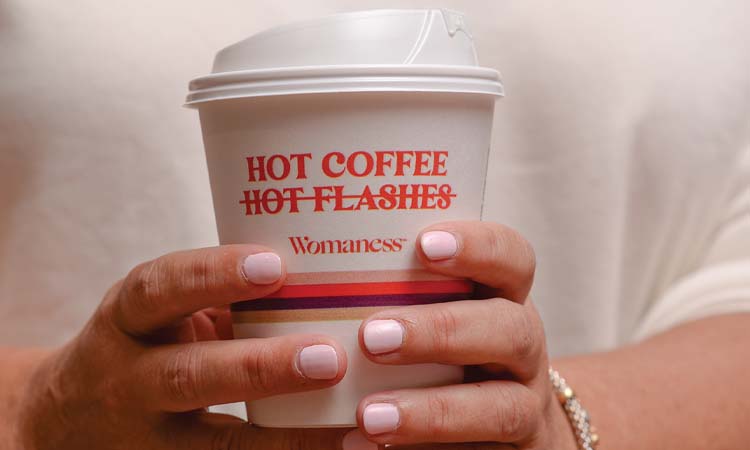
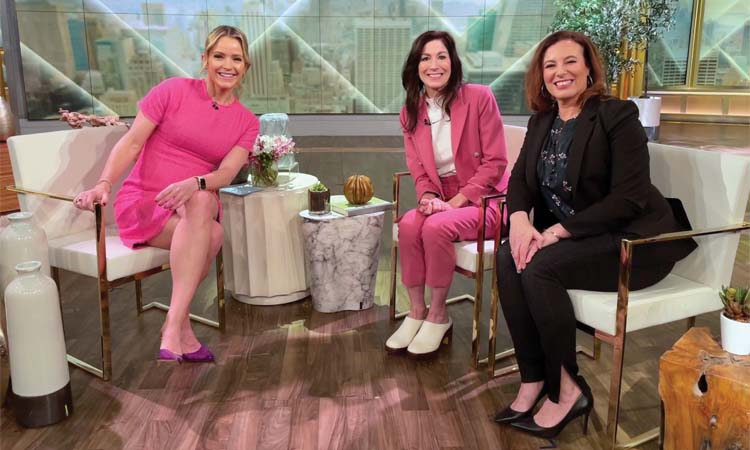
Sally Mueller is a trailblazer in what’s been dubbed the “menopause economy”—a multimillion-dollar market of products and services to help women age the way they want to. Largely untapped before the 2020 launch of her brand, Womaness, a flood of brands and experts and podcasts have since followed.
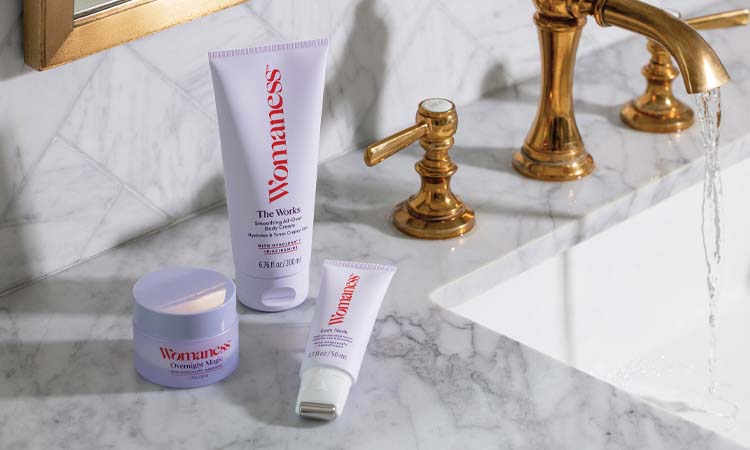
A seasoned retail executive who spent more than 30 years building brands and partnerships for Target and others, it was menopause that finally persuaded Mueller, with co-founder Michelle Jacobs, to launch a consumer business of her own. Womaness offers a modern assortment of products like neck serum, vaginal moisturizer, and sleep supplements. Now sold through Ulta, Amazon, Walmart.com and direct to consumer, Mueller says annual revenue for Womaness is north of $6 million.
“I don’t think I could have done this in my 30s,” says Mueller, whose corporate experiences gave her exposure to all aspects of consumer packaged goods, from sourcing and marketing to financing. “When you’re a little older, you get to a point where you’re like, I’d rather build something I can really own.”
She knew it would be difficult and all-encompassing. But Mueller admits the startup grind has been even harder than she imagined—product regulations, copycats, fighting for shelf space (Womaness pulled out of Target), and fundraising—which any entrepreneur will say is arduous, but with the extra hurdle of convincing largely male-led venture firms that menopause-related products are even a thing. “We were so early. We thought we’d launch, and people would get it, but we were creating a whole new category,” Mueller says. “You can’t get distracted.”
When women ask Mueller for advice on starting businesses of their own—and lots of them do—she urges them to really look inward: “A lot of people have great ideas, but they just don’t want to work that hard.” It can be tricky, too, among her own friends, who are starting to wind down corporate careers, spend longer stretches of the winter in warmer climes, and hone their pickleball game. It helps, she says, to have a spouse who is also an entrepreneur and understands when she has to take a call while on vacation or work well into the evening. “It’s not for everyone.”
But is being a founder worth the headaches? “Of course, economically, there’s way more potential upside,” Mueller says. That’s the long game. And day to day, even those that seem endless, “you feel this incredible sense of ownership.”
Womaness has taken on just under $11 million in funding, and based on its current trajectory, is on a path for eventual acquisition. Mueller swears this is it for her, the last company she will start from the ground up. But even as she says it, she mentions another idea—just something simple she started thinking about on vacation. It’s how she’s wired.
Bob Gaskill, chief operating officer, North American EP Technology
 Elevator pitch: Implantable sensor that improves outcomes for heart failure patients
Launched: 2023
Age: 62
The benefits of age: “I can pull together people I trust and know to bounce ideas around.”
A medical device senior leader who worked on implantable devices at Boston Scientific and Medtronic, Bob Gaskill has been at the forefront of Minnesota medtech innovation for 35 years. In 2021, his position at Medtronic was eliminated, and he joined the Minneapolis startup Sterilucent as head of product development efforts for low-temperature sterilization technologies. But as he was about to turn 60, an introduction to seasoned electrophysiologist Dr. Yanhui Li compelled him to become a partner in North American EP Technology. It’s a first for both Gaskill and Li, building from the ground up.
Read more from this issue
Li, who has more than 30 years of medical and teaching experience in China and the U.S., served as a visiting scholar at the University of Minnesota from 2016 to 2018 and decided then he wanted to start a company in Minnesota. His breakthrough idea: an implantable sensor that provides early detection of worsening heart failure symptoms—like noticing a flicker of flames before the smoke detector goes off. The goal being to reduce heart failure hospitalizations, improve patient outcomes, and reduce the cost of care. While Li, who has moved back to the Twin Cities, focuses on clinical studies, Gaskill is building the business and is working on a $4.5 million Series A round this year.
“I like making it happen,” says Gaskill, working from home in Edina. “And pushing others to make it happen.”
It’s the decades of corporate experience that give him the confidence he can see this device through to FDA approval. “I could not do this without all the people I’ve met. Our ecosystem is invaluable—I know there are people I can reach out to about regulations, functions. That’s what makes the Minneapolis-St. Paul ecosystem so strong.”
And because of his prior experience, he knows the pros and cons of becoming an entrepreneur.
“I don’t know that I see myself being ‘done’ for many years—I’m enjoying this too much.”
—Bob Gaskill, North American EP Technology
“At a big company, it’s hard to make mistakes,” he says, because of the layers of checks and balances that don’t exist for a startup. “If we make a mistake, we have no choice but to dust ourselves off and move forward.”
Even with that pressure, Gaskill says he has plenty of flexibility in his day, and even time for power bike rides on weekdays. “My work time is more focused. I’m not in meetings where 14 projects are being reviewed.”
Gaskill says the only downside of being an older founder: “convincing folks you have the energy to do this and see it through.”
Talking business and product specs with Gaskill, it doesn’t take long to be convinced. “I don’t know that I see myself being ‘done’ for many years—I’m enjoying this too much. I get to work with friends, create jobs, and improve outcomes for patients. It’s very fulfilling.”
Sean Murphy, founder and CEO, DemoHop
 Elevator pitch: A platform designed to create engaging virtual company meetings and events.
Launch: 2022
Age: 52
The benefits of age: “I have credibility in having felt the problem I’m trying to help executives fix for their own teams.”
Sean Murphy endured a lot of dull meetings in his 20 years at Target, where he served as vice president of e-commerce, and then two years at Optum, where he was senior vice president of digital pharmacy. But the pandemic rise in virtual meetings persuaded Murphy to step away from his corporate career and become a first-time founder. His thesis: There had to be a way to forge deeper connections online.
His new platform, DemoHop, is meant to be used internally by companies for larger events—even with thousands of employees, like one of Murphy’s former employers. DemoHop features breakouts, enterprise-grade security, reporting features, and other tools to foster an active experience. Murphy likens it to the corporate version of a middle school science fair, where attendees can choose their own path, dive into what interests them, and engage in a meaningful way.
It’s a need he never would have identified if not for his corporate experience. “I knew the problems at the top of an organization—how to get 1,000 people in four cities to connect and see each other.”
Still, it’s not easy to step away from the trappings of corporate life—the salary, the assistants, the relative security. DemoHop has landed some big clients recently, and Murphy expects the business to be profitable this year. But he’s gone more than two years without a salary.
“Starting a business terrified me,” Murphy says. “But I know I’m happiest when I push myself.”
And overall, Murphy says, starting up in the age of AI has been easier than expected. “AI is a powerful co-founder.”
The whole narrative of startup founders working nonstop? Not so, Murphy says, with mental discipline and maturity.
“I’m at a point in my life and career where I crave setting my own destiny,” says Murphy, who works from home in Minneapolis and is coaching his kids’ soccer, softball, and basketball teams. As a corporate executive, even in the remote work era, Murphy says, “I never would have done that.”
Ameeta Jaiswal-Dale, founder, Panache
 Elevator pitch: A vertically integrated beverage company that produces shelf-stable, botanically infused juices and ciders and agri-tech devices for commoditizing fruits.
Launched: 2015
Age: 65
Benefits of age: “I’m not evaluating my career success on whether or not this business takes off. I’m truly having fun, and I’m realistic.”
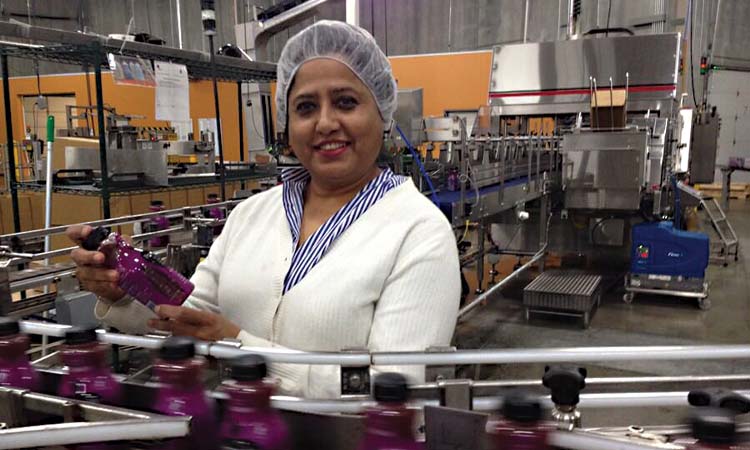
Ameeta Jaiswal-Dale recently retired after 30 years as a finance professor at the University of St. Thomas. She could be relaxing. Instead, she’s pushing forward with her beverage company Panache. In fact, she’s broadening the scope beyond packaged drinks to food tech, with the launch of a handheld sensor programed to detect “apple optimization”—quick identification of apple quality, which she says will make harvesting apples more efficient.
“Everyone thinks I’m mad,” Jaiswal-Dale admits. “They ask why I’m doing this when I’m a full professor and could hang up my hat.”
But Jaiswal-Dale says she can’t fight her entrepreneurial instincts. She likely would have started earlier, if not for the immigrant mindset that compelled her to pick a reliable career. Years of helping students work through their own startup ideas led her to take a chance on her own.
“I’m not evaluating my career success on whether or not this business takes off. I’m truly having fun.”
—Ameeta Jaiswal-Dale, Panache
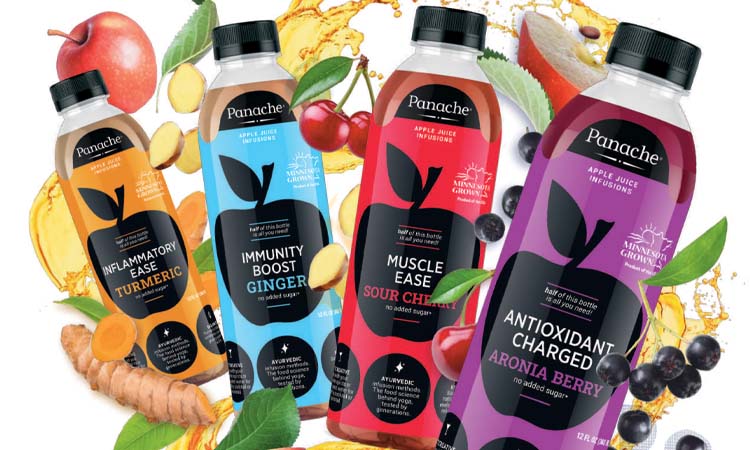
Panache juices are all natural, made with Minnesota-grown apples, and brimming with antioxidants that promote immunity, muscle relief and more. Panache ciders are made with a similar approach. The drinks are sold locally at select Whole Foods, Kowalski’s, Hy-Vee and Fresh Thyme markets. Scaling nationally remains elusive, but Jaiswal-Dale doesn’t let that get her down.
“This is another baby—something I emotionally and intellectually took from making juices on my kitchen counter to finished products on the shelves. I feel a sense of satisfaction.”
She’s invested nearly $500,000 of her own money to get Panache to where it is today and is now exploring series A funding as well as next steps, from sponsoring sporting events to raise the brand profile to focusing on the tech side of the business.
“At my age, what do I have to lose? I wouldn’t ever suggest dipping into retirement funds, but I might as well use what I’ve made to give this a try. I like to be busy.”