

New Uptown Initiative Is Simple: Walk Around, Buy Tacos
This part isn’t news: Uptown still struggles to regain a semblance of the vibrancy that defined it decades ago, even as it has notched some recent victories.
Last summer, a farmers market debuted in Girard Avenue Plaza, and several area businesses opened in the past year, including Moona Moono, Shop My Closet, and Brownstone Jazz Club. The Uptown Association—the region’s business collective, a nonprofit dedicated to neighborhood vitality—continues its push to redesignate the area as a Business Improvement District, for tax advantages. Plus, the Uptown Art Fair is reported to return to Uptown this year, after it moved to South Minneapolis.
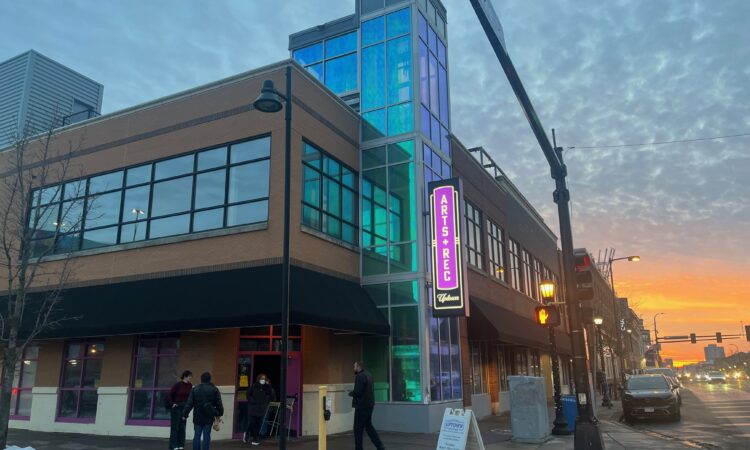
But, on Thursday evening, concerned Uptown residents packed a soon-to-be Mexican restaurant in the northeast corner of the Seven Points mall, on Lake Street and Hennepin Avenue, to describe streets still marked by drug use, empty storefronts, and—a recent development—businesses hurt by Operation Metro Surge and its dampening effect on traffic.
“It feels like the streets have been left unmonitored, and the burden has fallen on small businesses to figure it out,” said Marsha Magdalene, owner of Shop My Closet, a consignment retailer that opened in Seven Points last summer. Pointing to Operation Metro Surge, Magdalene said her store’s sales have dropped 70% this month.
The evening’s meeting space is set to become Arizona Taco Company in about a month, according to restaurant owner Marcos Ayala, who told the crowd, “We’re tired of this. [My wife and I] come here and we see women walking their dogs and drug deals going on right here on the corner, right in front of them.”
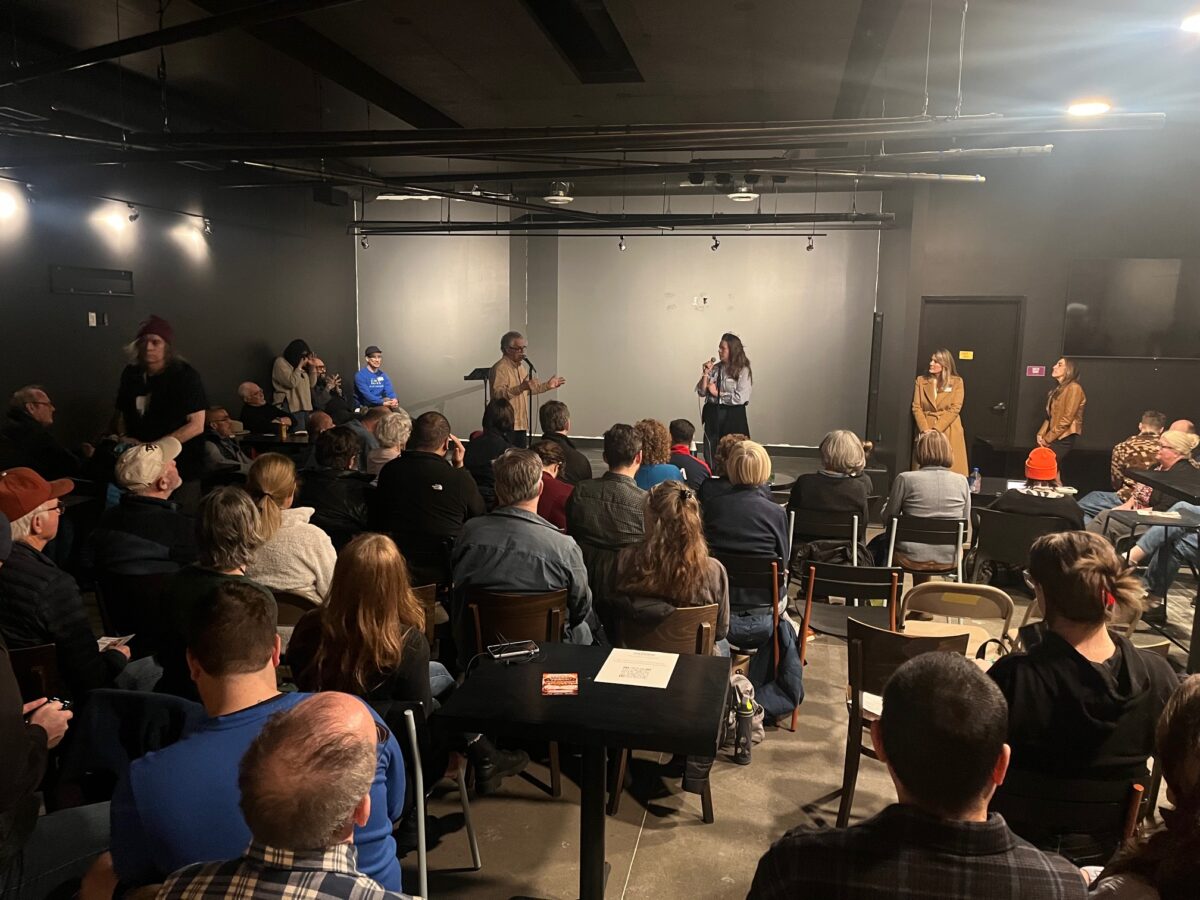
Business owners and neighborhood leaders led the meeting, which introduced an initiative to reinvigorate foot traffic, with a focus on the intersection of Lake Street and Hennepin Avenue. That’s where Seven Points stands, and it’s considered the heart of Uptown.
Several police officers from the Fifth Precinct, which includes Uptown, also attended the meeting to provide updates on increased policing in the region over the past several months.
The initiative is straightforward: Ask residents to get out, en masse, and walk the streets, patronize businesses, on Friday and Saturday nights. It’s called the Uptown Community Ambassador Initiative. Along with walking groups, it will include cleanup efforts, according to the website.
“People don’t like doing illegal activity when there’s a lot of people around,” reasoned Kevin Norman, who is launching the plan in collaboration with the Uptown Association.
A few months ago, Norman formed Uptown United, a campaign rallying residents to do something about area safety and vitality. He’d shared publicly an email he’d written to elected officials “expressing care for Uptown and a desire for better outcomes for the neighborhood,” per the website. This evolved into a letter-writing campaign, and now it’s a grassroots mobilizing effort—as well as “the easiest volunteering job you’ve ever had,” he told the crowd (which WCCO counted as 100 people deep). “You just have to walk and have to support businesses. So, maybe buy some tacos, go to other businesses and eat food, drop in and say hello, be a welcoming presence in the city.”
Speakers also underlined the importance of continuing to call or write to city officials.
Andrea Corbin, president of the Uptown Association, said that, as well as a safe environment for businesses, Uptown needs “a group actively seeking out these small businesses to come into the area.”
In that vein, she said the Uptown Association has begun to implement a slate of Uptown-tailored recommendations offered by the Urban Land Institute (ULI), a global research nonprofit. The ULI’s report, which Corbin said the City of Minneapolis paid for, should complement Norman’s initiative.
Meanwhile, representatives of the Minneapolis Police Department reported that, in March so far, the department has issued 60 trespass citations and made 20 arrests in the area. A directed-patrol unit—the likes of which are deployed to criminal hot spots to establish visible enforcement presence and hopefully deter crime—launched in December and has spent about 80% of its time in Uptown, one officer reported, noting, “We’re out here all the time, daily at this point.” The department’s Southside Community Response Team has conducted many of the narcotics stops in the region.
“In the last three to four weeks, [I have] started to see changes on the street,” Ayala said, noting he has begun working with police in the area, “and so we would like that momentum to continue to go the way it is and would like to see the community be empowered to say, ‘Hey, we don’t want drugs in our community, on our streets.’”
“These are very solvable challenges,” Norman said. “It’s not going to take just community walks. It’s going to take the police. It’s going to take us holding our elected leaders accountable. But this is going to be a very important part. This is a part that we can take action on today.”