

Rybak: If We Want Growth, Bet On the Backers
This piece is the first in an occasional series focused on practical, proven strategies that can drive new economic growth in Minnesota.
Minnesota needs new ideas for economic growth, and there’s a great one hiding in plain sight. It comes attached to results—a 20-time return on capital—that would make most public investments in the state blush.
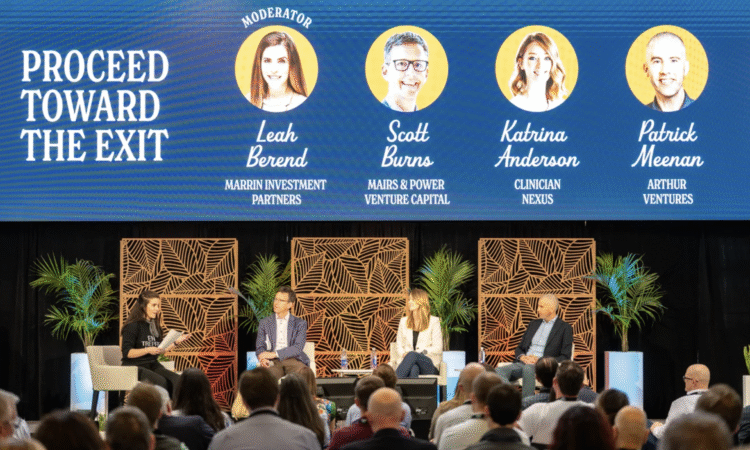
Groove Capital, a Minneapolis-based venture fund for angel investments, will be hosting angel investors from across the country in Minneapolis this week. It has hosted a signature event, Angelfest, since 2023. What was initially a locally focused event has grown into one with a majority of participants from outside the state’s borders, all focused on angel investing.
As this year’s Angelfest kicks off, a new local economic development report on angel investing offers a provocative thesis: The best way to fund startups is not to give them money, but to build infrastructure that fuels and supports their investors.
Most would agree that our economy is fueled by public infrastructure. In a literal sense, roads, bridges, airports, canals, and shipyards bring goods to market and enable businesses to grow. What if that same thinking was true of a less tangible sector, like investing?
Betting on the Backers
The yet-to-be-released report, prepared for policymakers and grantmakers by Matt Lewis of economic development group Greater MSP, is titled “Betting on the Backers.” It digs into the Angel Activation Campaign that was launched in Minnesota in 2023 with support from the U.S. Department of Commerce’s Built to Scale program, which was set up to support startups ecosystems and increase access to early stage capital.
The argument is actually quite simple: The main bottleneck for small, eager-to-grow companies is access to capital, and if you want to expand the pool of capital, you have to focus on the people supplying it.
“If you put grant dollars into activating investors instead of just supporting founders, it becomes far more catalytic, and in this case we saw a ‘20x’ return,” Lewis says.
This approach flips the supply-side argument—fund startups to help startups—on its head. If you invest directly in startups, they end up chasing the same capital as their peers, leaving more people going after the same stagnant pool of dollars. If you invest in the investment infrastructure, the total available capital grows and the returns appear to be far greater.
Minnesota has previously focused more on the startups themselves, and that focus needs to shift, argues Lewis. “We’ve spent years investing in the supply side, preparing entrepreneurs. But the real gap is demand. There just aren’t enough investors writing early checks.” There is a belief that there are people and institutions able and willing to invest, but they’re not sure where or how to do so.
The report describes the state’s startup scene as having fewer exits than in higher-growth markets. “People who build wealth through venture-backed businesses are historically more likely to recirculate that wealth in other local startup ventures in addition to other asset classes,” the report says. “Minnesota has seen exits, but mostly smaller ones that produced scores of active investors rather than the larger cultural tipping point that other cities experienced.”
This is where the flywheel starts to happen. Wins in the form of exits or acquisitions beget more capital, more capital creates more companies that are positioned for growth, and those companies drive gains that can push capital back into the system and accelerate the next generation of companies.
“Because angel investing is mostly a local game, with investors often targeting their community or their network, the total available capital can’t grow if there isn’t a mechanism for it to do so,” says Mickayla Zinsli Rosard, a partner at Groove Capital. “Angel investing is inherently local. If nonprofits and foundations don’t step in to activate it, it simply doesn’t happen.”
Startups can drive major economic growth, and in the local search for more jobs and a growing pie of tax revenue, they appear to be a worthy target.
As the report puts it, “The places that have pulled ahead in innovation and job growth are not simply those with the most entrepreneur-support programs but the ones with the deepest and most active early-stage investor communities.”
How the Angel Activation Campaign Worked
Groove Capital was founded by local investor Reed Robinson in 2020. It now counts Rosard and Prentice Keller as fellow partners, and Groove plays a starring role in the Greater MSP report.
One of the big problems for angel investing groups, the report says, is that the money is long-term, keeping the capital locked up over time, and fees can eat up the small short-term margins before necessary investments can be made in operations. Groove navigated this problem by launching both a venture fund and an angel investing group. It built out shared services across both entities to support operations.
This focus on infrastructure has shown results. Groove has also seen an uptick in investment happening through Special Purpose Vehicles (SPVs), which attract more capital because they make investing easy, Rosard claims. “SPVs are just a tool, but they create an easier on-ramp for people to write checks,” she says. “You build the muscle, then you write bigger checks.”
As Rosard mentioned, angel investors are also more likely to give to local groups that they are a part of, which is particularly helpful for communities that may go overlooked by other investors. That is a big benefit for startups with founders from underrepresented communities, including companies with racially diverse founders, female founders, and founders from outside metropolitan areas.
Sean Williams, co-founder of sports tech company FanSpark, exemplifies how this can work. When the Owatonna-based startup was raising money, Williams knew there were investors who would be interested, but he didn’t have a good way to identify and connect with them. That left capital on the table. It also theoretically forced those prospective investors into making less appealing—or, often, less local—investments.
Williams has put his money where his mouth is and transformed his local angel investing organization into the Minnesota Angel Investor Network (MNAIN), newly rebranded and focused on building out a statewide group after Williams helped stand up angel networks in the southern Minnesota cities of Austin and Owatonna.
“With the incredibly limited number of companies getting funded in the state, we knew that there were angel investors out there who just weren’t seeing us, and that this angel network could solve that problem—not only for the funding opportunities, but for the connections that a network brings along with it,” Williams says.
There’s been a shift in angel investment in the past few years that this model may help accelerate. While superstar markets like San Francisco, New York City, and Austin operate in their own stratosphere, cities across the rest of the country operate very similarly to one another. At the same time, angel groups are getting a lot more diverse. “More women and underrepresented investors are coming online,” Rosard says, “and that’s already changing who gets funded and how that capital shows up in communities.”
Angelfest Highlights the Successful Michigan Model
One of the successful models for this sits just across the Great Lakes—and it inspired the Greater MSP report.
The headline interview at Angelfest will be with Dug Song, who sold a company to Cisco for $2.35 billion and co-founded the Michigan Founders Fund in 2021. The fund is intended to connect business, government, and nonprofit ecosystems in their support of investors and entrepreneurs. The organization provides founder-to-founder support, creates a vetted environment for investors to access founders with promising ideas or backgrounds, and pulls in operators as investors once they have a successful venture.
The fund also includes a pledge for members to donate 1% of their equity, carry, or profit to the fund for donation to community organizations. So, when these startups succeed, there’s a direct community benefit beyond the jobs and wealth they can create.
This is the type of ecosystemic thinking that Angelfest and the Betting on the Backers report have been building toward. While they’re a good start, more investment is needed in the infrastructure for us to catch up to places like Michigan. And while it would be great if we had our own multi-billion-dollar exit and a benevolent benefactor to drive that, we may not have the luxury of waiting to see where it will come from. If Minnesota wants to build an ecosystem like this one, we may need to make a larger bet and invest in the infrastructure that can get us there—quickly.
As Minnesotans continue to search for new ideas for the growth that our state desperately needs, the success of the Angel Activation Campaign is one that we should be looking to build on.