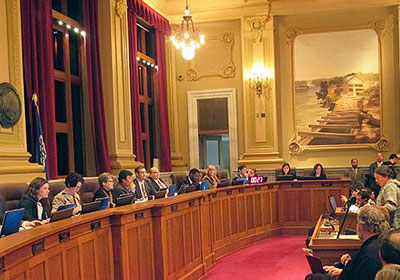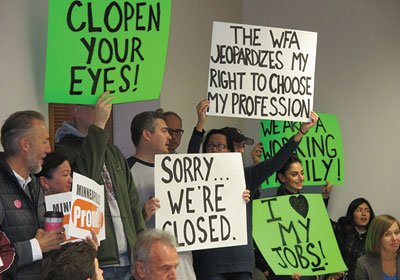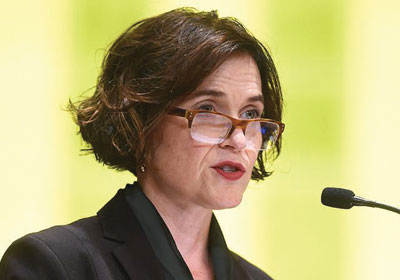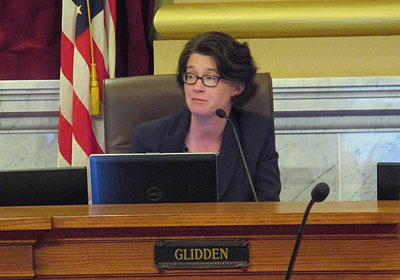
A proposed amendment to the city budget exposes rifts on the Minneapolis City Council usually hidden by the scrim of party identity.
Politics + Public Policy
While Strong Towns' agenda might sound familiar to urban planning enthusiasts, there is a difference informed by founder Chuck Marohn’s background.
Small business owners affiliated with the group Main Street Alliance are asking the public to patronize places run by those who support the proposed policy.
Among other things, the new laws would allow for an increase in the number of restaurants that could offer hard liquor.
The event will highlight issues facing one of the nation’s largest generations that is currently entering the workforce.
Options for the Riverview Corridor project include just about every idea for improving transit between Union Depot and MSP, including which route should taken and what transit mode should be used.
Family businesses make up 90 percent of U.S. businesses and 80 percent of the nation’s workforce.
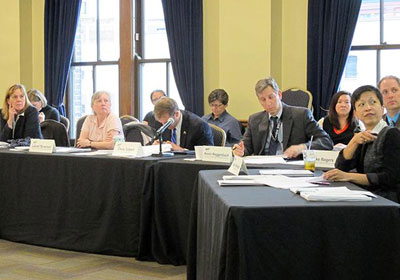
The city council wants a "partnership group" of 15 residents to study paid sick leave. Now comes the hard part: deciding who should serve on the panel.
The approval will enhance the company's ability to provide data to its customers.
One reason is that the previous estimate of $1 billion was always something of a place saver, put there only after preliminary calculations were done early in the planning process.
The total price of the project is now expected to be $1.48 billion.
Even if you never drink beers produced by SABMiller, Anheuser-Busch InBev or their biggest competitors, the merger’s effects may trickle into the smallest corners of the $100-billion-per-year beer industry.
Can SouthWest Transit’s express bus system survive Southwest LRT? Should it?
Six months after Mayor Betsy Hodges made the agenda the focus of her state of the city address, the once-ambitious plan is now a lot less ambitious.
In a statement released today, Minneapolis Mayor Betsy Hodges said concerns raised by businesses will take longer to resolve than the current timetable for passage of an ordinance allows.
A partnership of more than 50 regional organizations, “Make It. MSP” is aimed at retaining and recruiting workers. Among its initiatives: an effort to make natives more open to those who weren't born here.
Only San Francisco has anything similar to what's being proposed for employers in Minneapolis. But while the local ordinance would cover every employee in the city, San Francisco's covers relatively few.
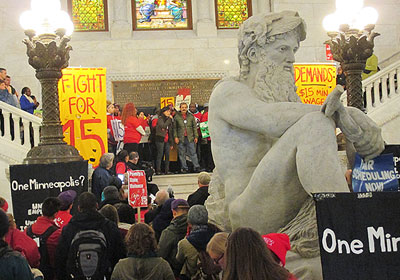
While the council appears united on issues like mandatory sick leave and fair scheduling rules, there is no consensus on whether Minneapolis should go it alone on a higher minimum wage.