

What Does Integer’s $5.7B Private Equity Deal Mean for Minnesota’s Medical Device Industry?
Integer Holdings’ catheters, pacemaker batteries, and cardiac leads end up inside medical devices made by some of the world’s biggest healthcare companies including Abbott, Boston Scientific, and Medtronic.
In July, private equity giant KKR announced it was acquiring Integer for $5.7 billion—turning the company’s ownership structure private. The sale offers a glimpse into the increasingly valuable manufacturing infrastructure behind Minnesota’s medical-device industry. The company has a large Minnesota presence, so any disruptions or changes pushed by the new owners could have an outsized impact on their local facilities and employees.
Integer’s sale might be a sign investors are beginning to see Minnesota’s medical-device supply chain as a consolidation opportunity.
What does the Integer sale mean?
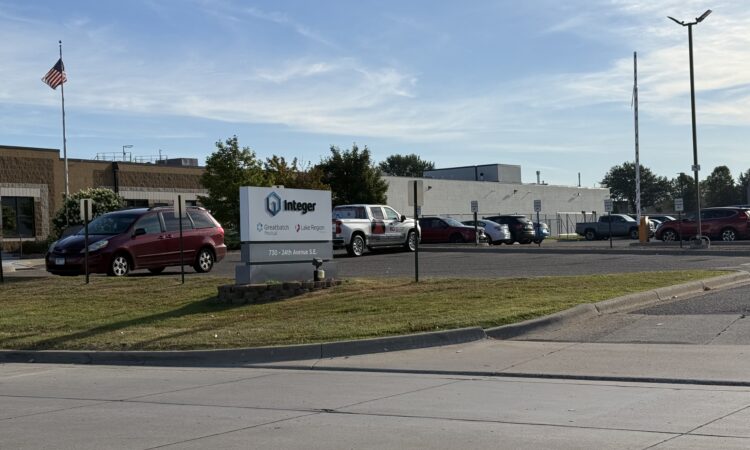
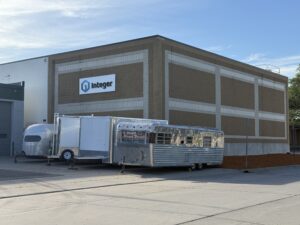
Integer, based in Plano, Texas, is one of the largest medical device contract development and manufacturing organizations in the world. Nearly half of the company’s manufacturing presence is in Minnesota, with plants in Brooklyn Park, Chaska, Minneapolis, and Plymouth.
Last year, Integer Holdings posted a revenue of approximately $1.8 billion and had an estimated 11,000 employees.
The company was founded in 1970 by Wilson Greatbatch (inventor of the heart pacemaker battery) and was originally known as Greatbatch, Inc. before rebranding to Integer Holdings in 2016 following its purchase of Lake Region Medical in 2015.
Since then, Integer has made “horizontal consolidation” moves in the mergers and acquisitions (M&A) space, rather than big, sweeping moves, according to Muer Yang, a professor in the Department of Operations and Supply Chain Management at the University of St. Thomas Opus College of Business.
“They do this for economies of scale, [to] make things cheaper,” he says. “It’s more for adding complimentary technologies to become broader and not just bigger.”
But that could change once it is no longer a public company, adds Switchback Medical CEO Brady Hatcher. “It makes sense Integer is not public anymore because to be competitive in this space, you can’t manage it quarter to quarter,” Hatcher shared when asked about the benefits to being taken private through the deal. Hatcher’s company is a medical device contract development and manufacturing organization that designs devices, like catheters, on a contract basis for other businesses.
KKR’s investment may allow Integer to take a longer outlook into the future of its business, thanks to increased resources from the sale and the benefit of avoiding the scrutiny of quarterly reporting that comes with being a public company. Hatcher believes Integer could invest in new facilities in other countries that offer inexpensive ways to do business—like Costa Rica’s Free Trade Zone that Switchback recently expanded to—or get more active in M&A.
“Now [Integer] could buy five or 10 companies at once,” he says. “There could be endless cash from the private equity side to buy whoever they think makes sense.”
RELATED: Medtronic Betting on New Devices and $1.5B in Acquisitions to Grow Its Value
Oftentimes, when a private equity firm purchases a business in another industry like home services, that company will consolidate back-end services like marketing, public relations, and/or accounting teams to benefit from the economies of scale.
Hatcher and Yang believe Integer may steer clear of this pattern.
From KKR’s point-of-view, Yang says it sees Integer as an opportunity to build a bigger platform. He believes that private equity loves that customer relationships in the medical device industry are hard to change, and its programs tend to have a relatively longer product cycle—incongruent to other industries.
Potential upsides and downsides to private equity investments
KKR has consistently ranked as one of the largest private equity investment firms in the world based on total assets under management (nearly $800 billion). It has made hundreds of acquisitions since its founding and boasts a historical reputation of aggressive downsizing, mass layoffs, and asset stripping at companies. There have also been multiple companies KKR has invested in that have filed for bankruptcy years after the initial investment (with Toys “R” Us and Envision Healthcare featuring as prominent examples).
However, the private equity firm has spent the last decade working to give back equity to rank-and-file workers that places money from M&A deals in a special trust.
It did so earlier this year, when it sold Calgary-based CoolIT Systems to Ecolab for $4.75 billion three years after KKR acquired it for $270 million. When the sale went through, 610 employees shared roughly $156 million, with payouts averaging $240,000, Fortune reports.
For Integer’s employees, there’s cautious optimism for a similar result.
The KKR-Integer Holdings sale is expected to close by the end of the year.
If Integer opts to get more active in the M&A space, consolidation will follow, Yang predicts, which will dwindle competition in the medical device manufacturing industry. Prices may go up as well, he adds. In addition, when one supplier gets bigger, it puts pressure on others to follow suit.
As for the larger manufacturers Integer makes its devices for (Abbott, Boston Scientific, and Medtronic), Yang believes it’s too soon to say how they will be impacted.
He says “the big guys” are not as dependent on Integer as Integer is on them. For Minnesota’s medical devices, Yang says, “wait and see” what happens.