

What’s the Deal With That Iowa Steel Mill?
One of the top stories on Sept. 28 was President Donald Trump’s announcement that a new $15 billion steel production complex would be built in Iowa. And the company behind the project is based in Minnesota.
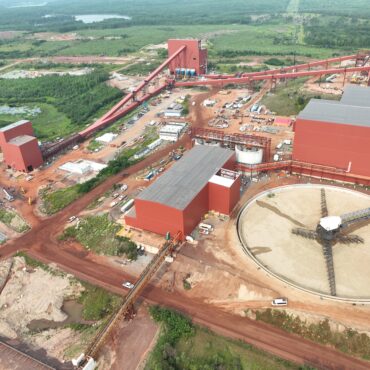
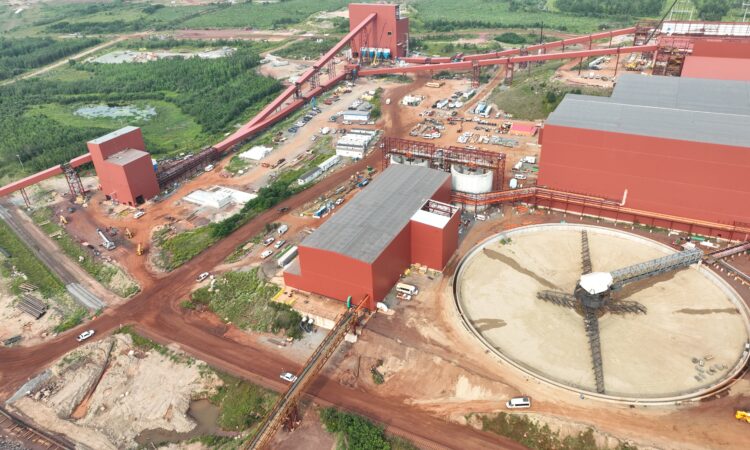
Nashwauk-headquartered Mesabi Metallics already had had a big year before this announcement was made. It has been getting ready to begin regular production of direct reduction-grade (DR-grade) pellets at its Nashwauk facility, the first new iron mine and pellet plant in Minnesota in five decades. These pellets are processed into direct reduced iron (DRI) and hot briquetted iron (HBI) for use in electric arc furnaces, which now produce more than 70% of domestic steel. Taconite pellets, for which Northern Minnesota has long been famous, can be used only in old-school blast furnaces. The Iowa facility would produce steel using electric arc technology.
The state of Iowa has pledged $1.36 billion in tax incentives over 10 years, which would kick in once the mill is operational. Mesabi Metallics expects production to begin by 2030, and that the completed facility would provide more than 1,700 jobs. Not surprisingly, many Minnesota politicians and other commentators have called the announcement a major loss for the state’s economy.
But will the Iowa mill actually be built?
Reasons for Skepticism
Setting aside the assertion that that Trump made the announcement to shore up Republican fortunes in the coming midterm elections, skeptics have raised several issues about the project:
Mesabi Metallics’ backers made this promise before (and it promised it in Minnesota)
Though based in Minnesota, Mesabi Metallics is owned by Essar Group, an Indian multinational conglomerate. In 2008, Essar broke ground on what was projected to be a $1.65 billion facility on the Iron Range property where Mesabi Metallics now stands.
Essar Steel Minnesota’s plans were groundbreaking in more ways than one: It proposed nothing less than the first facility in North America that not only mined and pelletized taconite but also used those pellets to make steel. The state of Minnesota put together a $71.9 million infrastructure development package to support the project.
Ten years later, the project collapsed. Essar Steel Minnesota filed for Chapter 11 bankruptcy in July 2016, leaving the state and contractors owed millions. Investors took control of Essar Steel Minnesota, renamed it Mesabi Metallics, and brought it of out of bankruptcy protection in December 2017. Essar Group reclaimed Mesabi Metallics in 2019.
There are still concerns about Essar Group’s commitment and stability. But it is worth noting that Mesabi Metallics has been repaying money it received from the state of Minnesota for the earlier project. As of September, it has paid back about $49 million out of a total of $71 million due.
The Foxconn precedent in Wisconsin is less than encouraging
In July 2017, during his first administration, Trump announced that Taiwan-based tech manufacturer Foxconn would build a $10 billion plant in to manufacture LCD screens on land west of Racine, Wisconsin. Foxconn projected employment of up to 13,000 at the facility, and state and local governments spent more than $1.2 billion on land acquisition, roads, and infrastructure.
Eight years later, Foxconn had invested about $700 million in the plant, which now produces AI servers. Employment is reportedly a little more than 1,200. In November 2025, Foxconn announced that it planned to spend $536 million to expand its Wisconsin operations, with promises to more than double its current headcount. Wisconsin is offering up to $16 million in tax credits to support the expansion, which would raise the state’s total commitment to $96 million.
Foxconn has generated jobs in Wisconsin. But so far at least, the (first) Trump Administration’s extravagant promises haven’t been fulfilled.
How will Mesabi Metallics transport its DR-grade pellets to Iowa?
DR-grade pellets need to be “finished” into HBI and DRI before they can used in electric arc furnaces. The proposed mill would have its own DRI processing facility. But how will the Nashwauk DR-grade pellets get there?
The most economical way to transport Minnesota iron is by ship on the Great Lakes. Northern Minnesota mines now send their pellets by train to the Duluth-Superior, Two Harbors, or Silver Bay ports, where high-capacity ore boats take over. Iowa, of course, is not a Great Lakes state. The mill’s backers have proposed an Iowa site on the Mississippi River between Burlington and Fort Madison. Mesabi Metallics could ship its Minnesota-made DR-grade pellets downriver by barge. But it would have to be sent by train to the Twin Cities, and some form of dedicated barge facility would be required.
From a logistics perspective, it seems to make more sense to follow Essar Steel Minnesota’s original plan and build the mill next to the Mesabi Metallics facility. Admittedly, that doesn’t take into account all the permitting and environmental-review hoops a Minnesota mill might have to jump through.
Can the Iowa facility find qualified workers?
The proposed Iowa location is not without its charms, and Burlington is a good-sized city (about 24,000 people). But unlike the Iron Range, the site is far from urban areas of any significant size that can provide a potentially deep workforce pool, as well as amenities that can attract newcomers. (Iowans, for their part, are both excited and suspicious about the proposed mill.)
Waiting and Seeing
None of this means that Mesabi Metallics’ DR-grade production facility in Nashwauk won’t succeed. The DRI market is growing, and the fact that the Essar Steel Minnesota project was focused on taconite was probably a significant factor in its failure.
And it’s possible Mesabi Metallics and Essar Group will be able to raise the funding needed to make the Iowa steel mill a reality, even as they continue to repay loans from the failed Essar Steel Minnesota project. It’s also possible that by not committing millions of dollars of public money to a project that still has many questions to answer, the state of Minnesota might not really have lost.