

Can Minnesota Build Back Its Aerospace and Defense Industries?
A multi-year effort to restore an industry that Minnesota lost is entering a critical phase. The big question that remains: Does the state have the capacity to build?
As Minnesota looks at potential growth industries, it’s hard to find a better one right now than aerospace and defense.
“We need to move from innovation and extend it to production,” says Bill Harper, the board president of Minnesota National Security Ecosystem, an industry group founded to grow Minnesota’s defense and national security sector. Harper has been one of several key figures working to position the state to win contracts, jobs, and growth – a plan that is beginning to bear fruit.
“This is no longer just about prototype development,” Harper says. “We are now entering a phase where we need to be driving manufacturing opportunities for the long term.”
McCollum’s committee chairmanship presents new opportunities
Harper assumed his role after departing Rep. Betty McCollum’s office, a decision driven in part by his experience working for her during a stint on the Armed Services Committee in the U.S. House of Representatives. In an interview this spring on The Twin Cities Business Show, he was quick to note that Minnesota has ranked last in defense spending per capita, an important metric given the enormous size of the federal defense bill.
The opportunity at hand has come into focus with the Democrats poised to take control of the House of Representatives in January. When that happens, Rep. McCollum is expected to assume the role of chair of the Armed Services Committee, in which she will likely write an Appropriations bill that will come in well above $1 trillion (no, that’s not a typo).
“Congresswoman McCollum is in a position to reshape how the Pentagon invests in the technologies and innovations of the future,” Harper says. “It gives Minnesota an opportunity to participate at the highest levels … of where the national security and defense innovation sector is going.”
Get used to hearing about “dual use”
A major focus of the local industry is on “dual-use” technology, or technology that’s used in military and non-military applications. Harper described what dual-use technology is in a Twin Cities Business Show interview this spring: “How do you take technologies that are already developed in the commercial sector and apply them to national security? Or, how do you invest in innovations and technologies for national security that can then help us in our everyday lives?”
Asked to describe what that looks like today, he cites medical examples that overlap with warfare: “How do you deliver blood to the front line autonomously? How do you evacuate casualties autonomously?” Solutions to those problems may translate elsewhere, such as with rural populations where many people live far away from hospitals and health systems. Scaling that solution may draw companies needed for non-military applications.
The military also presents major engineering challenges whose solutions also would likely extend beyond the battlefield.
“[Minnesota has] a tremendous opportunity in advanced manufacturing and 3D printing,” Harper says. “Many companies here work with polymers and metals. We’re now looking at how to meet the requirements for 3D-printing metal replacement parts for Army vehicles in theater, right on the front lines.”
Minnesota picked for two major new initiatives
Two major developments in the past year have highlighted a convergence of opportunities. Minnesota was selected for a prestigious defense innovation hub, and a key NASA workforce initiative launched last month.
In January, an Innovation Hub for the Defense Innovation Unit (DIU) opened in St. Paul, one of only eight in the country. The office is an initiative of the Department of Defense, now officially named the Department of War. When TCB spoke with Matt Hickey, the office’s managing director, over the summer, he shared what the opportunity looks like for companies across the state’s economy: “It means enabling more organizations to enter the National Security Innovation Base and helping generate a measurable increase in contracts, partnerships, and transitioned technologies tied to Minnesota capabilities.”
The DIU is one of those rare, quiet, long-term bipartisan initiatives that don’t receive much oxygen in political discourse during a period when partisan conflict seems ever-present. It was created by Defense Secretary Ash Carter during the Obama Administration, continued through the first Trump administration, stood up during the Biden Administration, and expanded during the second Trump administration.
The theory behind its creation was that the defense industry needed rapid innovation, which wasn’t going to come through the government and the contracting structure that existed in the defense industry at the time. Huge amounts of money creeping through slow government procurement processes and toward a couple large legacy contractors had made the United States too slow to build and unable to innovate. The DIU was intended to produce a nimbler military that could rapidly build in a way that catalyzed private, non-military industries at the same time. This challenge has accelerated following wars in Ukraine and Iran that highlighted how much can be done with drones and other simple, inexpensive tools.
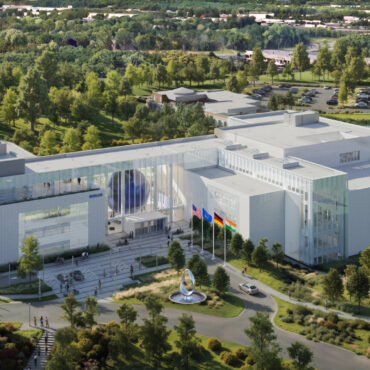
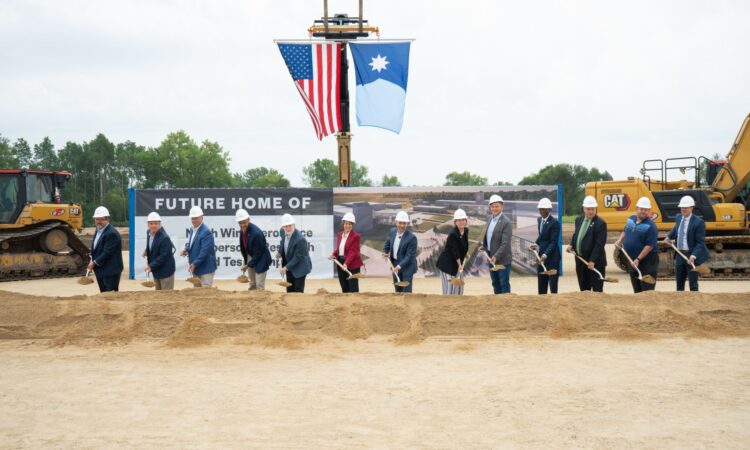
That will have big implications for local job creation. It may support endeavors like the North Wind aerospace testing complex, which is set for development in Rosemount and intends to make Minnesota the site of one of the nation’s most advanced hypersonic testing facilities. Hypersonic flight is when aircraft or missiles moves five times the speed of sound. Such facilities may draw more new companies like Lyntris, a D.C.-based defense technology business that opened an office in the same building as the DIU this fall to be closer to the industries that are scaling up in the state.
Last month, an opening ceremony was held at Dakota County Technical College in Rosemount to celebrate Minnesota’s $1.5 million NASA award through the NASA States Hub Initiative to build an aerospace workforce hub. The program will focus on jobs in welding, machining, automation, robotics, avionics, and advanced manufacturing. Shawn Haag is coordinating the program; he runs the Transportation Center of Excellence, a workforce development initiative run through the Minnesota State system. NASA selected his organization as one of seven state workforce hubs in the country. It is not an accident that the organization is based in Rosemount, the soon-to-be-home of the North Wind complex.
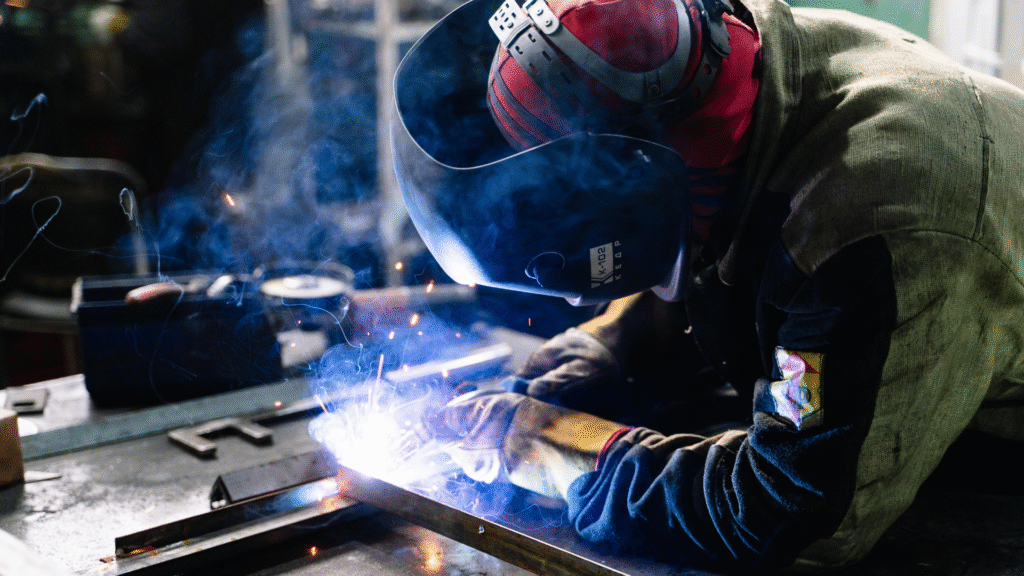
“How do we get people that maybe are in a different saturated industry to move over to aerospace?” Haag poses. “Or people that are on the sidelines that want to change careers [and] find an opportunity for themselves in the aerospace industry?”
Aerospace work is already growing
At the opening event for the NASA hub, an industry source shared that aerospace is already an $8 billion industry in Minnesota supporting more than 23,000 jobs. That’s qualifies the industry as one of the fastest-growing sectors of Minnesota’s economy.
“Over the past five years, the [aerospace] industry has almost doubled,” according to Sean O’Neil, senior director of economic development and research at the Minnesota Chamber of Commerce. O’Neil’s research drove the Minnesota Chamber Foundation’s 2026 report on the state of business retention and expansion, which highlighted aerospace as a major growth area for the state.
But while O’Neil believes the growth rate is impressive, the industry is still in its infancy and is growing back toward what it was before a late-’80s decline (more on that below). “It’s not a large employment sector for the state, but it’s grown at a really fast rate,” he says.
Haag believes there’s a lot more aerospace work in Minnesota than people know, and cites two companies as examples: Aerospace Fabrication in Farmington, which manufactures specialized blankets for space applications, and ION in Eden Prairie, which he said receives 90% of its work from NASA contracts and dates back to the 1980s.
In October, the Twin Cities Aerodefense Network (TCAN) hosted its inaugural summit, featuring luminaries from companies like 3M, North Wind, and the Trump administration. The floor of the summit featured booths from statewide manufacturers that build dual-use products such as ultra-strength adhesives for windows and springs that can withstand hundreds of pounds of force. These companies are having great years, with all of them attesting that their revenues have increased 25-40% in the past year.
TCAN was founded in 2024 by Jeff Johnson, a veteran as well as a longtime insider of the defense and aerospace industry. After a couple years in service, TCAN now has hundreds of members.
“It became apparent that it was a very fragmented industry. And a lot of these companies didn’t know about one another,” Johnson says. “I wanted to create a space that could start bridging these connections and creating business opportunities between companies, creating career transition opportunities.”
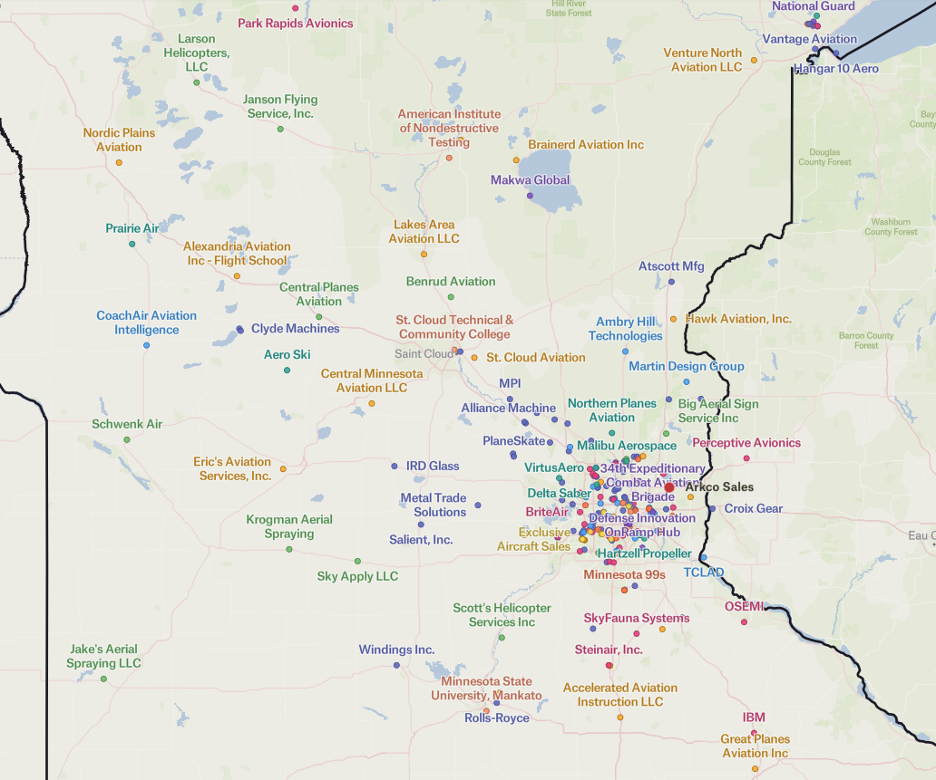
Johnson maintains a map of aerospace and defense companies in the state that highlights how much growth could come from dual-use applications spreading across manufacturing and software businesses statewide.
How does the industry scale up?
Minnesota has a rich history in both aerospace and defense, but the state saw a huge decline by the early ’90s. Between 1987 and ’89, the dollars the state pulled in through major defense contracts declined by 29%, which resulted in a loss of nearly 30,000 jobs. In 1991, the Minnesota Task Force on Economic Conversion prepared a robust report about why that happened, but the end result was that by 1989 Minnesota was paying more than $5 billion towards the Pentagon’s budget and receiving close to $2 billion in return – a gap that’s gotten worse since then.
Whether Minnesota can turn into a large employment sector once again is the big question, and it’s what Harper is focused on.
“The biggest challenge the defense-aerospace sector is facing is the ability to scale and scale rapidly and cost-effectively. It’s not good enough to produce, you know, 10 prototypes when we’re going to need to be able to produce hundreds of thousands of products, or millions of units.”
Jobs like these are especially important as the economy evolves. White collar knowledge work is in the midst of a generational disruption. Meanwhile, difficult industrial and manufacturing jobs are harder to disrupt. Many of these are highly paid, they provide opportunities for engineers and other specialized workers that can build up a larger manufacturing base for the state and go on to work with other businesses, and they require more physical space than software jobs, which is good for Minnesota’s tax base at a time when more property tax burden is shifting to homeowners.
Cora Leibig, founder and CEO of Chromatic 3D Materials, a 3D-printing service based in Golden Valley, announced on the Twin Cities Business Show that her team is bringing her 3D-printed rocket fuel to test at Camp Ripley, a military and civilian training center in Little Falls that’s operated by the Minnesota National Guard. There have been other tests discussed for Camp Ripley; it’s possible the Little Falls facility could serve as a “living lab” for more Minnesota companies with dual-use applications in the months to come.
When asked about what in Minnesota’s business and policy climate needs to change for the state to win more jobs, more contracts, and more opportunities, Harper shrugged off the familiar complaints about slow permitting and corporate tax rates. Instead, he suggested a new state hub that would attract industry players and assist them in navigating the state’s economic-development environment.
The state of Michigan, for example, runs an Office of Defense and Aerospace Innovation, which coordinates with private industry to find development sites and scale companies. Today, Minnesota has nothing similar. Harper believes building something like that (modeled on work done around Minnesota’s Med Tech 3.0 initiative) is the highest-leverage policy change that could deliver jobs and growth.
If Minnesota wants to accelerate these efforts, this would be a great place to start. But to get there, the state needs to get more serious about attracting companies, giving them the tools they need to scale, and doing both with an increased sense of urgency. The easier and less expensive we make it to do business, the faster this acceleration can happen.
“The goal is not to make this work for the next two years,” Harper says. “It’s to make it work for the next 20 years or 30 years or 50 years. So, we have to build collaboration and sustainability into all of this.”