

Why Are Minnesota’s Medical Device Companies Expanding to Costa Rica?
The Trump Administration hoped its tariffs would incentivize companies to move manufacturing operations and jobs back to the United States. Minnesota’s medical device industry has been seeing different results.
Minnesota contract development and manufacturing organizations (CDMOs) are expanding—but outside the U.S., partly to escape the country’s import duties. These businesses design and manufacture medical devices, such as catheters, on a contract basis for larger businesses. And at least three locally are choosing to build in Costa Rica.
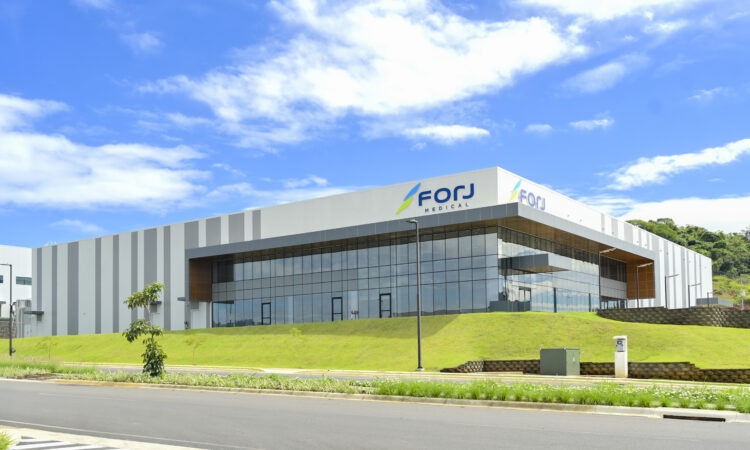
In 2024, Elk River-based Cretex Medical announced plans to build a manufacturing plant in the country and has plans to invest $20 million in Costa Rica operations over the next few years. In September, St. Paul-based Forj Medical opened a 5,000-square-meter Costa Rica facility to increase production capacity of electromagnetic sensors. And in 2027, Brooklyn Park-based Switchback Medical will open its second Costa Rica location.
“[Costa Rica’s] close proximity to the U.S. makes it a great opportunity,” says Ward Sokoloski, chief operations officer at Forj Medical. “We also found a lot of our customers we serve are already in Costa Rica. So, to have a presence there is part of our growth strategy.”
Costa Rica has emerged as a loophole for these manufacturers for several reasons.
A tax turnoff
CDMOs find a certain part of Costa Rica sexy for expansion: Costa Rica’s Free Trade Zone (FTZ). The FTZ is made up of dozens of industrial and business parks scattered across the country. In these areas, CDMOs can import raw materials from anywhere in the world, transform them locally, and export the finished products to the U.S. with 0% import taxes.
Being able to import polymers and plastics with no additional costs goes a long way for CDMOs, which make their money designing and building devices for medical device companies.
RELATED: Medtronic’s Diabetes Split-Off Drew a Crowd. Now MiniMed Has to Deliver.

“As you build a heart valve, if you can knock $200 off, that’s a huge factor,” Switchback Medical CEO Brady Hatcher explains, because “it’s making [your business] viable. Sometimes you need to not be in Minneapolis or California [to be] viable on the market.”
Sokoloski says that, in addition to low tariffs and the country’s tax advantages, Costa Rica has a very stable economy. “We in med tech are looking for that.”
Is Costa Rica becoming more like home?
In Costa Rica, medical devices have become the largest export in the country. “It used to be agriculture a decade ago,” Sokoloski says. “Costa Rica made a play to become known for its med tech ability.”
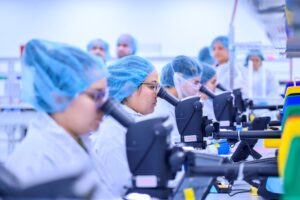
The first big company expansion took place in the late ’80s, when Illinois-based Baxter built a new facility.
Now, there are over 100 companies in the industry there, including original equipment manufacturers (OEMs) like Medtronic and Abbott, which expanded to Costa Rica before most CDMOs.
So, Switchback and Forj are making devices for other companies, many of which already have a presence in Costa Rica. “Part of this [Costa Rica expansion] is not just about the money,” Sokoloski says. “[It’s] being present with the customers.”
Why might a CDMO not want to expand to Costa Rica?
Costa Rica also offers cheaper labor costs, Hatcher says. Manufacturing labor in Costa Rica’s FTZ runs $8–$14/hour, compared to $25–$45/hour in U.S. facilities.
So, if there are these advantages, why does Forj Medical say its competitors haven’t followed?
It’s about resources more than anything else, Sokoloski says. “You have to have the scalability of your business itself.”
If Minnesota-based businesses’ revenue can outpace costs while they maneuver Costa Rica’s higher energy rates, language barrier, and transportation constraints, the state may see more CDMOs and OEMs expanding south and creating foreign jobs, such as the 50 jobs at Forj’s new location.