

2026 Entrepreneur Of The Year Winners
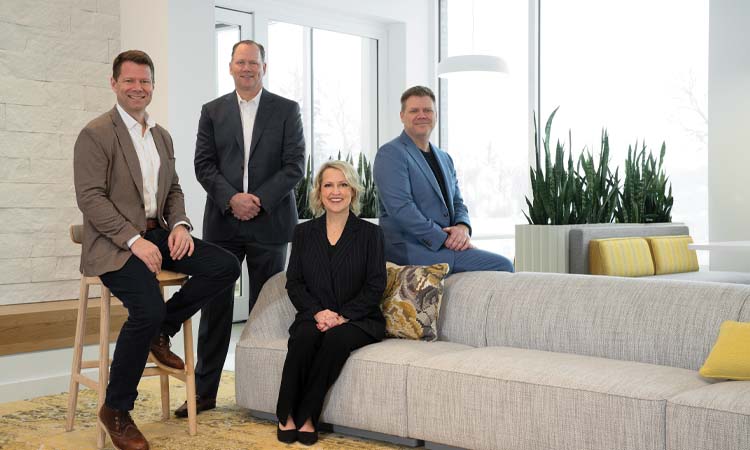
Paul Marvin
CEO and chair
Dan Marvin
President, Infinity by Marvin
Christine Marvin
Chief customer officer
Will Marvin
Senior director of retail operations
Marvin, Warroad
Christine Marvin defines entrepreneurship as “a mindset and a culture” that allows people to identify market opportunities. “We live in the spirit of possibility, and as a family business, we do think in terms of decades and how do we continue to bring value to the market,” says Christine Marvin, chief customer officer for the northern Minnesota-based company that manufactures windows and doors.
“I would say that entrepreneurship for us is about how we continue to modernize and not lose our soul,” she says. Her first cousin, CEO Paul Marvin, fully embraces innovation and entrepreneurship, but he’s also mindful of the company’s history.
For the fourth-generation Marvins running the 114-year-old business, they are conscious of preserving the family’s commitment to their employees, customers, partners, and communities where they do business.
“Stewardship is about passing down, preserving, and protecting all that’s great about the company and that makes Marvin Marvin,” Paul says. The company chair, Paul says there is an entrepreneurial side of stewardship, which is pivotal for each generation of the family. “If you don’t evolve, if you don’t take the gifts that have been given, invest them, build upon them, and innovate, you’re not headed in the right direction,” Paul says.
For the Marvin company, Paul says product, process, digital, and technology innovation have fostered company growth, despite facing tariffs and an uncertain economy. “We saw nice growth in 2025,” he says, and he projects revenue will be higher in 2026. “We’re always aware of what’s happening externally but much more interested and focused on what is within our control.”
That means being savvy about consumer demand within given segments. “The K-shaped economy is real right now,” Paul says. “For all of our history, Marvin has focused on the mid-to-high end of the market. The products we design are for that market.” Consequently, he says, the Marvin business benefits from households that are prospering in the current economy.
Marvin also makes Infinity fiberglass replacement windows and doors. “Consumer confidence is the biggest predictor of the direct-to-consumer side, the window replacement business that Dan leads,” Paul says. Dan Marvin, Paul’s brother, is president of Infinity, which has manufacturing facilities in Fargo.
While Marvin is known for its long-standing relationships with dealers, the Warroad-based company has ventured into new modes of selling its products. Vivid windows and Marvin Connected Home are among its new products that have caught the attention of consumers.
Vivid products are manufactured in Marvin’s new facility in Kansas City, Kansas. “We came out in this past year with a new collection that just wasn’t about high energy performance but also bigger sizes in windows,” Christine says.
Customer demand for larger windows has been increasing. Vivid has been a “home run” for Marvin because of the products’ high performance as well as robust customer response to the new product line, Christine says.
Marvin Connected Home allows homeowners to use a variety of technological options to control their windows. “That’s literally a startup within an existing business and one that required significant capability build,” Christine says, adding that Marvin teams were embedded in California to develop this initiative.
In a novel way to connect with customers, Infinity by Marvin is now in the second year of a partnership with Costco.
“Costco has about 650 warehouses across the country, and we’re in about half of them right now,” Dan says. “It’s been very well received by Costco members.”
In some cases, Marvin employees are based out of Costco, and in other instances independent Marvin dealers staff the Costco spaces.
Will Marvin, senior director of retail operations, says that Marvin made a strategic decision in recent years to open some retail stores called Infinity Replacement. The retail stores “act as the turnkey window and door provider” for single-family residences, Will says.
“We felt that we could be a better partner to our independent dealers if we understood at ground level how they do business,” he says.
Will learned teamwork and entrepreneurship as a boy while playing street hockey with older brothers Paul and Dan. “One of my favorite all-time photos is a picture of Dan, Paul, and me,” Will says. “We must have been 6, 8, and 12.” Will was the goalie.
“I’m wearing a life jacket for a chest protector,” Will says. “I had a baseball glove in one hand and the top of a garbage can for a blocker in my other hand. You just used whatever you could back in the day to protect yourself.” Will went on to play hockey at the University of Minnesota. —Liz Fedor
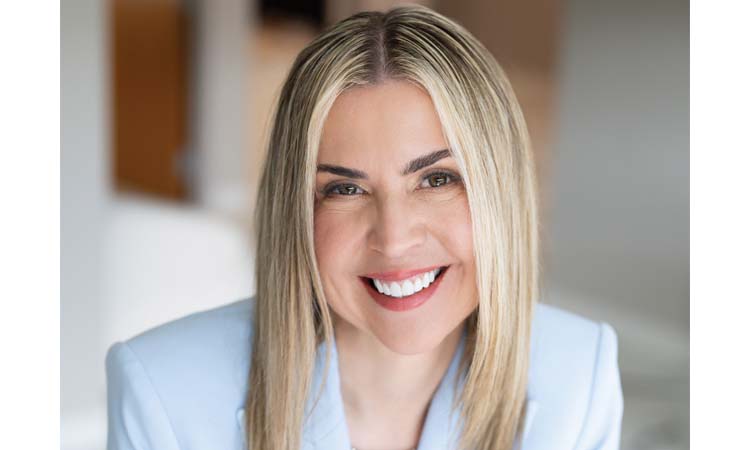
Jill Lytwyn
Founder and CEO, Lotus Pharmacy, Plymouth
Being a social entrepreneur has always been Jill Lytwyn’s plan, and supporting healthcare nonprofits fuels her entrepreneurial spirit.
“I want to give back and build something more,” she says. “It’s not as much about all of the profits.”
Lytwyn is founder and CEO of the rapidly growing Plymouth-based Lotus Pharmacy. She started the company in 2019 and was licensed to bill for prescriptions in 2020.
Lotus pharmacists fill prescriptions to nearly 200 locations, delivered via its fleet of 15 pink cars. It contracts with assisted living facilities and serves group homes, skilled nursing homes, and independent living residents. Lytwyn brings a personal approach to her business, with the lotus as a symbol of overcoming adversity in her life as a survivor of domestic abuse.
From day one, the Lotus business has focused on clients in skilled nursing and assisted living facilities. “I learned that assisted living [residents] just loved our model, because we were boutique-like,” she says.
Many competitors use third-party couriers, Lytwyn explains, but she wants to “own every touch point” in the process, from the customer’s phone call to delivery of prescriptions to the customer’s residence or care facility.
“We wanted to build a brand that is inspiring and creates hope,” she adds.
As independent pharmacies continue to close their doors, Lotus Pharmacy has found a market niche.
In its first year as a business, Lotus reported $250,000 in revenue. In 2025 it generated $15 million, and the company is aiming for $20 million in 2026. Lotus employs about 60, up from two full-time employees six years ago.
Lytwyn attributes that growth to landing its largest clients and having a pharmacy mission that resonates with its stakeholders.
And earlier this year, the company expanded, opening a pharmacy in southern Florida.
Looking ahead, Lytwyn might offer a subscription-model pharmacy for people who are unhappy with major drugstore chains. If she proceeds with that idea, she says, it would help to diversify the Lotus payer mix so the company would not be totally reliant on Medicare programs and Medicaid. —Connor O’Neal
Brian Brockway
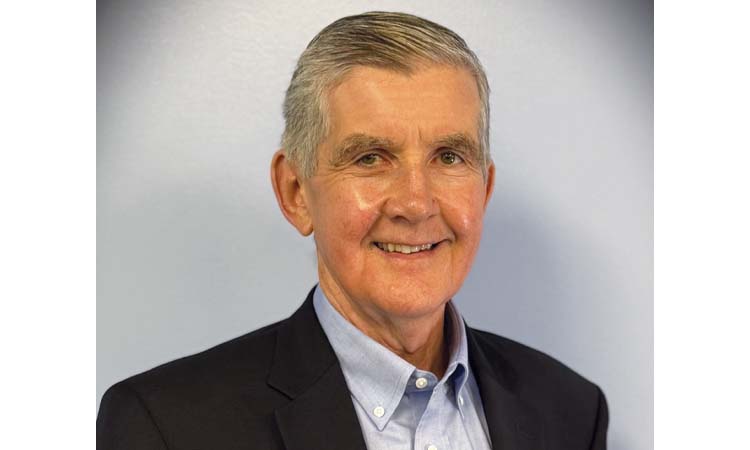
CEO
Marina Brockway
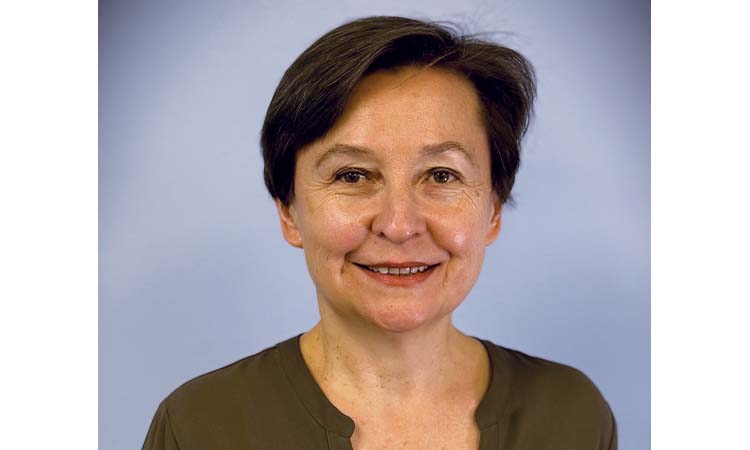
CTO, Rhythm Express (subsidiary of VivaQuant), Arden Hills
In 2019, medtech firm Rhythm Express received FDA clearance for the RX-1 mini, a wearable device designed to reduce confusing (“noisy”) data and the numerous false positives that remote cardiac monitoring devices often generate.
“Healthcare is moving toward solutions that are improvements in both quality and cost reduction,” Rhythm Express CEO Brian Brockway says, noting that removing the noise and improving the detection accuracy of arrhythmias in ambulatory patients achieves both objectives. By reducing the rate of false positives from 95% for most remote monitoring devices to around 5%, the RX-1 mini allows clinicians to make faster and more accurate diagnoses.
The RX-1 mini grew out of the work of CTO Marina Brockway, the other half of this husband-and-wife entrepreneurial team. She is an applied mathematician with an extensive medtech career, notably with Boston Scientific’s Twin Cities operations, where she worked on refining the algorithms for implantable devices.
Her education and expertise allow her to approach biological signals from a mathematical perspective, she says. She founded VivaQuant in 2009 to develop the technology that would become the basis of the RX-1 mini. Rhythm Express was launched as a subsidiary of VivaQuant; it now makes up its main business. Brian Brockway, an engineer and serial medtech entrepreneur, joined the company in 2010.
The Brockways’ business success is reflected not only in the number of people it employs (about 200) but also the tremendous growth it has posted the past three years. Rhythm Express ramped up commercialization of the RX-1 mini in 2021.
The couple took an unusual step of eschewing venture capital funding in favor of federal Small Business Innovation Research grants and individual investors, which Brian says has helped ensure the company’s independence.
Rhythm Express has been pursuing new applications for its technology. This summer, it received FDA clearance for a device that allows clinicians to remotely monitor sleep apnea and atrial fibrillation simultaneously, two conditions that are frequently linked. —Gene Rebeck
Brian Roers and Kent Roers
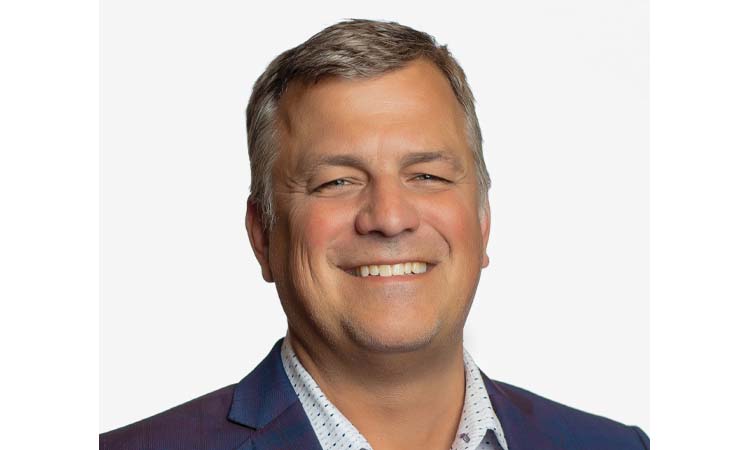
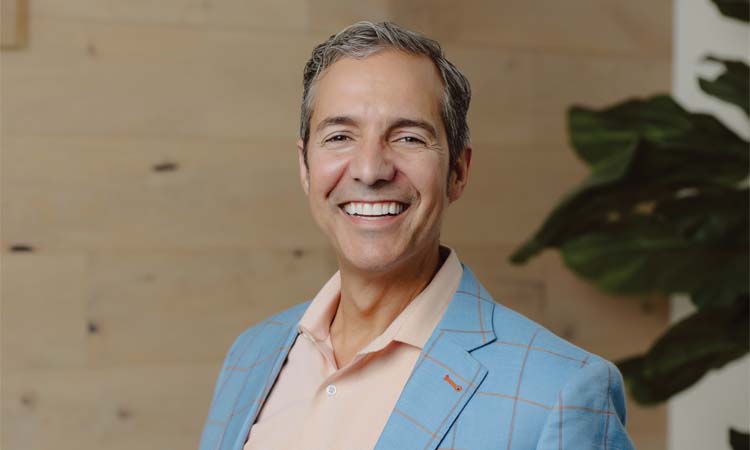
Owners and co-founders, Roers Cos., Plymouth
Roers Cos. co-founder Kent Roers describes his entrepreneurial journey and success this way: “Think big, start small, scale fast.”
That’s pretty much what Roers and his brother, Brian Roers, have done in building their development, construction, and property management business. Since launching 14 years ago, Roers Cos. has become one of the biggest developers of market-rate and affordable housing communities in Minnesota and nationwide.
The energetic, upbeat brothers didn’t have extensive backgrounds in the multifamily development space. Kent worked in the financial planning industry; Brian was a CPA. “We just had a dream,” Kent says.
The dream almost didn’t come true. “We almost went broke in 2015,” he recalls. “The only way we could get out of that problem was to grow like nobody’s ever grown before.”
They have indeed grown. Since its founding, Roers Cos. has completed 109 projects nationwide, comprising 16,671 units. It’s currently building projects in seven states. Its general contracting division is now the 25th-largest multifamily builder in the U.S.
“We’re building for the missing middle,” Brian says, adding, “it takes really bright developers to figure out the financing.” His business has been able to hire them. The brothers have attracted development talent from other companies because “we give them tons of risk, tons of opportunity,” Kent says.
One attribute that distinguishes the Roers from their competitors: Their funding comes from individual investors rather than institutions.
Roers Cos. has approximately 1,300 retail individual investors in Minnesota and nationwide, and the business raised about $150 million in investor capital in 2025 alone. Meanwhile, institutions have become less of a source of industry investment.
“You build when times are tough, not just when everything is sunshine and roses,” Kent says. “In the past two years, we’ve been able to build when others haven’t.” —Gene Rebeck
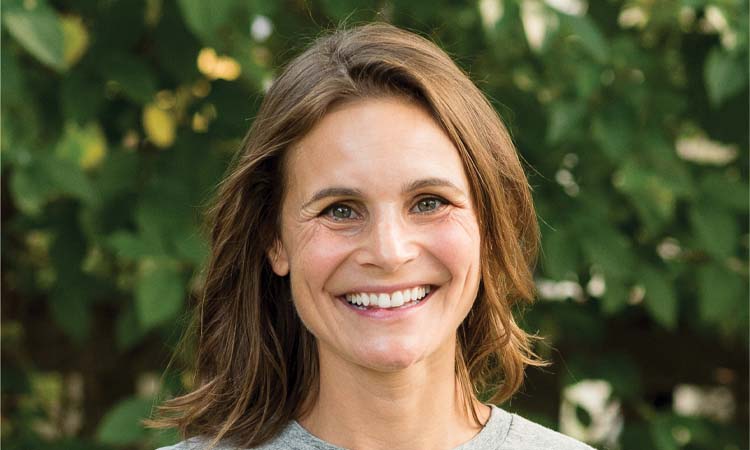
Hannah Barnstable
Founder and CEO, Seven Sundays, Bloomington
Producing healthy breakfast food and creating happy memories is the mission of Hannah Barnstable, a mother of three children from Minneapolis, who has busted into the cereal aisles of big stores with her Seven Sundays products.
A Medina native, Barnstable fondly recalls her childhood memories. “Breakfast was really fun,” she says. “I remember cartoon breakfasts on the weekends. It felt like you could just relax and you could be together as a family. I remember my mom making strawberry crepes for Valentine’s Day breakfast.”
Barnstable wants other families to make similar memories while eating her line of products—such as Simply Honey Oat Protein Cereal, Wild & Free Blueberry Chia Muesli, and Real Cocoa Sunflower Cereal.
Barnstable, who began her career in finance in Chicago and New York, returned to Minnesota in 2010 and started her food company in 2011 by selling muesli mixes at farmers markets.
Now, she employs nearly 90 people, with most of them working at her Bloomington headquarters and a St. Peter manufacturing facility.
Her husband, Brady Barnstable, is the company’s COO, and her brother Andy Montzka is the brand innovation manager.
Barnstable’s brother Cliff Montzka passed away at age 26 in 2007. In addition, her husband has had a cancer scare. So Barnstable says she wants to “build something that has meaning.”
That extends to supporting sustainable farming practices. Beyond making products with no artificial additives, Barnstable is excited to work directly with nearly 20 farmers to source some of her ingredients.
Her husband previously worked as an environmental consultant. “He’s really passionate about regenerative agriculture and changing the landscape of industrial agriculture in the Midwest,” she says. “This year, we will source directly from farmers about 2,500 acres of product, and that ranges from sunflower seeds to buckwheat, oats, and sorghum,” she says.
Barnstable was selling her products in local co-ops. As the Seven Sundays brand has gained loyal customers, it’s now available nationwide at retailers that include Whole Foods and Costco. —Liz Fedor

Brady Hatcher
Co-founder and CEO, Switchback Medical, Brooklyn Park
In 1998, Brady Hatcher was still enrolled in the University of Minnesota’s engineering school when he got his first manufacturing job at Neenah, Wisconsin-based Plexus.
He worked as the company’s first engineer at its Blaine location.
Two years later, Hatcher joined Boston Scientific to develop more experience in the medical device industry. He joined it “at the perfect time,’’ he says, because its drug-coated stent took the market by storm and became the company’s flagship product. Being a part of that innovation opened his eyes to how the industry could save people’s lives and how one product could drive a company’s valuation.
“I always viewed all of my jobs as paid internships to prepare me to start to be an entrepreneur,” he says.
Since leaving Boston Scientific in 2005, Hatcher has co-founded a dozen startups. He notes the Great Recession as his largest obstacle to date. While trying to secure outside investment for a separate venture, Hatcher started Fast Forward Medical, which manufactured catheters and stent delivery systems for structural heart, neurovascular, and cardiovascular therapies.
Hatcher and two equal partners decided to finance the startup and watched it grow until 2013, when Vention Medical acquired it.
Hatcher’s most recent business venture is Brooklyn Park-based Switchback Medical, which designs and manufactures medical devices, including catheters, on a contract basis for major strategics and other businesses. With services that range from component design to full device packaging and sterilization, Switchback aims to reduce development costs for businesses as well as shorten the time to get their products to the marketplace.
Last year, Switchback Medical’s revenue was $75 million. Hatcher says he expects annual growth of at least 20% this year. “Now we’re large enough where people actually do trust us as a manufacturer,” Hatcher says.
This year, the company expanded its footprint to Costa Rica. Dual sourcing and the benefits of being in Costa Rica’s Free Trade Zone persuaded Hatcher to make the strategic move. —Connor O’Neal