

 What’s this?
Everyone Has Something to Give
Pastor Sergio Amezcua got the call from his assistant one evening last winter, a few hours after the social media post went up. Attendance at his Minneapolis church had fallen as the presence of federal agents in Minnesota made it unsafe for congregants to leave their homes, so the church had put out an offer to help families in need.
Amezcua expected 20 families to sign up. Instead, 2,000 did.
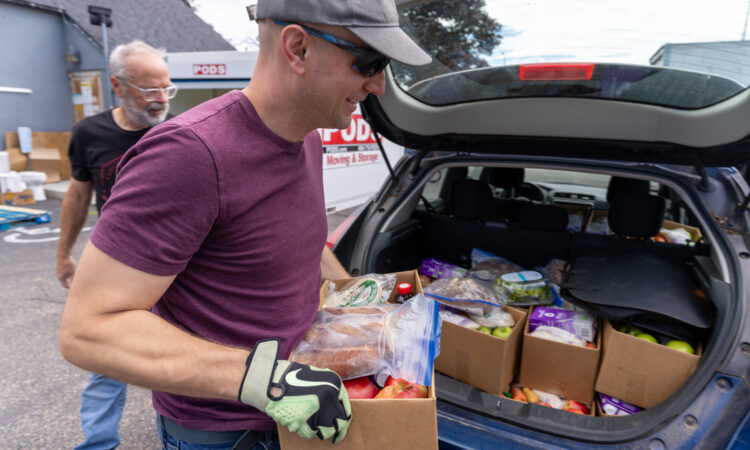
Volunteers at Iglesia Dios Habla Hoy’s (DHH Church) were soon delivering groceries to thousands of neighbors—a powerful example of community coming together to meet an extraordinary moment.
Operation Metro Surge created a critical need for food assistance. But for many families, it was only the latest pressure on their grocery budgets. Costs are up; the federal government shut down for nearly six weeks last fall; and SNAP benefit cuts for children and families approved in last year’s federal legislation have started to take effect.
The result? Food shelves were already facing incredible challenges when Operation Metro Surge began.
The Minneapolis Foundation has spent the past year channeling emergency aid into the community. But its responsive work goes far beyond endowed grantmaking. The Foundation also works with people who hold Donor Advised Funds, connecting their philanthropic priorities and expertise with community needs.
“Our donors have been deeply invested in addressing urgent needs, and food is a big one,” said Maggie McCracken, the Foundation’s Vice President of Philanthropic Strategy & Engagement. “We’re also seeing many fundholders looking for ways to help beyond grantmaking by putting their own experience and skills to work.”
Many of these fundholders have shown up as volunteers, packing food or delivering supplies. Others joined the boards of organizations they support. And some, like Alex Ware, have used their own networks to help local nonprofits solve problems.
As DHH Church began providing mutual aid, McCracken texted Pastor Amezcua to see how the Foundation could help.
One of the church floors had almost collapsed under the weight of food pallets they were loading, he said. They were scrambling to become food distributors but didn’t have the infrastructure to manage an operation of that scale.
McCracken thought of Ware, a fundholder and Foundation board member whose career has focused on the logistics of moving food. When the two visited DHH Church soon after, “it was an absolute beehive,” recalled Ware. “The need was great, and the enthusiasm and energy of the volunteer corps was impressive.”
McCracken said Ware didn’t come in telling the church how to operate. He listened. “Alex let Sergio be the one to say, ‘This is what we need.’”
Ware soon helped the church secure a refrigerated truck, solving a distribution pinch point—and illustrating the valuable contributions that donors can make when they give beyond the checkbook.
“Our role as advisors at a community foundation is to uncover the values, passions, and philanthropic goals of donors,” said McCracken. “We then connect them more deeply to work happening in the community that aligns with those goals.”