


Advice From a Corporate Event Planner
What makes a successful theme for a business event?
As a meeting planner for nearly 15 years, I believe successful meeting themes should be the connective thread to your company’s overall strategies and goals so everyone understands how the meeting contributes to the bigger-picture success. When people see that direct link, it helps drive deeper engagement and a sense of purpose. It also creates clearer direction and accountability, which makes it easier for teams to align and move forward together after the meeting.
Can you give us an example?
We recently did this with Thrivent’s semiannual Senior Leader Summit, where we used “Playing to Win” as our theme. The sports-inspired theme highlighted how Thrivent is differentiating itself as a Fortune 500 financial services company that puts generosity at the heart of saving and investing. “Playing to Win” was a rallying cry for our senior leaders to charge forward in the company’s transformation. Last fall’s Senior Leader Summit concluded with an evening at the Thrivent Club at Target Field—thanks to our purpose-driven partnership with the Minnesota Twins—which brought the theme to life in a memorable way. This year, the theme pivoted to “Momentum,” which was chosen to celebrate Thrivent’s recent success and momentum for the future.
“Themes should be simple and accessible, allowing attendees to easily participate.”
—Kim Fischer, Thrivent
How deep do you go on a theme without risk of getting too corny, especially for work?
When done right, I believe that a theme can tie all aspects together and create a cohesive and engaging experience for attendees, including everything from food and decor to messaging, programming, and signage. Themes should be simple and accessible, allowing attendees to easily participate. If you’re asking guests to dress according to a theme, recommend something they likely already have in their closet or can easily purchase.
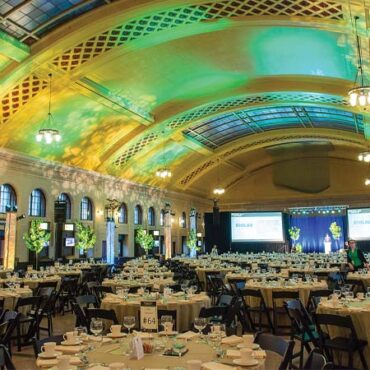
A great example of this was our recent Business Development Conference—Thrivent’s largest event hosted for more than 1,700 financial advisors across the country. This annual event is built to help our advisors grow their practices through sales, marketing, and practice management strategies so they can reach and serve more clients. This year’s theme, “Tomorrow, Together,” was woven into every aspect of the event, including with our keynote speakers, in all event signage, throughout workshops, in all group activities, in swag-like tote bags, and in all event communication. This helped do two things for our financial advisors: it showed what it means to embrace the future collectively (together) and reinforced the importance of staying relevant in a changing landscape.
What comes first: the venue or the theme?
Whenever possible, I think the theme should come first so you can choose a venue that supports the overall experience you want to drive. Once you have a theme that’s aligned to who you are as an organization, and one that ties to enterprise strategies and goals, you can choose a venue and plan your event. Starting with a clear theme lays a strong foundation to help guide every decision—from shaping the agenda and selecting speakers to crafting the overall experience you want to create for attendees. When people understand the purpose and theme of the event, they’re more likely to feel involved, inspired, and engaged.