

Fair State Brewing Declares Bankruptcy
Minnesota’s first cooperatively owned brewery has declared bankruptcy.
In a note sent to its members this week, Minneapolis-based Fair State Brewing Cooperative said it is filing for Chapter 11 bankruptcy protection to “continue forward.”
“It’s a sentence I never thought I would write,” CEO and co-founder Evan Sallee wrote in the note, which Twin Cities food publication Heavy Table shared on social media Wednesday morning. “But it’s also a fact of life for businesses of all stripes, and often a vital step on the path to a strong recovery.”
Sallee characterized the move as a financial restructuring that would enable the organization to “emerge on the other side stronger for it.”
A Feb. 13 filing in Minnesota Bankruptcy Court indicated that Fair State owes money to more than 100 creditors.
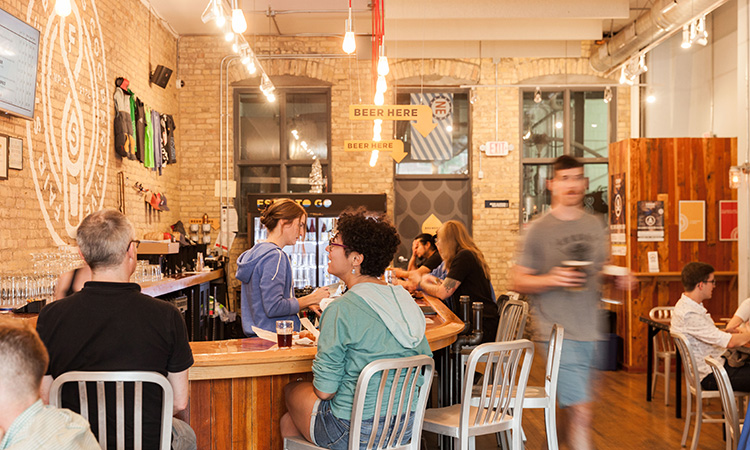
In 2014, Fair State first opened the doors to its Central Avenue taproom in Northeast, becoming the first cooperatively owned brewery in Minnesota and the third in the nation, according to its website. Six years later, the company became one of the first craft breweries in the nation with a unionized workforce.
Like many other brewers, Fair State dove headlong into the burgeoning market for cannabis-infused beverages. Last year, the organization launched the Chill State Collective, which was billed as the state’s first cannabis beverage distribution center. The center is not only for the Fair State’s Chill State brand; it also offers co-packing, storing, distribution, and endorsement to assist other cannabis beverage brands.
In a Wednesday interview with TCB, Sallee said that cannabis beverages “are and will remain a really important part of our business and our growth going forward.”
“We’ve seen a lot of growth there,” he said. “It’s been successful for us as part of our strategy to stabilize and grow moving forward, and make sure we grow as a healthy business.”
At the time of the launch of Chill State, Sallee said that cannabis beverages had become a lifeline for many businesses after a tough few years for the hospitality industry.
Still, the scars of Covid-19 remain, and this week’s bankruptcy filing is a testament to Fair State’s ongoing financial struggles. “The reality is the pandemic threw us down a hole, and we spent a lot of blood, sweat, and tears trying to get out of it,” Sallee said. “Ultimately, this is kind of where we had to hit the reset button.”
In a Feb. 13 declaration before Minnesota Bankruptcy Court, Sallee said that “the pandemic disrupted Fair State’s business tremendously.”
“Alongside these dramatic restrictions on Fair State’s business model, it had to deal with many other challenges generated by the pandemic,” he told the court. “For instance, its normal supplier of cans refused to work with small breweries, and Fair State was forced to import cans from as far away as Sri Lanka.”
For now, though, Sallee emphasized that the bankruptcy filing shouldn’t interrupt Fair State’s day-to-day operations. Its taproom will remain open. “Nothing’s really going to change,” he told TCB. “We’re going to keep making really good beer and [remaining] a cooperative community that people have come to know and love.”
At the same time, Salle’s declaration in bankruptcy court indicated that Fair State’s ambitious cannabis plans had encountered a few obstacles. “Despite having exclusivity contracts, two of Fair State’s customers informed it of their intent to continue working with Fair State for co-packing but to break those contracts for distribution services,” Sallee said in the declaration. “Fair State moved forward with each partner on assurance of continued production growth in return for not objecting to moving their distribution rights to other partners. This put an immediate hit on Fair State’s income, which in May of 2023 was near the highest point it had been in the history of the company.”
Indeed, in the fourth quarter of 2023, Fair State’s hemp-related revenue had grown 450% year over year, Sallee said. But that was not enough to fix other financial problems. Sallee said that Fair State in December 2023 and January 2024 took on new “merchant cash advance obligations” to meet existing suppliers’ needs and continue operations. That came after Fair State’s largest co-pack customer abruptly changed expected business plans, Sallee said.
“In late 2022, [Fair State’s] largest co-pack customer had communicated expectations that Fair State should be prepared for its business to ramp up in Q1 of 2024,” he said in the declaration. “Instead, at the eleventh hour, the customer ended up cutting its forecasts by 80-90% during that period, representing well over $100,000 in lost monthly forecasted revenue.”
Meanwhile, Fair State had other deals lined up that were delayed, which again bit into the organization’s monthly cashflow. Fair State also ran into “unexpected issues with multiple batches of product,” which led to “immediate cash losses that were unmanageable.”
Chill State is continuing to work on creating potential partnerships with an array of brands and businesses, according to the declaration.