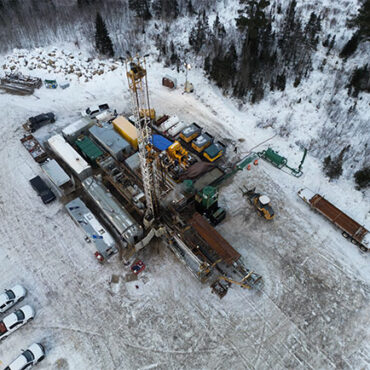



What’s Up in Northern Minnesota? Helium.
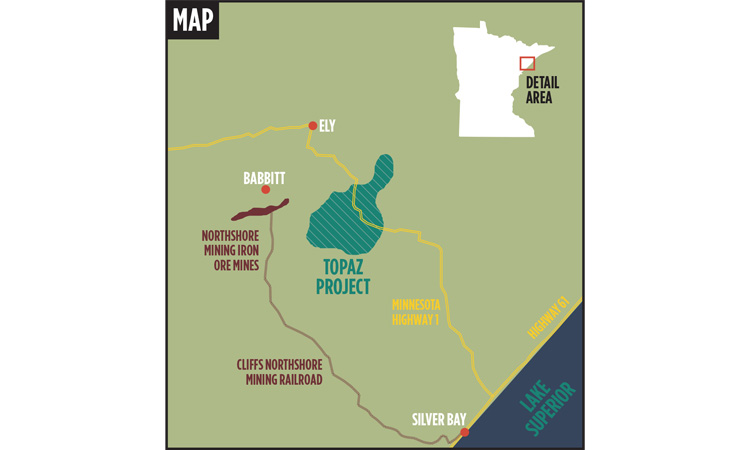
You might have read last year about a potentially significant deposit of helium found underground near Babbitt in northern Minnesota. That part of the state has long been known as a source for extractable metals, including iron, nickel, and copper. But a gas? One that’s known to most of us for lighter-than-air party balloons?
In fact, helium is one of the world’s most commercially important elements. It’s used in semiconductor manufacturing, fiber optics, medical equipment, and electric vehicles, among others.
It’s also in short supply. That’s what makes the Minnesota discovery intriguing. Early exploratory evidence suggests that the region might have one of the most concentrated deposits of helium on record.
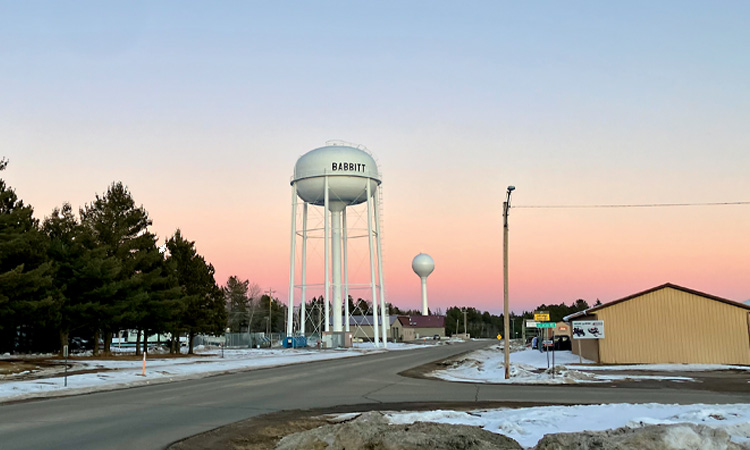
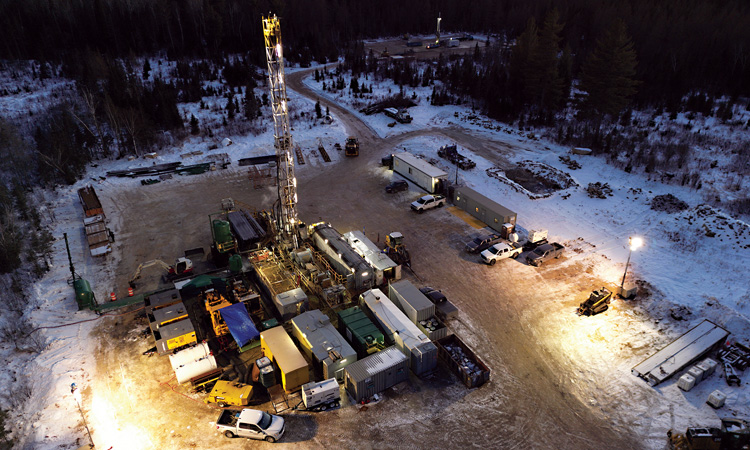
The exploration site, which sits on privately owned land near Babbitt, “is a Goldilocks zone” for helium, says Thomas Abraham-James, president and CEO of Pulsar Helium, the Portugal-based company conducting the exploration, which it calls the Topaz Project. “It has the right geological ingredients,” he says. “There aren’t many places on the planet that have them.” (In addition to Minnesota, Pulsar is exploring helium production at a similarly promising site in Greenland.)
Minnesota’s helium deposit is due to a quirk of geology called the Midcontinent Rift, which stretches underground throughout the Midwest. The rift allows helium to be liberated from deep underground. In Minnesota, the helium is held in place by a hard nonporous rock called gabbro. “From a geologist’s point of view, this is [uninteresting] rock,” Abraham-James says. But for helium extraction, it’s ideal because it’s very stable. In fact, he adds, “nobody thought that a [geological] system like this could exist.”
Abraham-Jones hopes that by March an independent third party will provide a report that will detail the amount of helium the site might yield. If the projected volume promises to be profitable, Pulsar would likely build a production facility, which would take about 18 months. Then extraction would start.
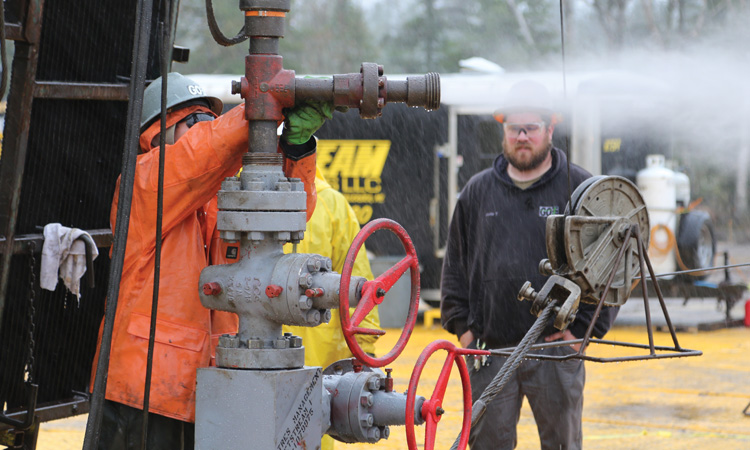
The company’s initial testing appears to look promising; one test showed helium concentrations of up to 14.5%. That’s remarkable because a concentration of greater than 0.3% is considered “economically viable,” MPR News reported this week.
Unlike a natural gas facility, which can take up dozens of acres, Pulsar’s would be a small-footprint operation, with most of the extraction automated. “You can think of it almost as a glorified gas station,” Abraham-Jones says, and it won’t be bringing a lot of jobs to the Range. “We could probably count the number of people we’d need on one hand,” he says. Containers of helium would be shipped out by truck—one a day at most. Since helium is a nonhazardous load, transport wouldn’t be an issue.
Read more from this issue

As for customers, “our preference is to deal directly with large end users, and there are a few in Minnesota,” Abraham-James says. These could include semiconductor fabricators, which need helium in bulk to manufacture chips. There also are independent distributors that handle a variety of gases. Looking ahead, Abraham-James imagines large customers such as General Electric (which uses helium as a coolant in MRI machines), as well as other semiconductor and medical businesses.
Late last year, Pulsar signed an agreement with Chart Industries, a Georgia-based company whose services Abraham-James calls “the gold standard for the construction and engineering of gas production facilities.” Chart would design and construct the facility using its regional operation in New Prague, which “underpins our desire to make this as local an operation as possible.”
In 2024 the legislature required companies extracting gas from Minnesota land to obtain a permit from the Department of Natural Resources. The permitting process would create regulations on environmental review and production. The legislation also establishes a production royalty payable to the state, similar to mineral rates Minnesota imposes on taconite production. Since Minnesota does not produce natural gas, such regulations would have to be written from scratch.
Abraham-James says he welcomes regulation. “This is a very new industry,” he notes. Perhaps a major helium deposit will become another reason for Minnesotans to puff up with pride, he adds. “We certainly consider it quite a coup for the state.”