

Understanding Trump’s Tariffs Through Plain Language
What are tariffs and who pays them?
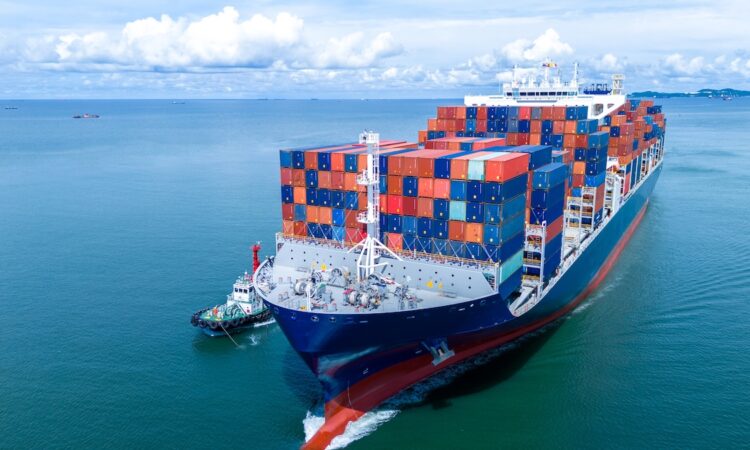
Tariffs are import taxes paid by buyers of goods or services from foreign countries. They are assessed when goods are received at U.S. ports and paid by the importing firm or agent. Once a tariff rate is determined, the percentage increase in price is applied and paid as an additional fee before the good is cleared for entry.
Mechanism: How do tariffs raise prices?
The easiest way to think about a tariff is that it drives a wedge between the pre-tariff, external or foreign price and the post-tariff, internal or domestic price. Like costs for transportation, the Trump tariffs are unrelated to costs of production and simply become an added expense charged to do business with U.S. companies.
In practice, the cost of the tariff is usually passed on to buyers of the imported good. Buyers must then decide if there are further opportunities to shift costs. If an importer receives a foreign-made washing machine with a 20% tariff, it can either absorb the cost of the tariff or it can mark up its domestic price in an amount less than, equal to, or in some cases more than the tariff of 20%.
If the washing machine costs $100 to import before the 20% tariff, the importer can pass through the entire tariff and charge $120 or absorb half the cost and charge $110. Depending on what the market will bear, the importer might also exploit the tariff by charging even more and asking $125. Studies indicate that most tariffs (such as those levied in the first Trump administration) are almost completely passed on as increased costs to final consumers.
Tariffs are sometimes justified in the name of helping troubled firms and industries adjust to global competition. Tariff protection can buy time to protect uncompetitive “infant” industries or out-of-date “senescent” industries until they get on their feet or in some cases are shuttered. Tariffs are also sometimes defended as strategically necessary to protect industries in the name of national security.
Response: How do consumers and foreign countries react?
Consumers respond to increased prices due to tariffs depending on how much they need and are willing to pay for the product. This is based on their budget and income and the availability of alternative non-tariffed substitutes. Competing domestic producers of products like washing machines, even if they do not face tariffs, may raise their own prices, putting upward pressure on prices in general.
Foreign producers of tariffed goods typically do not absorb the added tax except in the form of lost sales. They may lobby their governments to retaliate, and governments may respond by charging tariffs on U.S. exports. This can lead to a tit-for-tat cycle of increasing tariffs, with no clear “winners” and escalating losses for both sides.
These reactions to tariffs by foreign countries are important because they determine the economic impact of the tariff on the U.S. and any potential bargaining leverage the tariff may provide. Large economies, such as China, Japan, the European Union and Brazil, can credibly threaten a tit-for-tat retaliation game. Smaller developing economies, such as Cameroon or Vietnam, have far less leverage and are more likely to seek relief and make concessions. Imposing high tariffs on a country will have little effect on its economy if, like Russia, it has few exports to the U.S.
Impact: What are the main consequences of tariffs?
In sum, the main impact of tariffs is to raise the costs of imported goods. These costs are then generally passed through to intermediate and final consumers. In addition, tariffs can and often do provoke retaliation from larger trading nations. On April 2, the Trump administration imposed a wide set of tariffs according to a “formula” based on how much the value of U.S. imports from other countries exceeded the value of exports to those same countries. The administration took this deficit as a measure of whether foreign nations were “ripping off” the U.S. All countries were charged a minimum 10% tariff. Most larger countries responded with retaliatory tariffs of their own.
Since then, the administration has asserted authority to claim deadlines for “deals”. Only a few are now materializing, all at tariff levels substantially higher than before April 2, with all of the effects described. The administration has increased and decreased these tariffs week-by-week, based on a claimed “emergency,” national security and other factors in specific markets such as copper.
It recently announced that it would target pharmaceuticals for tariffs. It has also included non-economic behavior that it claims merits tariffs as punishment at levels as high as 50% to 100%. These include the alleged “witch hunt” against former Brazil president Jair Bolsonaro by Brazilian courts and punitive tariffs against Russia for its continued aggression in Ukraine.
Evolving Issues: What should people watch?
The tariffs imposed by the Trump administration since April are larger than any in the last century, estimated as averaging a little over 20 cents on the dollar for tariffed imports, higher than at any time since 1910. This includes the infamous Smoot-Hawley tariff of the 1930s, which resulted in a retaliatory tariff war with European countries that deepened and prolonged the Great Depression. The consequences are now playing out in at least six different ways.
- Price Inflation: Rising prices, resulting largely from tariffs, increased at an annual rate of 2.7% in June and are still increasing. Increases are coming in household furnishings, electronics, apparel, food and energy. Import taxes, especially on China, added costs that American consumers are paying—costs that are unrelated to production technology, transportation or product quality.
- Product Sourcing: Some importers anticipated these price increases and began building inventories of non-perishable goods before tariffs took effect, cushioning the price shock. As these inventories are depleted, importing firms will need to decide whether to switch to domestic suppliers (if they exist) or to foreign suppliers with lower tariff levels. These reactions will be affected by whether other suppliers, foreign and domestic, have taken advantage of the tariffs by raising their own prices.
- Holdback: Many consumers of tariffed goods have adopted a wait and see position as the tariff wars play out. This “holdback” will affect both consumer demand and producer supply, reducing overall activity on both sides of markets. This is the reason some fear a recession. More likely is a combination of price increases and reduced new investment, or “stagflation.”
- Uncertainty: No one knows whether tariff announcements are transitory bluffs designed to promote short-term compliance or more permanent changes in trade policy. As a result, uncertainty and perceived risks of new investment are increased. This uncertainty adds to holdbacks in both consumption and investment. This leads to a loss of consumer and business confidence that makes a downturn more likely.
- Hoarding: In anticipation of higher prices or reduced availability of goods and services, consumers at the household level or intermediate suppliers of, say, parts for washing machines, may continue to accumulate inventory. In the short run, some importers have parked inventory in bonded warehouses where they wait before paying the import tax, hoping it will fall. This will stimulate demand in the short run as they stock up. But in the long run, it will depress demand and increase carrying costs for this inventory.
- Supply Chain Disruption: Price increases, holdbacks, uncertainty and hoarding all cause supply chain disruptions, contributing to losses in efficiency and additional costs of doing business. An overall loss of “reliable supply” will cascade all along the supply chain, leading to losses in reputation at the firm, industry and national level.
Conclusion: How will tariffs be felt?
Tariffs will raise additional government revenues which will go into the general Treasury accounts. This additional revenue will be insufficient to offset reduced revenues from various tax breaks passed in recent legislation, resulting in increases in the U.S. federal deficit.
Import taxes paid as tariffs will be sent to the Treasury not by foreign governments or foreign businesses but by U.S. consumers and industry. This import tax will work its way into supply chains throughout the U.S. economy, at a current estimated cost of about $2,800 for every American household.
Data shows that the impacts from added costs, higher prices and market disruptions will be felt most severely by lower income households. These added costs will be the direct result of the U.S. administration’s own policies. They are self-inflicted injuries to consumers, investors and the U.S. economy.