


Most Companies Have AI, Not an AI Foundation
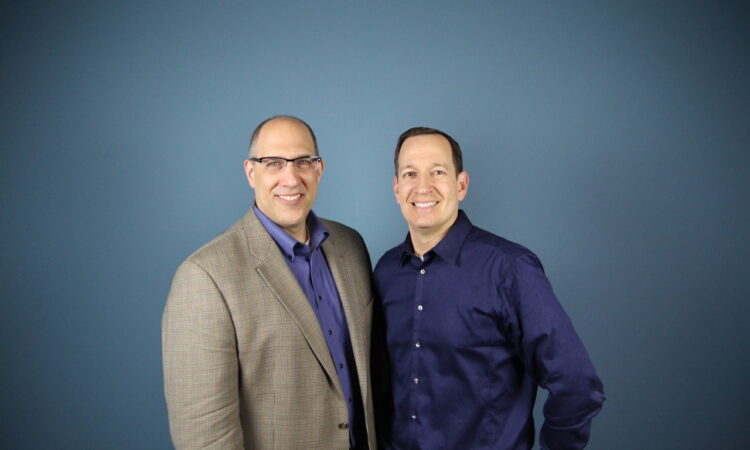
Scott Litman and Dan Mallin are five-time technology founders, co-inventors on seven issued patents related to AI, and co-founders of the Minnesota Cup.
We regularly talk to business leaders, in the Twin Cities and across the country—people running companies, typically small and medium-sized businesses (SMBs) with 10 to 300 employees. Lately, we have been asking them all the same question: Does your company have an AI foundation? Surprisingly, almost no one says yes. What we hear are versions of “Well, our people are using AI.” But using AI and having an AI foundation are two very different things, and in 2026 the gap between those realities is costing companies more than they realize.
Like many of you, we regularly use tools like Claude, ChatGPT, and Gemini, and marvel at the superpowers these tools have handed us. Here is what is concerning: In business after business, AI is being used by individuals on personal accounts, with company data, with no security, governance, or connection to the systems that run the business. Everybody has AI. Nobody has a foundation.
The Microsoft and LinkedIn Work Trend Index found most knowledge workers are using generative AI at work, and the majority are quietly bringing their own. This is happening inside your company, whether you have sanctioned it or not.
Without a foundation, nature fills the vacuum. Employees use personal chatbots—or, worse, free accounts—and paste in contracts, customer lists, and financials to get the job done faster. They are not reckless; they are being resourceful. But the result is the same. Your most sensitive information is flowing through tools you do not control, under terms nobody understands.
Creating a foundation means creating basic infrastructure that allows everyone in your company to work with AI the way they already work with email: securely, by default, and across every system. It means buying an enterprise license with one of the major providers, chosen to fit your existing technology stack. It means building enterprise security, so people can use company data without it leaking or training a public model. And it means orchestration that connects AI to systems you already run: your email, your CRM, your files, and your project tools.
This is where the payoff lives. With a real AI foundation in your organization, using a simple prompt means you can ask specific questions and get tailored answers in just moments: When did we last meet this customer? What did we propose? What are the terms? What is the payment status? Where does the project stand? Although today that may be a 20-minute scavenger hunt across five logins, a foundation will make the friction disappear.
For SMBs, this is achievable now, and much faster than leaders expect. The technology is already in your building. The only real question is whether you are going to put a foundation under it. Start there. Everything else follows.