

Minnesota Cannabis Businesses Grapple With Growing Pains
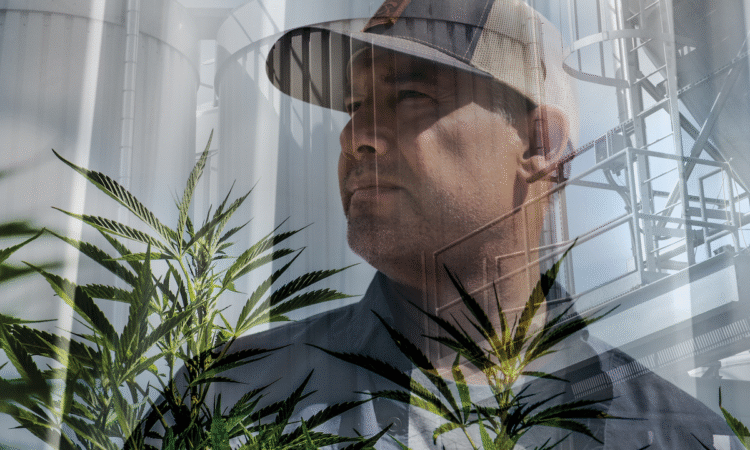
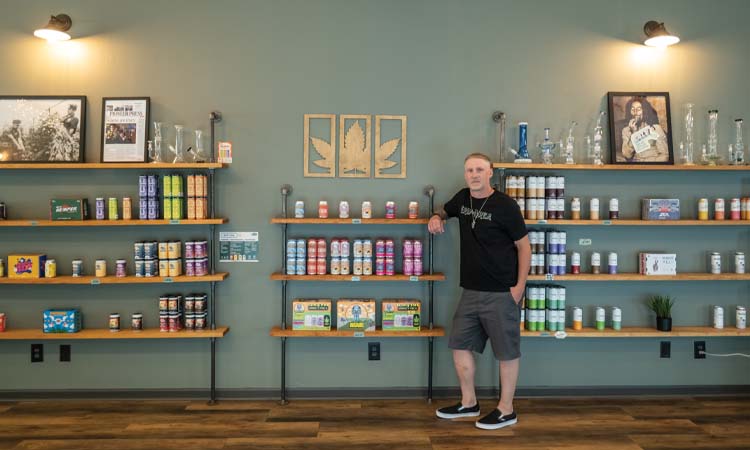
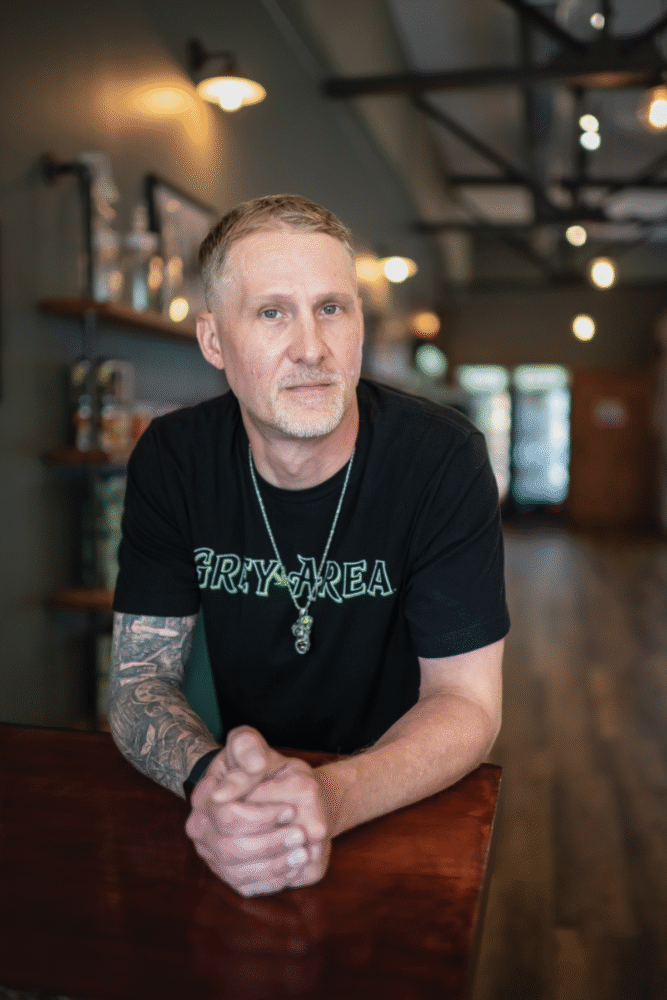
Bill Drexler sits in his dispensary in St. Paul on a quiet June morning, sunlight filtering through blacked-out windows (required by law), and wonders how much longer before he can start growing his own cannabis, which should help him break even. For more than two years, he has hustled and scraped by.
Minnesota legalized adult-use (recreational) cannabis in 2023, but the rollout has been slow. This summer, Minnesotans finally began to see cannabis growers reliably stocking dispensaries with some amount of flower—the smokeable stuff.
But Drexler remembers that, for a long time after opening, “we had people coming in every day, asking if we had flower yet.” That was anyone’s guess. “Trying to give them a timeline but not to say, ‘We’re going to have this, no problem’ … it’s hard on the mental health of employees, of everybody.”

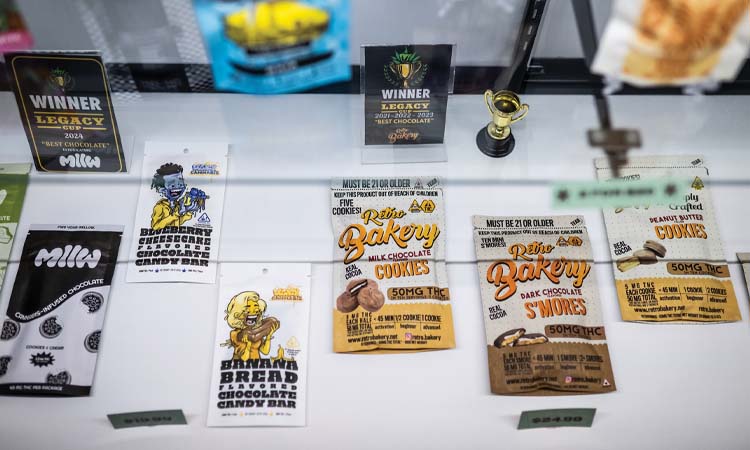
Hemp THC edibles and beverages, at least, had come to market thanks to a 2018 loophole in federal law. They’ve made up 95% of Drexler’s inventory.
That won’t last, however. Thanks to a “fix” in Congress last year, the loophole is set to close in November. A federal ban, outlawing practically all edibles and drinks containing THC derived from hemp (as opposed to adult-use cannabis, a legal distinction at the center of the loophole), will kill a thriving industry. That’s why the state’s robust ecosystem of hemp-derived THC businesses is in panic mode.
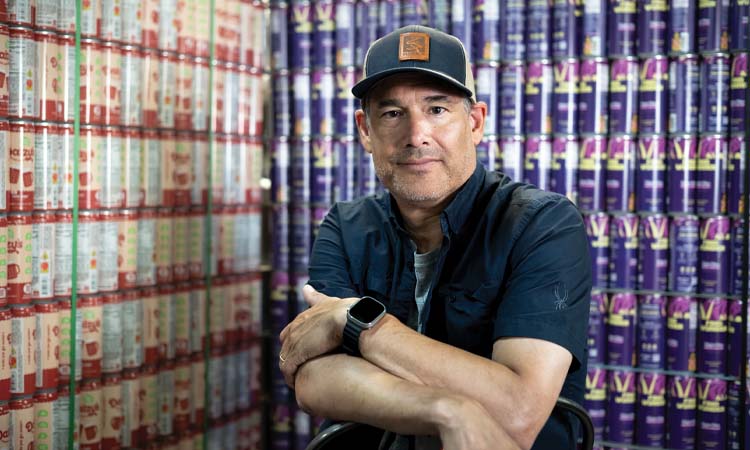
That ecosystem includes breweries. Across the metro, Omar Ansari sits in an office in a Brooklyn Center canning facility and considers how he might, once again, save the locally beloved Surly Brewing. He thought he had rescued Surly, an icon of Minnesota’s circa-2010s craft-beer boom: As people consumed less and less beer, he shifted production from 100% beer to about 60% hemp THC beverages. Production soared after that, largely of national brands. But Nov. 12, Surly will be back to square one. (See below: “The Hemp Mess.”)
“We’d have to pivot yet again,” Ansari says, sighing. “Sometimes you run out of things to pivot to.”
These are the stresses of an illegal market going legal. Minnesota became the 23rd state to legalize adult-use cannabis, and it’s been a quagmire of shifting regulations, brutally high operating costs, and institutional skepticism. Drexler feels like he’s “building a plane while it’s flying.”
***
Minnesota established its Office of Cannabis Management (OCM) in 2023 to interpret cannabis laws and set the rules. It is both cheerleader and enforcer. OCM executive director Eric Taubel says the goal is a market as lovably local as the fondly remembered craft-beer scene.
The Legislature was explicit about the mission: “promote a craft industry for cannabis flower and cannabis products.” The goal is reparative, too, in response to decades of misguided cannabis enforcement: “prioritize growth and recovery in communities that have experienced a disproportionate, negative impact from cannabis prohibition.” (Research shows cannabis-related arrests have disproportionately impacted people of color.)
As the state’s cannabis market takes shape, influential (and colorful) names have emerged on the “craft” side—the small entrepreneurs and growers. Among them is longtime Minnesota grower Catherine “Cat Seven” Franklin. She’s the last living co-founder of an LLC that originated and sold a Las Vegas-born strain famous enough (and stickily resinous enough) for namechecks from Jay-Z and Eminem. (Initially known as Gorilla Glue, the strain became Original Glue or GG4 after a lawsuit from the adhesives company.) This summer, when Franklin wasn’t advising new cannabis businesses, she was setting up her own cultivation site in Mankato.
About two and a half miles east of her is Clemon “Dr. Dabs” Dabney in Spring Grove. With a Ph.D. in cannabis molecular genetics and genomics from the University of Minnesota, he pens columns for the Star Tribune about the plant and its industry and was in the running to lead the OCM.
Based in the Twin Cities and Duluth, there’s also Josh Wilken-Simon, who fell in love with the cannabis community while selling artisan glass pipes at music festivals. He set his sights on opening a dispensary nearly 15 years before Minnesota legalized—and now he has (Legacy Cannabis), along with a Minneapolis growing facility managed by his brother. He’s also behind the state’s Legacy Cup, a 7-year-old cannabis festival and competition.
Among more than 60 licensed cultivation sites by early summer, they’re trying to fill in a weedy patchwork that Franklin says grows especially thick along Minnesota’s southern border and within a central “emerald triangle.”
Taking Root
Meanwhile, turf-war tension crackles between the state’s larger and smaller players. There’s envy among growers. By far the most common license distributed by the OCM is the “microbusiness.” This is craft size: up to 5,000 square feet of indoor cultivation or half an acre outdoors, with manufacturing and retail capabilities for modest vertical integration. (Minnesota’s climate means few outdoor harvests, so indoor growing is the stronger bet.)
Read more from this issue
For craft, Wilken-Simon calls 5,000 square feet “significant,” potentially producing 200 pounds of flower per month. (One insider places Minnesota’s pricing “sweet spot,” where businesses make money making consumers happy, close to $2,000 per pound.) From there, licenses scale up to a “mezzobusiness,” with up to 15,000 indoor square feet or an acre outdoors.
Then, the larger players: Minnesota started with two corporate growers (aka multistate operators, or MSOs). When the state legalized medical cannabis in 2014, it awarded them a duopoly over that sector. They are Green Thumb Industries (GTI), based in Chicago with 2025 revenue of $1.2 billion, and Vireo, based in Minneapolis with 2025 revenue of $268.8 million. They cultivate, manufacture, and sell statewide via eight retail locations each.
As of Jan. 1, GTI and Vireo will receive a new “macrobusiness” license for up to 38,000 square feet indoors. If demand calls for it, the OCM may raise that ceiling. The new law also merges medical and adult-use supply chains; cultivators like GTI and Vireo no longer must keep those separate, seed to flower.
The Legislature set up the macro tier this past spring. The goal is to ensure the big players don’t get too big. When the state-licensed market launched in September 2025, the MSOs had the much higher cap of 90,000 square feet. They could grow up to 60,000 for the medical market and up to 30,000 for adult-use—or, half the amount of medical supply sold the prior year. The two MSOs aren’t maxed out. Last fall, to determine their adult-use caps, the OCM measured 35,265 square feet of canopy at Vireo’s facility and 23,040 at GTI’s.
The OCM, trying to respond to these differently sized interests, has seemed to irk just about everyone eager to sell cannabis. Industry players point to a lengthy, bureaucratic licensing process. The office has always stayed within the license-approval window of 90 days, Taubel says, although some say even a month eats into precious growing time. Delays often happen because of local government obstacles, site incompliance, incomplete plans submitted, and difficulty finding capital, the OCM says. (By mid-July, Minnesota had 281 cannabis businesses licensed and 1,308 “preliminarily approved.”)
If most Minnesota dispensaries had access to flower by early summer, per Taubel, Franklin says that likely amounts to about two strains per shop, whereas dispensaries in other states sell 25-50. “That’s not a step forward,” she says.
Many question why the OCM didn’t activate cultivation licenses first, then move down the supply chain to retailers. Taubel points to New York’s cultivation-first rollout as a cautionary tale: Lawsuits barred dispensaries from opening, and supply seeped into the black market.
Minnesota’s supply chain has had its own bottlenecks. Between growers and retailers are labs, which test all cannabis and hemp products for safety from contaminants, and transporters. They have taken longer to join the fray. But the OCM says lab backlogs, reportedly of three to six weeks, have improved, with all three full-compliance labs meeting the 10-day turnaround requirement for nearly all products.
Overall, Taubel says the naysayers (and the frustrated customers) don’t get it: “The reality is three years is a pretty short period of time to have gone from zero employees, no location, zero written rules, [and] probably a total of 25,000 to 30,000 square feet of cannabis grown in the state—to the place where we sit today.”
The goal, he adds, “has never been to build a cannabis market the fastest. It’s always been to build an equitable and sustainable cannabis market, so that the business operators that enter today have a business in five years.”
Where’s the Good Stuff?
While complaining about the lack of flower available at Minnesota dispensaries, aficionados have pined for quality, too. “Ninety percent of everything that’s on the shelf right now has been irradiated,” Franklin says in June—as in, pelted with high-energy waves to kill certain microorganisms. She estimates based on what she observed on Metrc, the state’s seed-to-sale tracking system, plus the suggestion that operators do their own irradiation. Dabney says irradiation has become standard practice for many of the state’s larger cultivators. This way, they can send product to state labs assured it will pass testing. Often, this means “it was grown using poor technique,” he adds. (Research has not concluded irradiated cannabis poses unique health risks to those who smoke it.)
For more top-shelf weed, Minnesota may need to keep waiting. “Any time you turn on a cultivation facility, there’s going to be issues,” Wilken-Simon says. “You’re never going to grow the best-quality weed that you know you can grow until you get into the ebb and flow of everything.”
No Rush
Meanwhile, the age of the “green rush” is over. In states like California, which legalized adult-use cannabis in 2016, consumer frenzy and high prices led to oversupply, price compression, and bankruptcies, convincing some that legal cannabis is a great way to lose money. The OCM wants to avert that boom-bust pattern.
For now, though, the problem facing Drexler and others like him isn’t a boom; it’s cash flow. It’s finding capital, navigating tedious or expensive regulations (a few examples frazzling license holders: 24/7 security cameras; large batch requirements for lab testing; self-closing bathroom doors), reassuring wary landlords, networking with growers—and staying in the game long enough to start winning, even a little.
Native American tribes were the first to market. Dispensaries began opening on tribal land three years ago. As sovereign entities, they aren’t subject to OCM vetting. “Tribal government runs a lot faster than the state,” says cannabis attorney Carol Moss, with Edina-based Hellmuth & Johnson. “They were able to pass their regulations, get licenses, and get people up and growing on tribal land.” Since May 2025, Gov. Tim Walz has signed nine cannabis compacts, establishing coordination between state and tribal cannabis businesses.
The tribes’ speed worried some in the state-licensed market. “A lot of the state licensees thought the tribes were being handed this unfair opportunity and they would dominate the market,” says cannabis attorney Jason Tarasek, with Minneapolis-based Vicente. “I don’t know if that’s really coming to pass. Frankly, if it wasn’t for the availability of tribal cannabis right now, there really wouldn’t be anything on the shelves.”
The OCM had planned to give social-equity applicants (SEAs) a head start. Minnesota legally defines SEAs as individuals negatively affected by cannabis prohibition, as well as veterans and those living in neighborhoods or census tracts of high poverty or disproportionate enforcement based on arrest data.
Things didn’t go to plan. In late 2024, the OCM canceled a “preapproval lottery”; it would have allowed hundreds of SEAs to start early, but the OCM disqualified about two-thirds of the 1,000-plus applicants. Some sued. (Minnesota attorney general Keith Ellison also noted a prevalence of fraudulent “straw applicants.”) A judge paused the lottery, then the OCM scrapped it outright, saying the delay voided its benefits.
“We would have had people growing in 2024 if they hadn’t canceled the lottery,” Tarasek says. “By canceling that, OCM sort of stalled everything.”
Controversies continued when the OCM gave a head start to the two MSOs, GTI and Vireo, just as their agreements to supply the state’s medical market neared expiration.
“Most markets that launch adult-use cannabis have pretty big medical [cannabis] programs,” unlike Minnesota, Taubel says. “I think of Massachusetts, where they had a fully robust medical system, maybe even up to 100 retail stores.” That medical system could convert into adult-use sales, kick-starting the market with supply. As early entrants, they find the most success—“it’s not rocket science,” Taubel says.
Extending the medical-supply agreements, the OCM allowed the MSOs a provision to sell up to a third of existing medical inventory on the adult-use market. So they became the first non-tribal retailers with flower. Dabney’s column at the time: “Minnesota’s recreational weed rollout leaves small businesses behind.”
Room to Grow
A state’s “canopy,” or spread of cannabis, reaches maturity once that supply matches demand. In Minnesota, a mature canopy is estimated to cover 1.5 million to 2 million square feet. It’s hard to say how much canopy Minnesota has now, but most supply still comes from the tribes and MSOs. Industry folks do back-of-the-envelope math, with help from the OCM’s online harvest dashboard, to estimate coverage.
In May, the OCM cited less than 400,000 square feet in production, but an insider says that’s overly optimistic: It might accurately quantify licensed square footage but not active cultivation, which he estimates is between 200,000 and 300,000 square feet, or 10-20% of a mature canopy.
Of that, and apart from GTI and Vireo, only a few facilities are high-impact suppliers, the insider says. One is Unbound, growing 15,000 square feet in Grand Rapids and yielding up to three harvests per month, with the buildout of another 15,000 set for later this year. Another is run by the Mille Lacs Band of Ojibwe, estimated at 20,000 square feet. (A Mille Lacs representative could not verify by press time.)
Several insiders estimate Minnesota will reach maturity in two to three years. Tarasek says he expects “a level of equilibrium toward the end of this year, once all the outdoor grows are harvested and once all the big indoor grows get going.” What’s not clear yet, he says, is who will last. “You don’t really know who’s going to succeed and who’s going to fail.”
In a Haze
Drexler was up at 4:30 a.m. recently, his head full of tasks. He hadn’t realized his indoor growing facility would need sprinklers. That’s a $70,000-$150,000 expense. Luckily (and unlike many of his peers), he has an investor: a friend who came onboard in June with property in Anoka County that he is willing to renovate.
Drexler expects to be growing at the beginning of next year and to turn a harvest every two weeks. Really, he is the hope of Minnesota cannabis: an SEA, living in an area deemed disproportionately impacted by prohibition, he says (and, as a bonus, he’s had a cannabis possession charge). His dispensary on St. Paul’s Grand Avenue is named The Grey Area, after a favorite cannabis haven and café in Amsterdam.
He says he buys flower from a couple small growers and has been meeting others, but he hasn’t managed to buy wholesale from a tribe or MSO. It’s a seller’s market: By early July, the retail price for a pound of cannabis in Minnesota exceeded $6,500. In Michigan, by comparison, a pound was closer to $1,000, indicating price compression and market maturity.
Drexler acknowledges The Grey Area’s second meaning: “There were so many gray areas in everything coming out about how this business would function, what you could do.”
There may be no grayer area than an industry that is legal at the state level and illegal federally. This ambiguity has been limiting.
Access to capital may be the trickiest problem. Most banks are “over the top” about refusing to work with cannabis, says Jen Reise, a Minneapolis-based consultant to cannabis businesses. They’re federally liable for handling proceeds from cannabis sales, although she says eight banks in Minnesota welcome cannabis accounts. State-chartered and not multistate, they don’t deal with interstate commerce.
Meanwhile, “investors are just not interested in the Minnesota market,” Reise says. Financial rewards are unreliable. To start, cannabis is highly taxed; Minnesota raised its rate last year from 10% to 15%, which is about average nationally. The OCM also stipulates an SEA must own 65% of their business and cannot sell their license for three years, which has led many to describe the SEA license as more hindrance than help. The OCM this year began allowing investors to hold up to 33% of controlling ownership of up to four SEAs, up from 10%. This may spur investments. Dabney says he would lower the equity requirement to 51%, with equity owners maintaining voting control. He wants Minnesota to expand its cannabis loan program, too.
Many microbusinesses get by as self-funded outfits, Reise says. Before his investor, Drexler was among them, with financial help from his family plus sweat equity. “I had my family up here doing every single thing. We painted all our stuff, we switched the lights out.” He employs no full-timers, just friends now and then.
He knows license holders who have become desperate, who “have to get ‘hard money,’” or short-term asset-backed loans, “which is dangerous—high interest rates.” Predatory lending is common in an industry of newer business owners, Wilken-Simon notes.
On the upside, Wilken-Simon says that, for now, the “more dangerous,” ruthlessly profit-driven MSOs haven’t entered Minnesota. He notes GTI and Vireo sell to dispensaries and engage with community causes, like Meals on Wheels. (At times, he stocks a small amount of GTI flower.) He points to Michigan as an example of a state where MSOs are tanking prices and drowning small competitors.
Dabney isn’t convinced. “I don’t think Minnesota likes or wants corporate weed,” he says. “Minnesota has a strong tradition of small operators, from our farms to breweries.”
But few or no industries are as inherently daunting to those small operators. The federal government’s Controlled Substances Act of 1970 categorizes cannabis as a Schedule I drug, alongside heroin—defined as having a high risk of abuse and no medical application. Schedule I prohibits cannabis businesses from deducting operating costs on federal tax filings. No other businesses function this way, “not writing off labor, advertising, rent,” Wilken-Simon says.
The Trump administration is pushing to reschedule cannabis from Schedule I to Schedule III, which would open it to business deductions. Trump also has voiced support for legislation like the SAFE Banking Act, which would shield banks from liability when dealing with proceeds from state-legal markets like cannabis.
Even with the disadvantages, Drexler stays optimistic, “just trying to cross over into that profitable area,” he says—hopefully next year.
The Hemp Mess
Long before the Controlled Substances Act of 1970 outlawed all cannabis, hemp had been defined as a version of the plant used in industry—for seed oil, fiber, textiles. In 2018, the federal farm bill legalized it again for these purposes. But it happened to allow intoxicating products on the market, too.
How’d that happen? To start, hemp is distinct from adult-use cannabis because, once dried, it must not contain more than 0.3% of delta-9 tetrahydrocannabinol (THC). THC is the main psychoactive compound in cannabis, and delta-9 is its most common isomer. (Today’s cannabis strains, by the way, tend to pack 15-20% THC.)
But THC has another, less plentiful isomer that also produces a high: delta-8. In hemp, it’s possible to isolate CBD—THC’s non-intoxicating cousin—and convert it into delta-8, which can then go into edibles and beverages in unregulated amounts. Since the delta-8 came from hemp, this has been arguably legal. But many purveyors have been bad actors, putting out candy-like products with unknown psychoactive contents.
Minnesota set regulations early. In 2022, the state began devising a legal framework of testing, labeling, and regulating what it would call “lower-potency hemp edibles.” Sen. Tina Smith has hailed Minnesota as “one of the strongest and safest and most responsible hemp markets in the whole country.”
“We have normalized this plant more than anyone,” concurs longtime Minnesota grower Catherine Franklin. “We brought the drinks, the gummies into the coffee shops … and that allows the soccer mom to now be a connoisseur of cannabis.”
But the bad actors seemed to ruin things. Minnesota attorney general Keith Ellison signed a letter with 38 other attorneys general asking the federal government to close the “wrongly exploited” hemp loophole. Sen. Mitch McConnell inserted a “fix” into the spending bill that reopened the U.S. government after a historic 43-day shutdown in November 2025. Sen. Amy Klobuchar described McConnell’s move to close the loophole as a “last-minute, in-the-middle-of-the-night addition.”
Taking effect Nov. 12, the “fix” bans sales of hemp-derived products with more than 0.4 milligrams of THC per container—effectively all hemp THC products. The U.S. Hemp Roundtable advocacy group reported the ban will erase 95% of the United States’ $28.4 billion hemp industry and wipe out more than 300,000 jobs.
Minnesota reinforced hemp-industry protections in its latest legislative session, but the ban is likely to decimate hemp THC businesses anyway, as it outlaws interstate commerce. “There are not enough consumers in [Minnesota alone] to support these [hemp THC] businesses,” says Carol Moss, a cannabis attorney with Edina-based Hellmuth & Johnson.
Federal legislators have been pushing for a reversal. At press time, last-minute brinksmanship seemed likely. (After press time, the Senate passed a one-month delay of the hemp ban, which now must pass the House.)
Omar Ansari, owner of Minneapolis-based Surly Brewing and a craft-beer pioneer, is among the local alcoholic-beverage producers who began to also pump out hemp THC drinks as a way to shore up flagging sales amid shifting consumer tastes. Surly can’t switch to state-licensed cannabis production without jeopardizing its federal alcohol permit. Becoming licensed for a separate cannabis business, also, is an expensive proposition that, to Ansari, sounds unappealing.
Most consumers don’t know about the ban, Ansari says. “It will be a rude awakening in November. They’ll be like, ‘What? Why did the government do this?’” That’s why he believes hemp will become legal again, one way or another. Consumers have spoken, and they like to get high this way.
The Craft Difference
Many say federal legalization of adult-use cannabis is inevitable, possibly happening in the next decade. In theory, this could take out Minnesota’s industry. Out-of-state outdoor growers, operating cheaply compared to indoor growers, have market advantage in places with temperate climates like California. MSOs will benefit from economies of scale.
But here’s where craft might matter. Again, think of beer: “There’s a market for Coors Light and Bud Light,” Dabney says, “and there’s a market for Modist and people who are doing craft here in Minnesota—like, high-quality cannabis.” Observers note that niche is still in its infancy here. “We’ve yet to see the very, very craft side of things,” Wilken-Simon says.
For Drexler, craft will mean finally getting under the canopy lights, trying to grow the highest yields, being “a scientist that is in love with that plant.” It could mean making a small Amsterdam of St. Paul, with its own Grey Area. “Who wouldn’t want to work doing what they love?” he says. “The process of getting there has been”—he pauses, laughs—“something else.”