

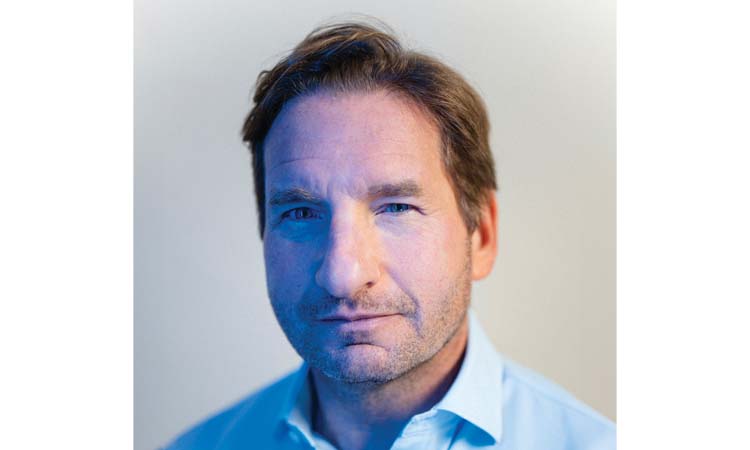
Dean Phillips: Reality Check
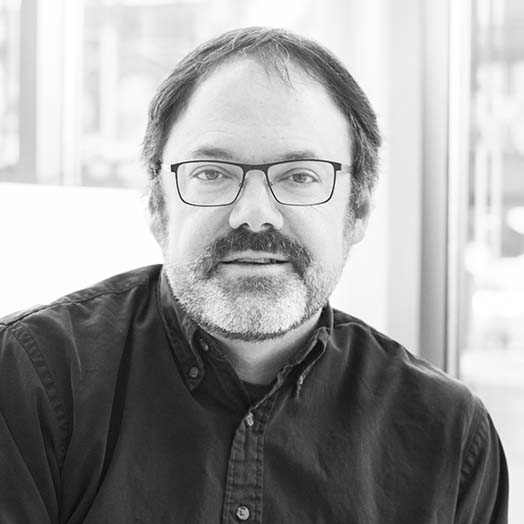
Dean Phillips was a rather obscure DFL congressman from the west ’burbs before he decided to take on Joe Biden. A scion of two different distilling families, Ed. Phillips & Sons and Johnson Bros., independent-minded politics was nonetheless a constant. (His great-grandfather Jay was Minnesota chairman of Democrats and Independents for Nixon in 1972.) Phillips Distilling brought Belvedere Vodka to the U.S. and established it as the first “super premium” vodka before selling it to luxury conglomerate LVMH. Phillips left distilling to enter the gelato business in 2011, helping to build the first premium national gelato brand, Talenti, which was sold to Unilever in 2015. In 2018 Phillips challenged incumbent Republican Erik Paulson for the 3rd District congressional seat, which had been in GOP hands for 60 years. He ran with the sole purpose of opposing President Donald Trump, but once in office he pivoted to three terms, characterized by bipartisanship and problem-solving, becoming a national spokesperson for a more functional Congress.
In 2024, Phillips became concerned that incumbent President Joe Biden’s cognitive decline had become so severe that he could not defeat Donald Trump. Rebuffed by party elders, he began to speak out, eventually challenging Biden for the nomination. He generated national attention, and the party turned on Phillips, who did not seek reelection. He has since become a spokesperson for governance reform in America and is actively pursuing ideas for challenging America’s two-party hegemony and what he labels its corrupt, corrosive influence on a functioning national government.
In late August, Phillips, 56, sat down with TCB at his Wayzata home to reflect on his political rise and fall and challenge the business community that he once called home to a more thoughtful role in restoring America’s political functionality.
TCB: Before you began speaking out about Biden’s electability, were the Dems happy to have a pro-business, pragmatic Democrat?
Dean Phillips: I was ascendant. I had been elected to House Democratic leadership. I was at the small table where the decisions were made with [Speaker/Minority Leader] Hakeem Jeffries, with whom I had a very close relationship. And my brand of politics at that time was celebrated—not by the left, but certainly by Democrats who recognize that to succeed and to get things done, you must work with others.
TCB: What got you in leadership, given that you were an outlier?
DP: I campaigned for my position. When I did my presentation in front of the caucus, I did a show. I had a bottle of Belvedere and a Talenti gelato and talked about how the only reason these brands dominate is because of packaging and messaging, and [Democrats] have to start looking at brand building as well. People bought into it, but I barely won.
And then I made the decision to throw it away. I remember the first night sitting on the House floor, looking at this room with all my new colleagues, and literally thinking, “How did I get here?” It was awe-inspiring. But I came to realize that my esteem for those leading this country was more significant than they deserved.
TCB: How long were you ruminating on that?
DP: I loved [Joe Biden]. I want to give this backstory because it’s important. I have a couple of photos of him in my house in Minneapolis with my daughters, Daniela and Pia. He spent 30 minutes with them on the couch, answering every question on note cards from their class at Blake.
But that man who was at my house 10 years ago compared to the man who I flew in Air Force One with and saw in front of our caucus … it was an astounding decline. Not senile and not Alzheimer’s and not unable to prosecute his job, but in rapid decline.
And we all were talking about it in Congress. That’s what really flipped things, when I saw the people at the leadership table say, “We know, but we have to keep quiet.” I was just astounded by a party that had so impugned our friends across the aisle for their support of Trump doing the exact same thing on our side, lying to Americans, but most importantly, facilitating the return of [Trump].
I resigned [from leadership] because it was incompatible for me to sit at that table. But if there’s a notion that somehow I saw the writing on the wall or my career was coming to an end anyway, no, I had every intention to run again. I wanted to be in a position to effect some change.
TCB: Did you expect to defeat Biden for the nomination?
DP: I absolutely expected to succeed in getting him to debate me and demonstrating to the country if he was able to serve another term, which I did not think he was. I did not expect to succeed in getting the nomination.
TCB: A lot of people outside of Minnesota still don’t know why you ran.
Read more from this issue
DP: Because MSNBC blackballed me the minute I announced my candidacy. [It is] populated with Biden and Obama administration alumni.
TCB: They saw your purpose as undermining the president and the party.
DP: When I would call prominent Democratic elected officials who could have won …
TCB: They wouldn’t take your calls.
DP: And if I had called them two weeks before, they would have picked up in one ring. I whispered in Gavin Newsom’s ear, “You should run,” and he smiled. My mission wasn’t to get [Biden] out of the race. It was to get others in. And then to get them on a debate stage to see what I was seeing.
TCB: Did you anticipate being blackballed within the party?
DP: Yeah, I did. I did not expect it from some of the Minnesota electeds who had been my friends, whom my family and I had supported for a long time. I will confess that surprised me.
But I was absolutely prepared for the consequences. Those consequences are well known, and the parties want them well known to prevent the sheep from getting out of the flock.
TCB: Because this whole idea of the party just being resigned to Biden’s candidacy and [an electoral] loss seems bizarre given how apocalyptically people spoke of another Trump presidency.
DP: You hit the nail on the head. Yet all the data that we looked at said [Biden] would lose.
TCB: Why the resignation to a losing cause?
DP: Self-interest is always the determining factor, unfortunately, in politics. And it’s a very rare person who’s willing to be courageous, because by definition that is self-sacrifice, and humans are not designed to do a lot of self-sacrifice.
TCB: When you talk about fear of losing a seat in Congress, I always wonder what is so enticing about a job where you must fundraise constantly and run for office every two years that makes people so unwilling to stand up for the national interest?
DP: People assign their identity to their profession, and politics is intoxicating. For many, it’s the first time they’ve been listened to. Many, maybe half, are earning more than they ever would in the private sector. It’s why they will compromise their own principles to return to a position that has some prominence but is as unsatisfying, I think, as any job in the United States of America.
TCB: Yet you were framed as the most self-interested person by the media and your colleagues.
DP: Yeah. And let the record show I invested almost $7 million into this thing; [it] took a massive toll on my life and relationships, my existence. It was laborious. And I’m not writing a book. I’m not making $100,000 speeches. I didn’t set up a PAC to take donations. There was not one element of benefit. Not one.
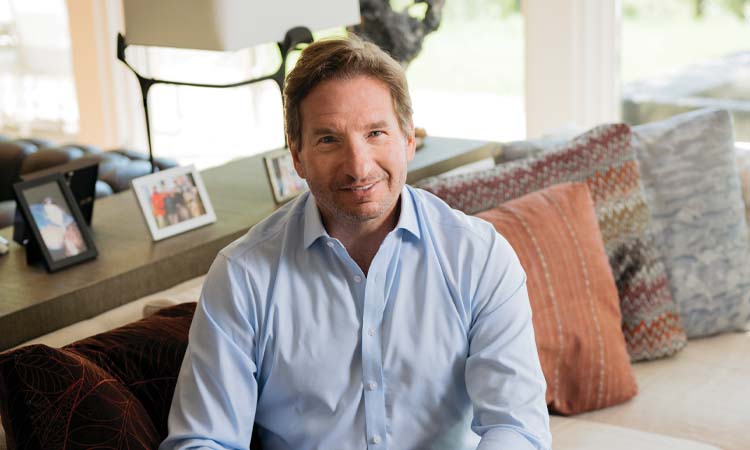
Sobering realizations
TCB: How did you decide to run initially?
DP: I made the decision almost immediately after the 2016 election. Like many, I had told my family to just give him a chance. That’s my nature. Judge his actions, not his words. But I woke up [after Election Day] and Pia was crying. And to see my young daughter, a child of privilege but who is also gay and had fought childhood cancer, so afraid really jarred me. Both my kids were deeply concerned, and I felt it, and I promised them I would do something. And soon thereafter that turned into the run for Congress. We needed to flip red seats to be part of the resistance.
TCB: But it seems like at a certain point you flipped from “Dean’s going to be part of the resistance” to “Dean’s going to blaze his own trail.” When did that mindset change?
DP: The minute I stepped foot in the Democratic Congressional Campaign Committee, which is kind of a rite of passage for candidates. I could tell right away—the political strategy, the organizational structures, the focus on nothing but numbers and dollars were my first big red flag about the system. The only thing they wanted to talk about and the only thing they seemed to be measuring was how much money you could raise.
I was naïve. I’d never lobbied. I’d never made political contributions with expectations. I’d never gone to ask for favors. So I didn’t know. And it appalled me.
I couldn’t imagine it was somehow cleaner on the other side. And that’s why I really kind of switched to more of a disruptive resistance. It wasn’t coat-tailing Donald Trump, but it was recognizing that Americans were begging for something different.
That was my business background—we disrupted categories. We were never the biggest, the best financed, or most prominent. Taking on the system was really the legacy I wanted to leave for my kids. And that’s why I switched to taking no PAC money and trying to elevate problem-solvers and cooperation and those things.
TCB: You’ve talked a lot over many years about the dysfunctionality of government, the inability to create change for people. Is it our system or the perversion of our system?
DP: I think the founders constructed a remarkable system that anticipated and allowed flexibility, recognizing that things would change. Considering how young these men were at the time, I think it’s quite remarkable how well conceived the system is. I don’t think our problem is the hardware, the system. I think the software, the people that are populating it, have a lot to do with the perverse rewards and incentives. If we had votes in the U.S. Congress that were secret ballots, we would actually get a lot done.
I discovered in the Problem Solvers Caucus that working with my Republican colleagues forced us to do what you’re supposed to do—discuss, debate, a little negotiation. But then when it came time to vote on these things, despite almost unanimity in terms of what we should do, people would [revert to] “What’s best for my reelection?”
“It’s why they will compromise their own principles to return to a position that has some prominence but is as unsatisfying, I think, as any job in the United States of America.”
—Dean Phillips
Fixing the system
TCB: What are your ideas for electoral reform?
DP: So my focus has become this “jungle primary” idea—put everybody on the ballot and then the top two finishers, no matter what party, go to the general election. The other is some type of term-limiting because, in the absence of it, your focus becomes almost exclusively sticking around. I’ve seen firsthand when people’s terms are coming to an end, myself included, you are more independent because you’re no longer beholden.
And those bookends—how you get into the system and how you leave the system—I think are the most low-hanging fruit to effect some significant change and force collaboration. Our founders did not anticipate or create mechanisms for these things.
Through most of American history, presidents ran like a mayor or governor. If we had a legitimate CEO in the White House, and his or her mandate was to operate better, I think we’d see some significant change.
TCB: But this isn’t happening.
DP: Well, I think competition is the final element, a meaningful, competitive third party. I shouldn’t even say a third party. The formation of a competitive party for the two big parties is not about winning the White House, having a majority in the House or Senate. It’s about winning maybe three seats in the House, maybe a Senate seat or two, so that those five people in the U.S .Congress become the most important swing votes in a long time.
And if by definition those five people are people of integrity and courage, that little cohort can make a massive difference. And now you extend that around city halls and in state houses—that absence of competition is to me the single biggest hurdle to the change.
[Create change] by listening to what people want. You have term limits to preclude candidates from raising money. If Americans would invest in this enterprise—$5, $10, $20, literally with an IPO of a new competitive party, maybe amplify that with the largesse of wealthy Americans. That corpus spins off cash every year to support candidates and allows them to actually listen, learn, and campaign, not spend 60%, 70% of their time raising money. Start building the old-fashioned way and build some credibility.
I can’t name names, but there are five or six members of the U.S. Congress right now that would make the shift to a competitive party that would support them.
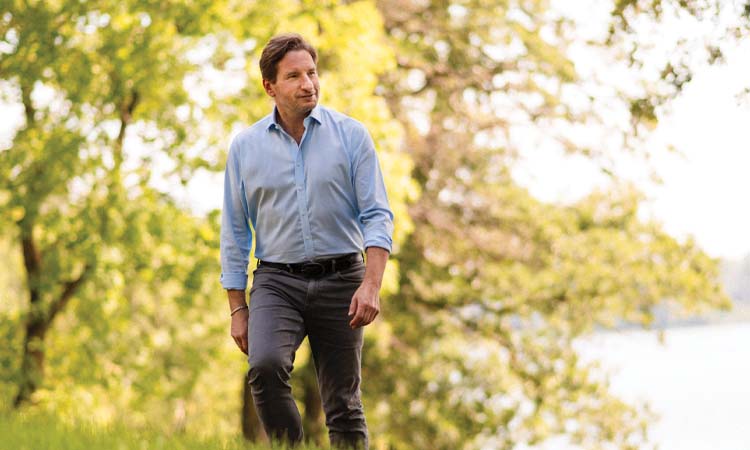
Why Dems are anti-business
TCB: We’ve talked a bit about how small business at the federal level is an afterthought, despite the historic success of the SBA. What is government’s role with small business?
DP: A small business is a lot of people putting their hearts and souls and savings into a dream. I think Minnesota in particular could recapture some of its historical reputation for innovation by promoting, encouraging, supporting, and allocating resources to the small business sector.
If a city cared about job creation and a prosperous small business ecosystem, it would offer an office of small business facilitation, where you’re assigned a caseworker to help you navigate the system.
I found it unbelievably complicated and frustrating to open a coffee shop [in Minneapolis]. Gov. Jared Polis in Colorado, an entrepreneur, he’s done a really quiet, good job [at empowering small business]. Minnesota used to kind of have that spirit, and I would like to see us recapture it. The left feels that if you get anybody affiliated with business into government, that somehow they’re there to take and to hurt.
TCB: You’re talking about the belief on the progressive side that business is inherently exploitive?
DP: Right. Those who feel that all of us in business are somehow devils. I push back hard, because absent a thriving business sector, there are no resources for all the things that the left wants. It’s a competitive market that Minnesota has just completely taken for granted. So my call to action is for people with business experience to become participants.
TCB: What is your take on what’s happened in the Democratic party? The ascendancy of leftist ideology?
DP: I think it’s not just ideology, it’s also age. When you’re young, it’s natural to be an idealist. By definition, wisdom is the recognition that that’s not possible. And if you look at these young mayoral candidates, they’re in their 30s. Most of the ones in the news haven’t done anything but organize urban politics. So I think they’re still in that phase.
By the way, most of America should wake up to the fact that what these young candidates are really saying is the same thing that a lot of Trump supporters are saying—the system is not working for us.
“If we had votes in the U.S. Congress that were secret ballots, we would actually get a lot done.”
—Dean Phillips
Business’s role
TCB: When you first ran for office, you spent a lot of time talking to small business people.
DP: I did a program called On the Job with Dean. You could sign me up to work an afternoon or morning shift at your business. So I worked at dry cleaners and florists and fast-food places and coffee shops and medtech firms. It was the most eye-opening experience of my life.
What would matter to the business owner was different than the employees. Employees, red and blue, rural, urban—their incomes just couldn’t support saving for the future. People were afraid. The lack of portability of health care, the cost of health care, making job and professional decisions only based on health care, not [based on] your strengths, your aspirations, your joys.
I also discovered most business owners want their employees to do well, but the business has to do well to be in a position to help. A national health insurance model was something that came up time and time again. Business owners love that idea. Yet the Republican Party objected to it so heavily.
Amongst owners, there was this increasing belief that our educational system isn’t producing the type of workforce they need. The savvy companies were already working with community colleges to create programs.
What I really discovered in Congress was that the people making regulations typically have not been in business.
TCB: They’re all lawyers or activists?
DP: Right. And you can’t expect lawmakers who’ve never had an experience in the private sector to make regulations and laws that are reasonable. It is a significant impediment, I think, to progress in the country.
TCB: In the before times, there was always this belief that the Republican Party was the party of business, from a values standpoint.
DP: Oh, it was absolutely real. And it was when I was new in Congress that pendulum started to shift. The Democratic Party has not adopted the business community, but the Republican Party has certainly distanced itself. And that’s because of Trumpism.
TCB: What about MAGA caused the Republican Party to cleave away from business?
DP: Populism. Donald Trump strikes me as a man who really empathized more with his base than people recognize. Because in New York City, despite his success, he was kind of ostracized from society. Clubs wouldn’t admit him. He never could tap into the old family network. He was always the outsider. I think he relates to a growing majority of Americans who feel outside. And that’s almost everyone. Most people feel somehow left out.
TCB: So what is business’s place today?
DP: If I have a message in this interview, it is that those who are concerned about the erosion of norms and the absence of legislative bodies doing their jobs and the future of the United States, it’s going to fall to the business community, business leaders, to inspire change because they command an extraordinary number of troops and have extraordinary platforms.
I think the real test of democracy isn’t whether we will continue to have elections. It will be whether or not those elections result in people populating our legislative bodies who can actually get stuff done. And the business community right now is standing on the sidelines.
TCB: Why?
DP: I think fear of retaliation. The same reason why no Democrat stood up to say publicly what they were all saying privately about [Joe Biden’s electability]. And I do think it’s time for the business community to stand up. We need pragmatic budgeting and national debt and trade and tax policy.
Business’s culpability
TCB: Through your experience, my eyes have been opened to the extent to which our system is so unresponsive to the needs of the nation that it almost is at cross-purposes to it. If business wants to start pushing back, what do you suggest?
DP: Well, there’s an irony to this because it’s actually the business community that in most of these cases has corrupted our campaign finance system, and it is that system that makes government unresponsive to people’s needs. You’re spending 90% of your time outside of the legislative environment raising money. Which means you’re not spending it with the very people who have the gravest issues.
I think the left does have an argument about Democrats that talk values but act in a way that is misaligned, and that’s because Democrats aren’t spending a whole lot of time with the very people that historically we represented. That’s why we’ve lost rural America. That’s why we’ve lost labor. You’ve got the Democratic Farmer Labor party, but two of the letters in the three-letter name don’t support the party anymore.
We have an obligation to ensure that the foundation for the least advantaged is high enough to provide a platform to succeed if there’s inspiration and aspiration, but also to prevent the very civil unrest and revolution that has consumed just about every democracy in world history.
I think it’s time for the business community to start recognizing that the very policies that have enriched American companies have also taken a lot from America’s middle class. I would ask that the business community starts playing a more active role in policies that raise the foundation, such as a national health insurance system, sharing more with employees, creating ESOPs. Convert a company and sell to your employees for more sharing, more bonuses, more equity. And that can be done absent any policy change.
I think another way that the business community can play a role in Minnesota’s future—considering our challenged education system and impediments to workforce development—is to get kids out of their schools and see businesses. Recruit kids in high schools for summer jobs. Don’t wait. To close the achievement gap, we have to close the exposure gap. There’s no better gift the business community can give to future generations of Americans than to expose them to possibilities. It might be a tour of a Target warehouse or going to Abbott Northwestern to see an operating room. It could be an ad agency, a law firm, a production studio.
And it would unite people on both sides of the aisle. Because I think we can all see that what’s going on with young people right now is tragic.
Phillips’ future
TCB: A year ago you said you were pondering, talking to people, ruminating about what might be possible. Are you any closer to having any sense of what is necessary or the path to breaking the two parties’ hegemony?
DP: I mean, at the end of the day, voters are consumers, and they choose the product that most aligns with their interests or needs or is most appealing. I encourage people of substance and capacity and capability to run. If you really look objectively at those running for office now, there’s been a massive erosion in competency. It’s just the truth. On both sides.
TCB: What’s your place in all this?
DP: I don’t anticipate being a candidate again; I would much rather be part of the inspiration and the strategy [for breaking two-party control]. How do you create competition? That’s what I want to focus on.
I think there will be some formulation of that effort, probably after the midterms. Those who are going to try to protect the two-party system will immediately attack anybody of prominence as being self-serving. And if Elon Musk becomes the face of it, that almost by definition undermines the whole effort.
Jeff Ettinger from Hormel, a very thoughtful, able guy, checked a lot of the boxes but didn’t have the right letter after his name, but that doesn’t change the rationale for running. I would encourage more left-leaning executives to consider it, because if you care about the party and you think it’s moving too far to the left, well then, run.
You don’t have to necessarily win. I think we focus too much on winning. You have loss leaders, whether it’s in a store, whether it’s a product, right? It’s all for greater good.
Systemic change is going to be harder. I do think we should look at best practices around the world, but at the end of the day, you can throw out the hardware or change it, but in this system, it’s awfully hard. It’s a lot easier to upgrade your software. That’s people.
I hope [Minneapolis] Mayor Frey wins again. I’d like to see a change in the governor’s office, and whoever it is, Democrat or Republican, I hope they prioritize recruitment of capital and enterprise, construction. I don’t see that happening right now.
Those are the lowest-hanging fruit, because I think changing the system is just way too hard right now.
This interview has been edited for clarity and length.