

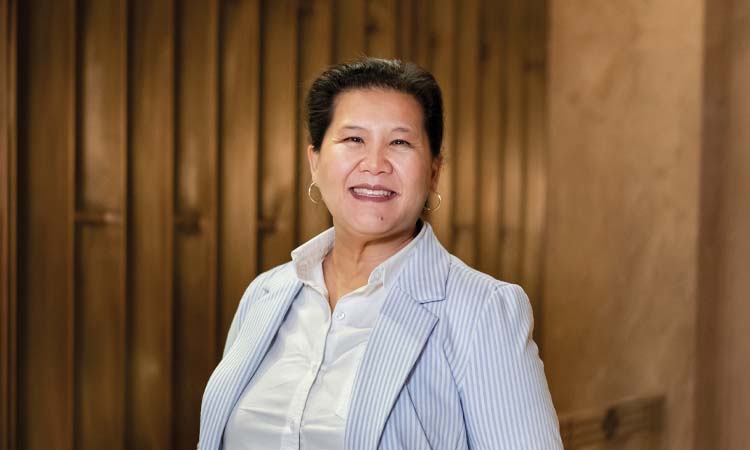
Kaohly Her Declares St. Paul Is Open for Business
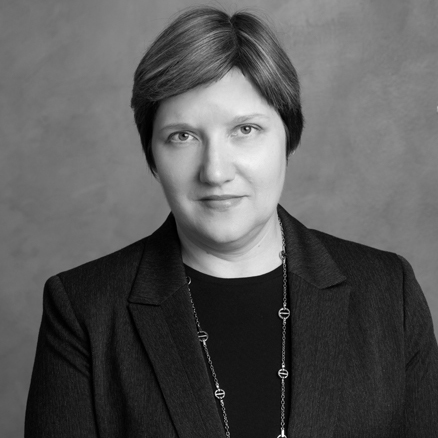
Kaohly Her didn’t mince words when she entered the St. Paul mayor’s race just three months before the Nov. 4 election. In capital letters, she crystallized her campaign message on her website: “OUR CITY IS AT A STANDSTILL; IT’S TIME TO MOVE FORWARD.”
A seven-year member of the Minnesota House, she challenged incumbent Mayor Melvin Carter because she saw the city struggling mightily. Covid-19 had sucked the lifeblood out of downtown as many city and state government employees chose to work from home, a concentration of people with addiction problems congregated on downtown streets, and areas with near-empty blocks made some people feel unsafe walking through downtown.
St. Paul homeowners were fed up with high property taxes, values on downtown office buildings had plummeted, a rent control measure had stymied apartment construction, and businesses were frustrated by long waits for regulatory approval from city departments.
Her, a DFLer who had worked as Carter’s policy director in his first term, knew that his good intentions—such as favoring a 2021 ballot measure to limit rent increases—had nonetheless sapped the city of its economic vitality. Despite her late entry in the race, people took notice. Kathy Gosiger, general manager of Tom Reid’s Hockey City Pub, says she thought Her was the only challenger who could give Carter a “run for his money.”
“The focus was not on bringing money into the city” under Carter’s administration, Gosiger says. “The focus was more on low-income housing, bike lanes, and homelessness, which are really important things. But if you’re not bringing the money into the city [through more businesses and economic activity], how can you afford to pay for all these things?”
Mark Henneman, former CEO and chair of the Mairs & Power investment advisory firm, was among the businesspeople who welcomed Her’s candidacy. He invited Her to the Mairs & Power office in downtown St. Paul to talk with him and employees who live in St. Paul. “I just watched her win the room with some of the most skeptical people I know,” he says.
Henneman, who had been urged by a friend to consider Her’s candidacy, ranked Her first in the election’s ranked-choice voting. “I was looking for somebody who puts in the work and really evaluates what in her mind is best for the city,” he says. “She’s going to give this everything she’s got.”
Her holds an undergraduate degree in finance from the University of Wisconsin-Madison and an MBA from Northeastern University in Boston. Her experience in the for-profit sector includes working for Securian Financial and American Express. “She’s had a really good career in the investment business, which definitely appeals to me,” Henneman says.
He remains an investment manager at Mairs & Power, and he’ll be working closely with the new mayor. In January, the two became co-chairs of the Saint Paul Downtown Alliance.
A business-friendly St. Paul
Even before Her was sworn into office Jan. 2 at St. Catherine University, she spent considerable time meeting with businesspeople after her election victory.
“We need a whole culture change at our city,” Her says. From department heads to rank-and-file city employees, she expects everybody to be responsive to residents, businesses, and others who can contribute economically to the city. “It’s the assurance of when you call, we will answer our phone and get you what it is that you need.”
She cites how she intervened on behalf of a business when she was still the mayor-elect. “I had a developer who was working on a piece of property that’s been sitting for a long time and not being developed,” Her says. “He was calling one of our departments for months and got no responses.”
Her called the department director and said, “Let me know if you’re going to have a conversation with this person and how the conversation goes.”
“Sure enough, the developer got a call that afternoon,” she says. “We’re going to make sure we all know that we’re keeping an eye on everything with each other.”
She’s heard from a variety of businesspeople about the difficulty of doing business in the city. “It’s just being able to navigate our systems to get licenses and permits,” Her says.
B Kyle, president and CEO of the St. Paul Area Chamber, says she’s glad to see Her focusing on practical solutions that help businesses operate.
Read more from this issue
“Mayor Her will have an early opportunity to show that St. Paul is open for business as the City Council revisits the proposed drive-through ban and considers reforms to outdated signage rules,” Kyle says. The chamber opposes a drive-through ban, arguing that bans hurt businesses and consumers by taking away a safe, convenient, and efficient way to make purchases.
Kyle met with Her before and after the election, and Her met with business leaders in a session organized by the chamber. “I’ve emphasized that St. Paul’s success depends on policies that drive economic growth, support downtown revitalization, and sustain a stable business climate,” Kyle says.
Her has been hearing consistent messages from the business community, regardless of business size.
“We were with a group of small businesses on the East Side, who were also talking about the huge increases in property taxes,” Her says. “Everybody is feeling that pinch, which means we really have to grow this base as quickly as we can” to spread the costs of government across an expanding private sector and increasing residential population.
“With Mayor Her having been a legislator herself, she understands more clearly how to maneuver.”
—Craig Leipold, owner, Minnesota Wild
Political stability = more investment
Beyond improving city responsiveness and controlling property taxes, Her says businesses want stability in city policies. “Political instability makes it difficult to invest large sums of money into starting a business here,” she says. Her emphasizes that the business community dislikes 4-3 votes of the City Council, because it suggests that a key policy could easily change when one member leaves the body.
In recent years, the St. Paul City Council has had many such votes, including on a local sales tax, zoning, and rent control.
St. Paul voters approved a ballot measure in 2021 that capped annual rent increases at 3%. Rental housing construction dropped rapidly following that vote. In response, the City Council voted 4-3 last May to permanently exempt properties constructed after 2004.
Several years ago, Her says, it was more common for the City Council to take on a major issue, work through it in detail, debate it, reach a conclusion, and cast seven affirmative votes for the policy. For the good of the city, she says, council members would take the approach of “we’re all getting behind this decision.”
In the 2000 to 2020 period, when there were multiple veteran council members, votes often were 7-0 or 6-1. Chris Coleman, a three-term mayor beginning in 2006, collaborated with the council to help achieve policies with strong council backing.
Her wants to work with the council to produce definitive policy decisions that reassure existing and prospective businesses. “It has been challenging for people to want to build, develop, and invest in our city,” Her says. She pledges to do what’s needed for businesses to “feel comfortable in establishing themselves here and that they will get the services they need to keep their businesses open.”
McGuire in the Midway
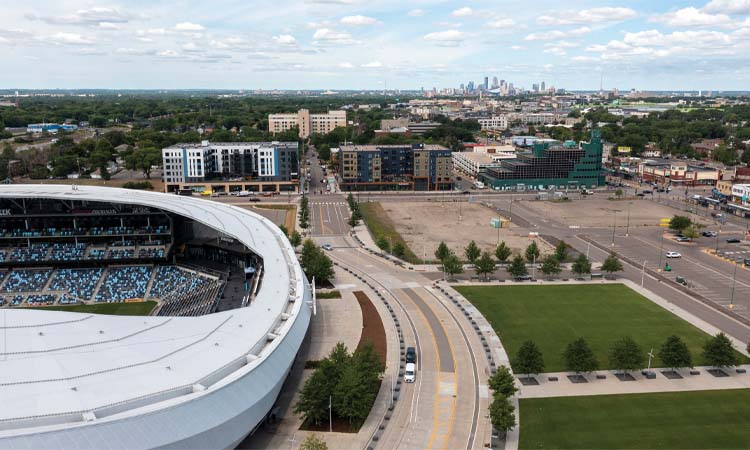
After being rebuffed by Minneapolis, Dr. Bill McGuire built Allianz Field without public funding for his Minnesota United FC soccer team, which began play in 2019 in the St. Paul stadium at Snelling Avenue and I-94.
Now McGuire, former CEO of UnitedHealth Group, is proceeding with construction of four buildings that are taking shape near the intersection of Snelling and University avenues.
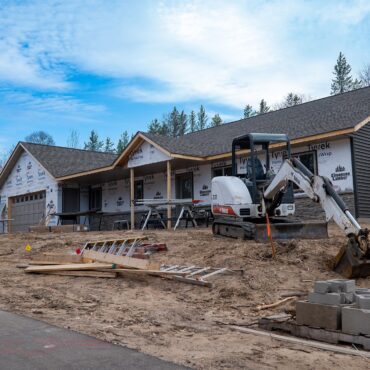
McGuire’s new LLC, Snelling-Midway Redevelopment (SMR), is building two restaurants that will open by June. SMR is also constructing a four-level office building that will be completed by late summer. A 158-unit boutique hotel will be ready for visitors by early 2027.
“When we talked to the community, these are things that they think would be very beneficial,” McGuire says, referring to the residents, businesses, and nonprofits in the neighborhood.
Community leaders and residents have had high hopes that McGuire would lead a wave of development in the Midway area. However, the Covid-19 pandemic and property damage that occurred along University Avenue in the wake of George Floyd’s death delayed the economic transformation.
McGuire says he’s among many businesspeople who’ve been frustrated by the slow pace of city permitting. “As a result, costs go up,” he says. “Timelines are stretched.”
McGuire has long talked about plans for a Midway development called United Village. “Why aren’t you doing something?” McGuire says people would ask him. “All I can say is we have not been [the source of the] delay.”
McGuire didn’t specify the city roadblocks that have slowed his progress with Midway construction. But he’s shared some of those impediments with Her.
He’s encouraged that the new mayor is insisting on regulatory processes that help streamline compliance requirements for developers.
“I think she has stepped up, identified significant issues for the city to address, and things that can dramatically improve the city in terms of its growth and development,” McGuire says.
Her notes she’s had multiple conversations with McGuire, and she and her staff have been working through some of the issues he raised. “It matters to me that he knows that we are paying attention and we’re here to help facilitate the process,” she says.
“I appreciate Dr. McGuire’s willingness to be a partner and his vision for the area,” Her says. Both McGuire and the mayor stressed the importance of the redevelopment attracting visitors to the Midway area and serving the people who live there. She says that the Snelling-University area is one of the most diverse in the city, so her goal is to “have progress and move forward with investments without losing the identity of the people who created that area.”
Her has been talking to council members Molly Coleman and Anika Bowie about how to revitalize the University Avenue corridor that runs from Snelling, in Coleman’s ward, east to Dale Street, in Bowie’s ward. The first step, she says, is getting a clear picture from the businesses and nonprofits already in the corridor about what they’d like to see developed.
Commercial development along that corridor was discussed during intensive planning for Metro Transit’s Green Line, which opened in 2014. While some housing developments have been built along the Green Line, it’s been a challenging location for many companies. In recent years, numerous businesses haven’t survived, including big-box retailers, a major grocery store, and a CVS drugstore. Now the discussion is focused on what is needed in 2026 and beyond.
Immigrant roots, problem solver
Her, 52, is the first woman and first Asian American to serve as mayor of St. Paul. Born in Laos, she lived in a bamboo hut with her Hmong family members until they came to the United States when she was 3 years old. The second-oldest of six children, Her’s family initially lived in Illinois for a few years and then followed relatives to Wisconsin, where Her lived from second grade through earning her bachelor’s degree in Madison.
“I’m a Democrat through and through,” Her says. “I am a product of social programs and safety net programs. We relied on food shelves. There was a time when my family, my father, had to be on public assistance.”
Those public and nonprofit programs allowed Her and her family to subsist before becoming financially independent. In Her’s case, getting a good education allowed her to succeed in the private sector.
Her stresses that government safety nets only “can exist if we have a healthy system in which businesses are thriving and people have good jobs.” If the private sector falters, she says, it’s difficult to attract new businesses and there isn’t enough revenue from income and property taxes to support social programs.
“We can’t pit people and businesses against each other, because we need each other,” Her says.
She moved to Minnesota in 1995 to work for Minnesota Life, now Securian Financial. Her longest tenure was with American Express, where she worked nearly 11 years. Among her responsibilities were managing an investment portfolio of $240 million and 100 major client accounts.
Her’s American Express job took her out of Minnesota, but she came back to the state in 2006. She then worked in a series of nonprofit and public sector jobs and was Mayor Carter’s policy director from 2018 through 2021, which overlapped with her legislative service.
Her was elected in 2018 to represent Minnesota House District 64A, which includes parts of the Merriam Park and Summit Hill neighborhoods. She rose quickly within House DFL leadership, serving as the majority whip in the 2021 and 2022 sessions. She resigned her seat in January after being elected mayor.
Her is married to Kong Her, a private sector investment management executive. They have two children.
West Seventh challenges
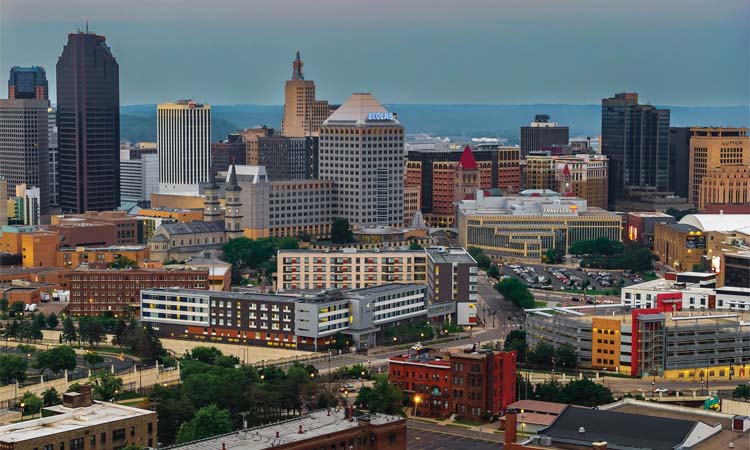
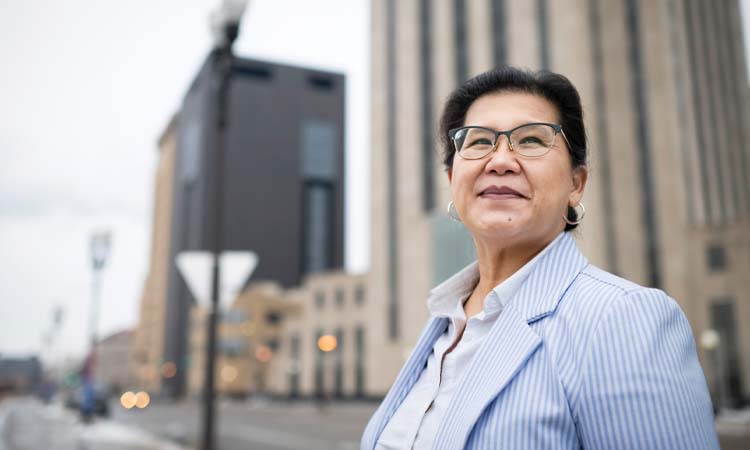
A major focus for the new mayor will be revitalizing downtown. Restaurants and bars along West Seventh Street in St. Paul have had to withstand extra hardships in recent years.
During the early months of the Covid-19 pandemic, hospitality businesses were hit hard. “It was very, very difficult, but we survived,” says Gosiger, of Tom Reid’s Hockey City Pub. “Shortly after, they placed a [nonprofit] homeless shelter on the corner,” she says, without the city informing the businesses they planned to approve it.
“We had break-ins, extreme vandalism; we had people making threats,” Gosiger says. “We had guns and knives, and it was a very difficult time. It was also really hard to watch the people who are most vulnerable being preyed upon.” Drug dealers were a regular presence in the neighborhood.
In late 2021, Tom Reid’s and six other plaintiffs sued Freedom House and the city of St. Paul in Ramsey County District Court. At the time, the St. Paul Pioneer Press reported that the 28-page lawsuit alleged “violations of the city’s zoning regulations and the mayor’s emergency powers, as well as two claims of negligence and a claim of nuisance.”
“The city would no longer listen to us or respond to anything that we said to them,” Gosiger says, which forced the local businesses to file litigation. Ultimately, the homeless drop-in day center was relocated.
Last year, the West Seventh businesses had to deal with a large sinkhole on the street, which made it more difficult for patrons to reach the businesses. The collapse of a sewer tunnel in May caused the sinkhole, and repairs weren’t completed until September.
Gosiger says Mayor Carter’s office didn’t return calls about the sinkhole, so her only means of learning about the progress of repairs was talking to the project engineer when she was on-site.
Gosiger is optimistic about a new era with Mayor Her. “I think she will be good for downtown St. Paul,” she says. “Right now, it’s a tired city. It’s very unkempt. There’s a lot of boarded-up buildings and graffiti.” But she says now is the time to make changes. “I hope that her focus is to clean this place up and make it shine like it used to years ago and make it a place that people want to come to for events and feel safe.”
“We can’t pit people and businesses against each other, because we need each other.”
—Kaohly Her, Mayor, St. Paul
Renovating the Arena
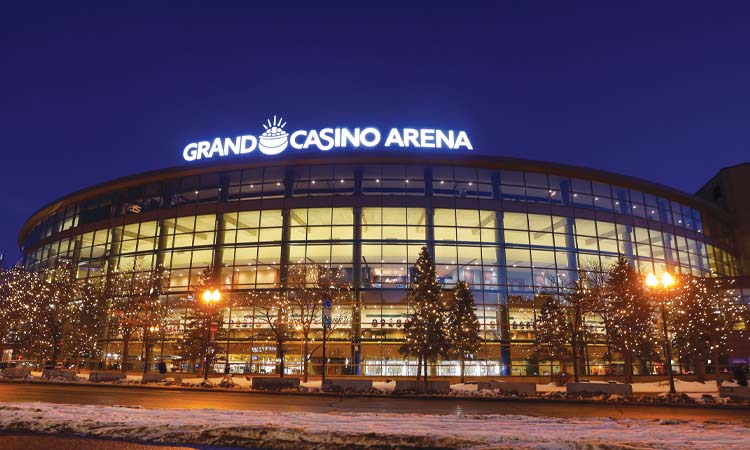
In March 2025, Mayor Carter and Minnesota Wild owner Craig Leipold appeared before legislative committees seeking $395 million in state funding to help pay for upgrades to the Grand Casino Arena, Roy Wilkins Auditorium, and the Saint Paul RiverCentre.
The city owns all three buildings. The total project cost was nearly $770 million, and the 2025 effort to secure state funds came up empty.
Leipold is undeterred. In December, Leipold and Wild CEO Matt Majka provided Her with a detailed presentation on costs of renovations, the financial impact of improved and expanded facilities, and what they’ve learned from research on other U.S. venues.
The new mayor recognizes the importance of the project as well as the challenge of funding it. “I’m exploring every possible way that we can finance projects for our city-owned assets,” Her says. “I am very much aware that my residents cannot take on any more tax burden.”
Her is looking at bonding through the state and/or city as well as creative options such as enlisting private partners and the St. Paul Port Authority. “I never want to go to somebody and ask them for something if I can’t show them all the things we explored and why they wouldn’t work,” she says. “It’s important to do that due diligence and the homework.”
The Minnesota Legislature convenes Feb. 17. Lawmakers are likely to assemble a bonding bill, which requires a 60% supermajority to pass. The DFL holds a one-seat majority in the Senate, while the House is evenly split between DFLers and Republicans.
Leipold is optimistic that Her and the Wild will come up with a multi-funder financing package that will attract political support. It would allow the Wild to upgrade a hockey arena that’s about 25 years old.
Leipold cites a key Her asset that Mayor Carter lacked. “With Mayor Her having been a legislator herself, she understands more clearly how to maneuver,” he says. “Her relationships, particularly with the St. Paul legislators, are fantastic.”
The Wild owner also says he appreciates that Her asked numerous questions and weighed different scenarios.
“Everybody talks about the mayor as someone who is a financial person, a numbers person,” Leipold says. “They’re absolutely correct. All during the discussion and the presentation that we were making, she constantly had her calculator out, she was running the numbers.”
New life for downtown
Henneman, of Mairs & Power, has worked in downtown St. Paul since 2004, and he and his wife, Terri, bought a condominium and moved to the west side of downtown in 2024.
In his co-chair role with the Downtown Alliance, he anticipates progress in finding new uses for empty or underutilized buildings. The Saint Paul Downtown Development Corp., which was created by the Downtown Alliance, has been buying up properties. In some cases, the development corporation can start renovating the buildings. In other instances it will partner with developers, Henneman says. He envisions commercial and housing uses for the redevelopments.
Corporations and foundations have been contributing to a downtown development fund. “The main thing we’re really focused on with those dollars is to create a healthy corridor that connects what we view as the two healthy parts of downtown—the Rice Park area on the west and the Mears Park area on the east,” Henneman says. “We’ve got a pretty troubled central district.”
Kyle of the St. Paul Area Chamber says momentum has been building among community leaders about ways to revitalize downtown. To strengthen that effort, Kyle says she hopes Her will capitalize on her legislative experience to champion the CUB tax credit proposal. The CUB (Catalyzing Underutilized Buildings) financial incentive could stimulate redevelopment of some downtown buildings. Under the bill, the tax credit is equivalent to 30% of qualified conversion costs.
“We have to reimagine a downtown in the way people want to live in the next generation,” Her says.
The mayor’s vision entails “drawing people from the entire age spectrum to live here, work here, consume here, and enjoy the amenities that we have here,” she says. Key players—the Downtown Alliance, the chamber, arts and sports organizations, CEOs, and foundations—already are working on strategies, she says.
The real strength of the mayor’s office, Her says, is to “convene everyone to create a cohesive vision for how this downtown is going to work together.”
Her brand of leadership
“I’ve always been a people leader,” Her says. “I’ve been very good at managing people and developing them.” As a lawmaker, she was in command of many details of pending legislation. As majority whip, she also needed to count votes to ensure the House DFL caucus could pass bills.
As she moves from a legislative role to an executive one as mayor, Her says she’s still thinking through how best to use her time, interact with department heads and the City Council, and communicate most effectively with residents, businesses, and key stakeholders.
She’s also conscious of her historic mayoral status. “Everyone’s excited about me being the first woman and the first Asian person,” Her says. “I don’t have anybody like me who could tell me, ‘This is what it’s like to experience this.’ It’s a unique challenge to be charting that course all by yourself.”
She wants to ensure she creates an environment that allows her staff to do its best work.
She’s at ease discussing budgets, procedures, and deferred maintenance, but she says she makes time to “have the compassion and ability to relate to other people.”
“I know what it is that I need to do to get the city turned around,” Her says. But she’ll also be careful “to not lose who I am in this process.”
Her says she’s found a good role model in Ecolab CEO Christophe Beck. Beck leads a global public company from downtown St. Paul, and Her thinks his leadership approach holds lessons for her. “He’s such an amazing person—brilliant, kind, and gentle,” Her says. “He really showed me what I need to aspire to be like. I’m quite an intense person. He showed me how you can run a great organization, do good, be a part of initiatives that matter, and still run a [high-performing] business.”