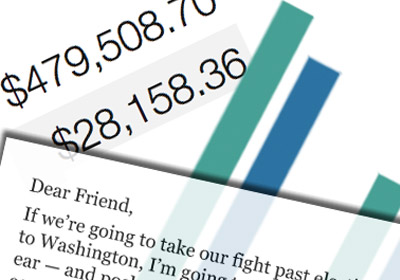
Here are some key numbers from the campaign finance reports filed with the Federal Election Commission on Tuesday.
Politics + Public Policy
The two Twin Cities mayors (and their aides) will spend much time the rest
The Center of the American Experiment, a conservative group, says lawmakers should focus transit spending on improving roads and bridges.
A Met Council leader touted the proposed deal as a “win-win,” while Minneapolis Mayor Betsy Hodges characterized it more as a sacrifice that the city would make for the greater good of improving Twin Cities transit.
While the Twin Cities’ corporate tax structure is lower than those in many major cities throughout the world, it’s higher than those in major metros in places like Canada, Mexico, and the Netherlands.
All but one of the GOP candidates made loans to their campaigns.
The Minnesota Chamber of Commerce published a report that outlines its stance on bills and how lawmakers voted on them throughout the 2014 session.
The state Republican Party has been conducting a frank reappraisal of its priorities, outreach, and messages since the 2012 election when the GOP lost control of the legislature.
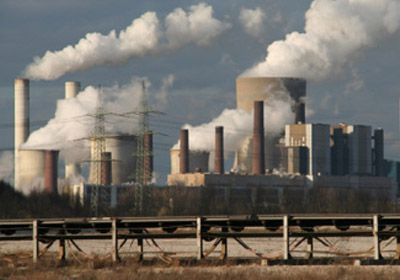
To reach that goal the Environmental Protection Agency is setting customized targets for each state.
Looking at how much the average Minnesotan will notice the results of the unsession.
Brenton Hayden and Ryan Marvin, co-owners of Minnetonka-based Renters Warehouse, are working on GOP Senator Dave Thompson's gubernatorial campaign.
The city is banning Styrofoam takeout containers—but why haven’t restaurants already made the switch to greener alternatives?
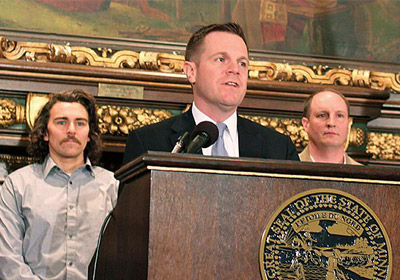
Representative Morrie Lanning: “It’s not just the Super Bowl. It’s a $400 million project being built around the new stadium. I don’t know how anybody can now feel that this was a bad deal.’’
Approximately 29.4 million travelers visited the Twin Cities in 2013, representing a 5.4 percent increase over 2012, according to a study commissioned by Meet Minneapolis.
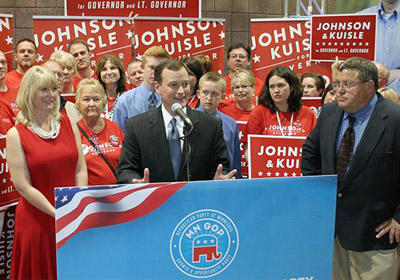
Two new television ads on behalf of two Republican candidates for governor will be on the air shortly.
The funding will now be used on two big freeway projects, one in the metro and one in southern Minnesota.
Midwestern power companies had blocked a regulation that would reportedly cost them hundreds of millions of dollars a year—but the U.S. Supreme Court has now sided with regulators, reviving the rule.
House Capital Investment Chairwoman Alice Hausman has introduced a $125 million proposal that pays cash for a handful of construction projects out of the state’s $1.2 billion surplus.