Target and three other national retailers became the latest at the center of debate over more regulation in a $32 billion industry.

Law
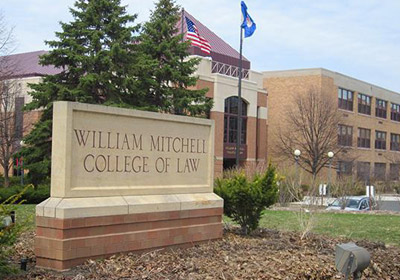
The merger of Hamline's law school and William Mitchell College of Law makes sense for a lot of reasons. But it’s also clear that they didn't have much of a choice.
Mithun, Spong, Maslon simplify monikers.
A new Minnesota law allows companies to incorporate with a mission to help society.
There is some common ground between House and Senate leaders on rural Minnesota, but sharp differences on taxes and education
The legendary trial lawyer is leaving the firm he spent 44 years building. Why?
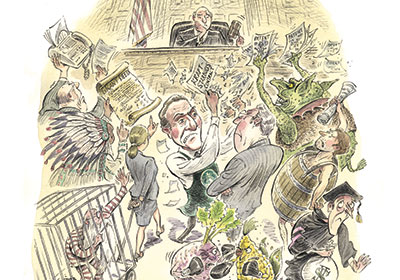
Twelve months' worth of the most notorious local ventures into the legal system.
Timothy Owens is accused of lying to the Federal Reserve Board and for obstruction.
Lake Minnetonka couple was charged with receiving more than $167,000 in fraudulent benefits.
Similar streaks of incidents prompted bars and restaurants to close and scared others from opening new businesses near perceived crime hot spots.
One year after investigating shareholder complaints, a new round of allegations could come amid further disappointing results.
It says Bombardier Recreational Products and BPR U.S. Inc., used technology it patented in 2000.
An investigation revealed that Michael Whitelaw skirted more than $100,000 in sales taxes at his Asian fusion eatery.
Let’s accept this: Back in ancient Greece, there was a guy in a toga
An appeals court upheld an earlier decision to dismiss the claims that an investment fund liquidator brought against U.S. Bank.
During a construction project that was never completed, Philip and Virginia Carlson allegedly funneled money through a company that wasn’t doing work on the project, while failing to pay the companies that were.
Stephen Foley, who cofounded Foley & Mansfield in 1989, helped build the firm into a national operation with 10 offices across the country.
The potential combination of Lindquist & Vennum and Oppenheimer Wolff & Donnelly would create one of the largest law firms in town—but is big necessarily better?