

For the Love of Squash: Securian’s CEO Opens a Racquet Club
Securian CEO Chris Hilger smiles a lot. He projects the sort of calm assuredness required from a leader of a large enterprise. And like anyone carrying the weight of a $7 billion operation with thousands of clients and customers, he needs an outlet to let loose—to shake off the stresses of the work day. For Hilger, that’s smashing a small rubber ball against four walls with a racket at least a couple of times a week.
Since moving to St. Paul for Securian in 2010, squash has not only become Hilger’s favorite workout; it’s his community. He discovered the Commodore Squash Club, where for years he played with a tight-knit group of individuals who are fiercely competitive on the court; but collegial off the court, and apt to linger over drinks and conversation. “It’s just an incredible group of people,” Hilger said. They came to the sport from different paths—teachers, office managers, marketers, entrepreneurs—and bonded over the relative obscurity of their shared passion here in the Midwest. So when the owner of the Commodore put the building up for sale, this clutch of about 100 east metro squash players feared their community would become a casualty.
Then Hilger went into CEO mode.
“He started sending me sketches,” said Glenn Baron, fellow squash player and real estate investor. The sketches depicted the new racket club Hilger wanted to build. “Some mornings, I’d have five drawings waiting for me,” Baron said. “He could have been an architect in another life.”
Sketches quickly evolved into business plans with Hilger, Baron, and a third member of their squash circle, investment banker John Lonnquist, fronting the cost. Lonnquist stays out of the day to day; Baron, who sold his business, Lancer Hospitality, in 2017, had the time and inclination to be most directly involved in development and operations. Hilger modestly notes that his days are “pretty busy,” , but he can’t help himself—this is a side hustle driven by passion, and the desire to keep his favorite pastime alive in St. Paul.
Hilger and Baron visited five or six St. Paul area buildings available for lease, but none of them were quite right for squash courts. They needed high ceilings. Parking. An adjacent outdoor area. It turned out, Baron already owned the optimal place: a Mendota Heights warehouse that served as the former headquarters of Lancer Hospitality. Part of the building is leased, but the trio claimed 26,000 square feet and set about building the racquet club of their dreams.
Pickleball vs padel
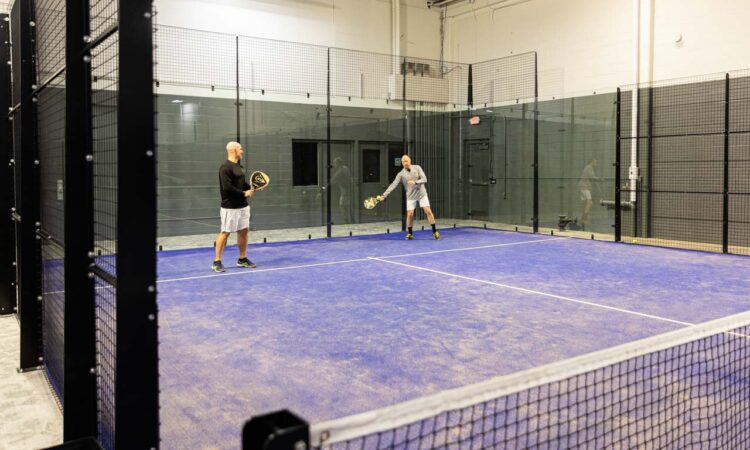
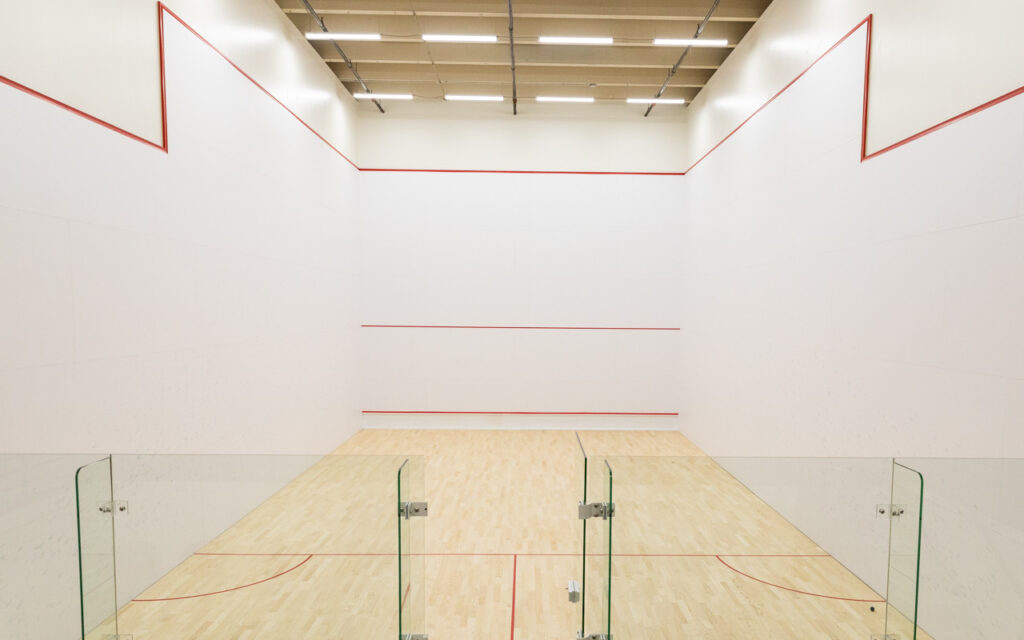
The result is The Heights Racket & Social Club, now open at 1415 Mendota Heights Road. The club features three single squash courts, a doubles court, and because its owners know a thing or two about running a successful business, they added indoor pickleball. In another burst of entrepreneurial inspiration, they incorporated Minnesota’s first padel court. “Pickeball is the fastest growing racquet sport in the U.S., but padel is the fastest growing in the rest of the world,” said Hilger, who got acquainted with the sport in Spain and saw the opportunity to lead the way in the Midwest.
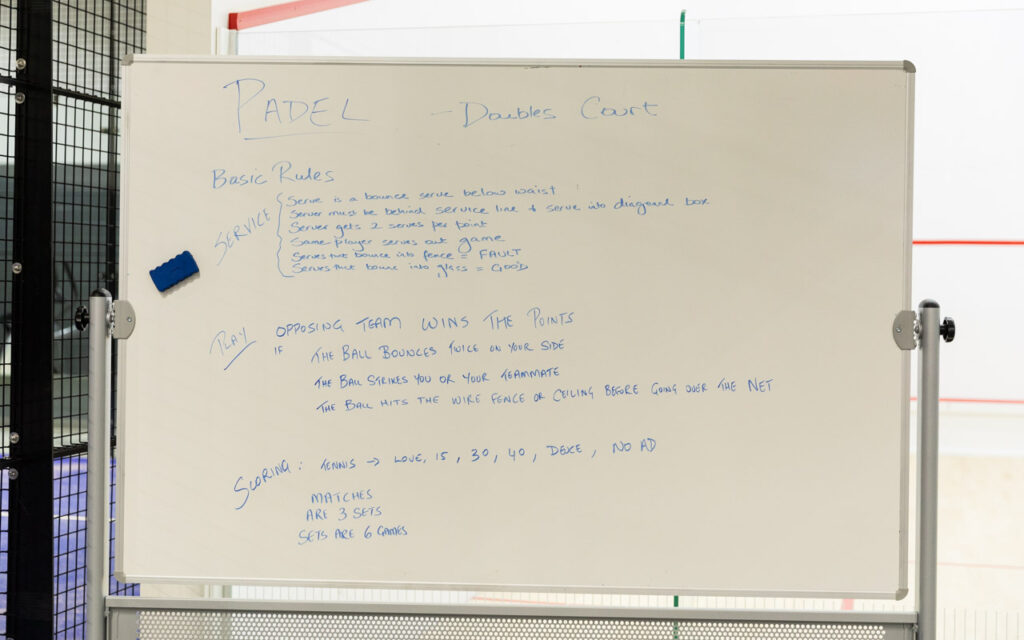
More similar to tennis than pickleball, padel is a mashup of tennis and squash. The court is one third the size of a tennis court and enclosed, so the ball—a depressurized tennis ball—can be hit off the walls. The court surface is porous, which gives the ball some bounce and cushions the impact for players. The padel racquet is has a perforated face and is thicker than the paddle used for pickleball. Serving is underhand, which tends to level the playing field. The game is scored the same as tennis.
Most padel courts are outdoors; leave it to Minnesotans to introduce indoor padel play. Demand has been so strong that The Heights is already planning to add an outdoor padel court in the spring.
“Lots of people want to try it,” said The Heights’ general manager Sheldon Vaz. “The padel court is booked every day.”
Not a country club
Vaz grew up playing squash in Nairobi, Kenya. His father was an avid player. He graduated from the University of Minnesota in the 1990s and stayed in town, but it wasn’t until he “hit a gray patch” in life in his 30s that a friend brought him back to the sport. At the Commodore Squash Club in St. Paul.
“I’ve been to clubs all over the country. There was something very unique about this group. Maybe because we’re a very small community here—the sport is bigger on the East Coast,” Vaz said. “You get your butt kicked on the court—it can be the hardest workout. Then you hug after.”
The Monday before Christmas, Vaz became a U.S. Citizen, and there to cheer him on at the ceremony were Hilger, Baron, and around 20 other friends from the squash club. For Vaz, squash is no longer just a hobby. Hilger and Baron asked him to become general manager of The Heights. “I know they’re both tough negotiators, so I tried to hide my excitement,” said Vaz, who had been managing parking ramps in St. Paul. “My biggest worry was turning play into work, but everyone has been super supportive. I couldn’t be happier.”
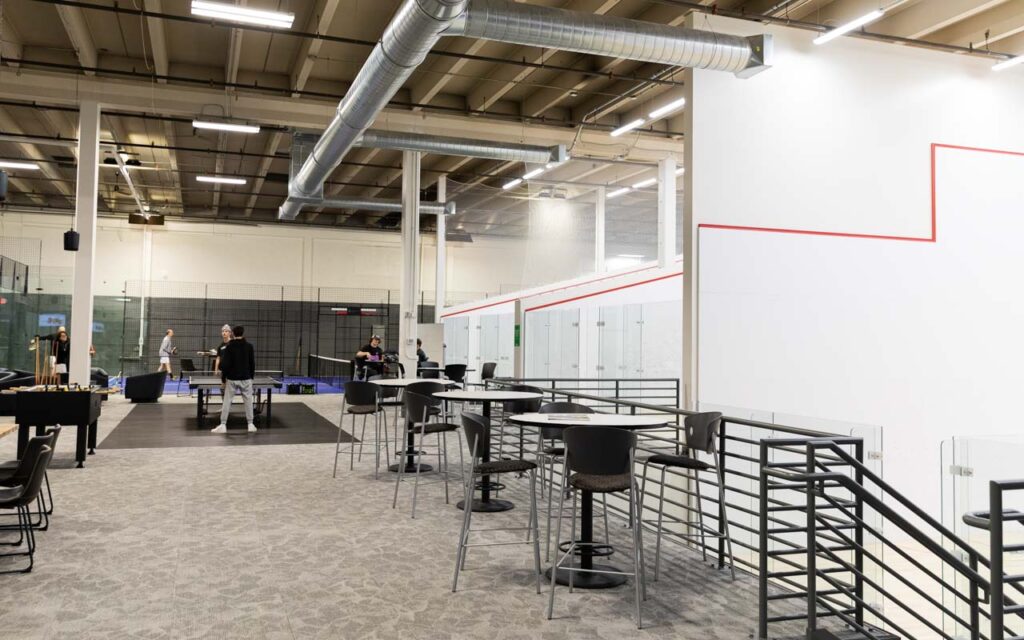
The Heights is not a drop-in club, and that’s intentional. “This is a community, not a facility,” Vaz said. Monthly memberships range from $110 to $185. There’s also exercise equipment, full locker rooms and saunas. A large lounge area overlooks the courts. There’s ping pong and foos ball. The vibe is more warehouse than exclusive club; it’s all very utilitarian in appearance and attitude.
“I’m not really a country club guy,” Hilger said. “We want everyone to feel welcome.”
The business plan called for around 100 members within the first month. The Heights has already doubled that.