

What Does the Phrase ‘Business for Good’ Mean?
In the world of business, do we aspire to be community-minded George Bailey in the 1946 movie classic It’s a Wonderful Life or do we admire the hard-charging Gordon Gekko in Wall Street, who infamously uttered “Greed is good.”
Gekko, played by actor Michael Douglas, could never have been mistaken in 1987 as an advocate of “stakeholder capitalism” or “corporate social responsibility.”
But Minnesota is home to several companies in which its leaders recognize the importance of giving back to address societal needs in the communities where they do business. They understand they have multiple stakeholders—customers, employees, owners, and the communities where they have offices and plants.
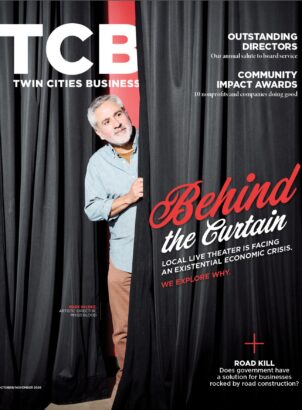
In this issue of Twin Cities Business, we are exploring the concept of “business for good” by asking leaders of three long-standing Minnesota companies to explain how they live out that value in their companies.
We approached leaders from three parts of the state to share their thoughts.
Paul Marvin, CEO of Warroad-based Marvin, says that giving back has been part of the ethos of the family-owned company since it was founded in 1912. In his essay, he cites several examples of how the Marvin business and its employees focus on making their headquarters community better.
As Marvin has grown as a company, it now does business in about 20 locations. In recognizing the contributions of its employees, Marvin announced in December that it was sharing more than $17 million in profits. The profit-sharing increases the economic security of Marvin employees as well as their ability to be good citizens and volunteers in the communities where they live and work.
A similar value is present at Stearns Bank, which is headquartered in St. Cloud. Kelly Skalicky, who succeeded her father, Norm, as CEO in 2019, has been ramping up the bank’s capacity to serve communities that lacked access to financial services or were unable to receive customized solutions that meet their needs.
Skalicky discusses the employee stock ownership plan in her essay, as well as the bank’s commitment to support people in need. That includes contributing $1 million to Anna Marie’s Alliance in St. Cloud, which provides shelter services to victims of domestic violence. The nonprofit also does education, prevention, and advocacy work.
Like Marvin and Stearns Bank, the Padilla communications and public relations agency has employees and does business in other parts of the United States. It’s headquartered in Minneapolis.
Matt Kucharski, Padilla’s president, has worked for the company for more than 35 years. He has served on boards ranging from the Greater Twin Cities United Way to Pheasants Forever. The company’s corporate social responsibility program is called Padilla PluggedIn, which comes to life through volunteerism, pro bono work, and charitable contributions.
“While we share time, treasure, and talent, we also benefit—from a broader perspective, new experiences, and stronger connections,” Kucharski says. –Liz Fedor
Marvin Exemplifies a Community-First Mindset
The Warroad-based manufacturer supports local residents in many ways—from providing home repairs to coaching school robotics teams.
By Paul Marvin // CEO, Marvin
 My great-grandfather George G. Marvin had a very important goal when he started our business in 1912, and it had nothing to do with making windows and doors. Rather, he was focused on a more powerful purpose: to do right by his small rural community in Warroad.
George’s contributions here were numerous and varied, from buying mortgages from a failed bank to allowing local farmers to pay back debts over time to not risk losing their land to donating Christmas trees to local families. George put the interests of the greater good before his own.
Read more from this issue
His son, my grandfather William S. “Bill” Marvin, embraced this philosophy from his earliest days at the company, where he focused on providing meaningful careers for his friends and neighbors in Warroad. As they returned home from the war, Bill knew that without well-paying jobs, veterans from the community would be forced to look elsewhere—a fate he couldn’t imagine for his beloved town.
When Bill’s children, including my father, aunt, and uncles, faced the hardships of the Great Recession, they led the business with an unflinching commitment to people, successfully navigating one of the country’s worst economic fallouts without laying off a single employee.
For us, it’s always been about people first. That purpose—one of community, people, and giving—has shaped Marvin for more than a century. Quite simply, we believe that business for good is good for business. We believe that business exists for more than profit, and that business can and should do more.
Now, more than a century later as a fourth- and fifth-generation family-led business, my siblings, cousins, nephews, nieces, and I have the privilege to continue to steward Marvin’s people and our community-first mindset in Warroad, throughout Minnesota, and across the country.
We help strengthen our communities through many forms of giving to make a difference in the lives of others. The spirit of giving is felt across the company through Giving at Marvin, a program that provides team members with the time and resources to engage, connect, and care for their communities in the ways that feel best to them.
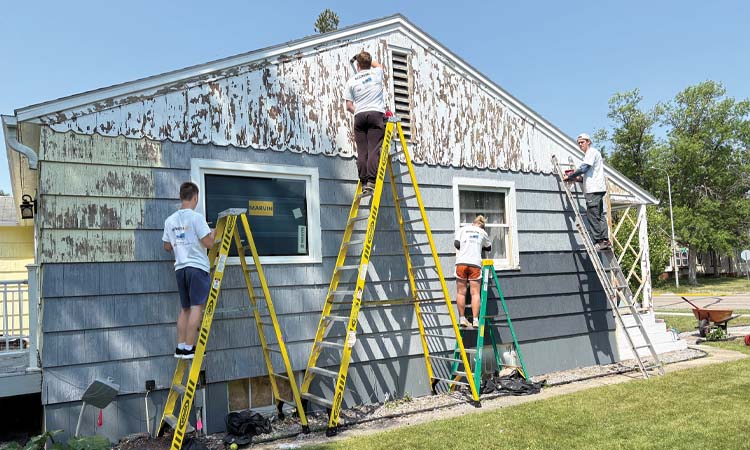
From helping with home repairs through Hearts & Hammers to raising funds for the Wounded Warrior Project, we find the best ideas for community outreach often come directly from the Marvin employees who live and work there.
That is especially true in our hometown and founding headquarters of Warroad, where the population hovers around 1,800 people. Here Marvin team members show up for their community, investing their time and talents in countless ways that have incredible impact in a small town.
Marvin employees from all parts of the business share their expertise as coaches and mentors to Warroad schools’ award-winning robotics teams, while others serve as instructors at the Advanced Resource Center, a first-of-its-kind mechatronics program we developed in partnership with Northland Community College. Yet I honestly believe we get as much from Warroad as we give. I’m not sure we can ever repay this community for everything it has meant to our company and our family, but that won’t stop us from trying.
Companies who do the right thing are rewarded over and over again. At Marvin, as we continue to grow, we’ve proven time and again that sticking to values and purpose doesn’t just feel good—it’s also a very sound business strategy.
Stearns Bank Values Shared Prosperity for All
The bank serves the underserved and meets community needs, including a major gift to a nonprofit addressing domestic violence.
By Kelly Skalicky // CEO, Stearns Bank
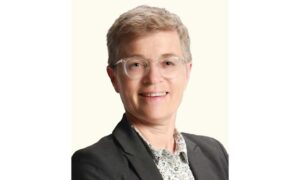 At Stearns Bank, we pride ourselves in empowering our customers to achieve their full financial potential, creating meaningful impact in communities nationwide, and building a more inclusive banking ecosystem anchored around the belief of driving shared prosperity for all.
For us, being a “business for good” starts with how we’ve structured our business with our employee ownership to provide employee profit-sharing, ensuring their financial security and prosperity. For over 40 years, Stearns Bank has increased employee ownership through our employee stock ownership plan (ESOP), which now includes our more than 500 employees living in 36 states nationwide.
Today, as one of few ESOP-owned banks in the country, we prioritize the financial future of our employees who are building generational wealth and unlocking new economic opportunities for them and their families.
According to the National Center for Employee Ownership, the average ESOP account balance is more than double the average 401(k) balance, and in 2022 ESOPs paid out more than $156 billion to participants. These figures underscore why we’ve grown our ESOP, building on our shared-prosperity business model. Because when our people can secure their financial futures—they take the wheel, innovate more, and pour all their energy into our customers.
It’s our employee-owners who are the driving force behind our mission to empower our customers and their success. We know shared prosperity works: When our customers succeed, Stearns Bank succeeds and our employee-owners and communities flourish. That’s why we put our customers at the center of everything we do, embracing the fundamental belief that “we all do better when we all do better.”
How are we different than other banks who claim to put customers first? We listen and learn what our customers want, then take action to deliver custom-tailored banking that meets their unmet needs.
Example: In 2023, we developed a full suite of nonprofit banking solutions, custom-made for nonprofits of all sizes, nationwide to fill the gap in services nonprofits themselves identified.
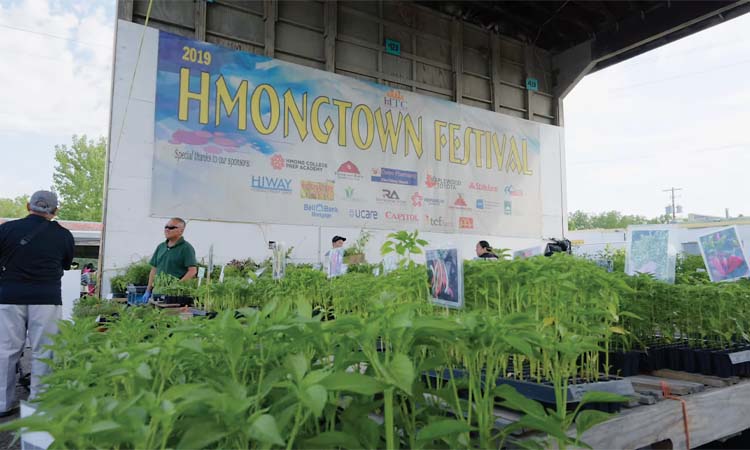
Another example: In March 2024, after listening and in-depth learnings from communities across the country, we launched Stearns Salaam Banking to deliver banking to nonprofits and for-profit businesses that historically had been left out of the traditional banking ecosystem. Our Salaam Banking products are approved by an independent Sharia Supervisory Board composed of world-renowned scholars and experts in Islamic finance. Where other banks offer products to serve their bottom line, we put our customers and communities in the driver’s seat, so we deliver banking that best serves them and their bottom line.
Lastly, we prioritize our collective responsibility to strengthen our communities. For us it’s simple: We put people over profits. Example: Stearns Bank expanded our steadfast partnership with Anna Marie’s Alliance (AMA), championing its mission to provide safety, shelter, and support for survivors of domestic violence in central Minnesota.
Since 2019, we delivered more than $1 million in financial support and employee peacekeeper donations to spearhead AMA’s multi-phase capital campaign to transform shared shelter spaces into units for families starting anew. We also contributed hundreds of volunteer hours, with employees volunteering at AMA, serving on the AMA board, and organizing community drives. We commit financial and hands-on resources to make a lasting community impact.
We’ve long believed in “business for good,” which is what our shared prosperity model brings to life. Our first priority is the success of our customers because when they prosper, our communities flourish and our employee-owners succeed. We’re grateful our model has worked so well over the past 100 years and look forward to serving for 100 more.
Generations of Padilla Executives Embrace Giving Back to the Community
The public relations agency does pro bono work, makes charitable contributions, and gives employees time for volunteer projects.
By Matt Kucharski // President, Padilla
 I’ve had the benefit of spending most of my 35-plus-year professional career in the Twin Cities. For me, there’s never been a question about the importance of businesses giving back to the community, and credit for that goes to my most important mentors—Padilla CEOs John Beardsley and Lynn Casey. Both made it clear that being “plugged in” to the community is bidirectional. While we share time, treasure, and talent, we also benefit—from a broader perspective, new experiences, and stronger connections.
Our corporate social responsibility program, Padilla PluggedIn, embodies this through individual volunteerism, pro bono work, and charitable contributions. It’s a living example of how doing good for the community enriches our own culture and grows our people.
Whether we’re supporting focused organizations like Pillsbury United Communities or those that bring a “multiplier effect” like the Greater Twin Cities United Way, we’re both giving and receiving at the same time.
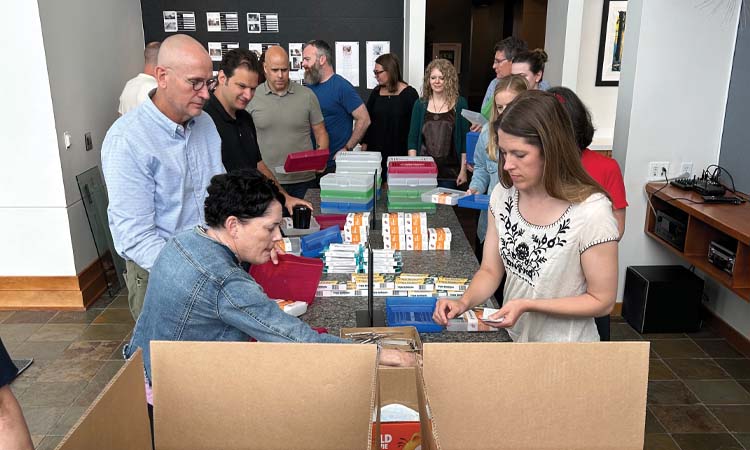
Our chili cook-off and silent auction didn’t just raise money—it gave us all a chance to connect during a time when hybrid and remote work environments were making us feel a bit fragmented and isolated. And our day of assembling “welcome home” kits for individuals transitioning into stable housing reminded us that not everyone has a safe and secure place to sleep at the end of the day.
Additionally, by offering every employee an individual paid “day of service,” we champion work that is meaningful to them while also gaining valuable perspective on a range of causes, from inclusiveness to food insecurity to rescue animals. And we celebrate those efforts through our Volunteer of the Quarter program.
 We also encourage and reward board service, which allows us to go deep into issues that we care about in the community and gain important experience along the way. Some of my most valuable leadership skills came from serving on boards like the Arthritis Foundation, Pheasants Forever, Greater Twin Cities United Way, and the Science Museum of Minnesota.
Other civic leaders at Padilla have benefited as well, supporting organizations like the East Town Business Partnership, Itasca Project, Minneapolis Downtown Council, BestPrep, Northern Star Scouting, University of Minnesota Cancer Philanthropic Board, and Minneapolis Parks Foundation.
We’re also helping shape, uplift, and support the next generation of public relations professionals through the Take Flight externship. Developed in partnership with other local communications agencies, it provides career exploration for students who may not have ever considered the field. Now in its fifth year, Take Flight has connected dozens of students from 10 colleges and universities with coaching, workshops, and that ever-important first internship. Meanwhile, colleagues are obtaining mentoring skills and perspective from people who may have different paths to the profession than their own.
This reflects who we are as individuals and as a firm: dedicated, diverse, and driven professionals making a difference for clients and communities. My hope is that our journey inspires others to see that sharing time, treasure, and talent brings mutual value to both the community and the company. It’s part of what makes the Twin Cities a unique place to live and work.