

Taking Back Salsa Lisa
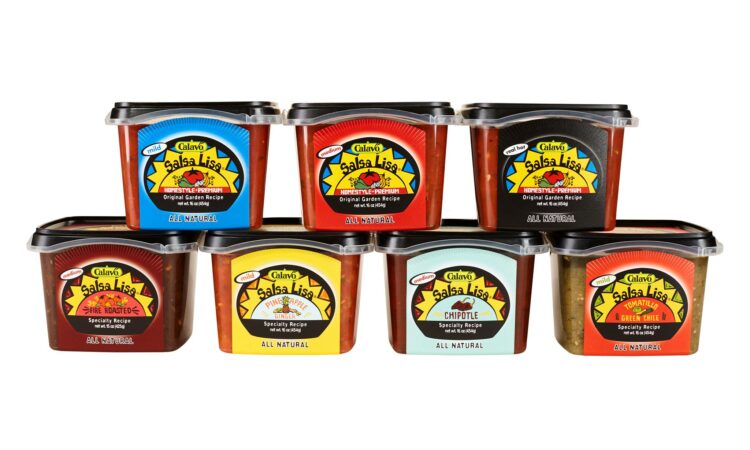
Lisa Nicholson weaves a story that many entrepreneurs would envy. Starting out with tomatoes from her own garden, she built St. Paul salsa brand Salsa Lisa from the ground up in the ’90s. She would later go on to sell the business to a multinational food company in 2010.
So, after what seemed like a dream exit, why did she buy it back?
At the beginning of April, California-based Calavo Growers sold the Salsa Lisa brand back to Nicholson for an undisclosed sum. Calavo sold back the salsa brand as part of a wider cost-cutting initiative, but in Nicholson’s eyes, it’s not a loss. Instead, it’s a moment of reclamation and rejuvenation in ownership.

“It’s what I love to do, running a business. That’s what I was kind of missing–agility and that hustle and the problem solving and creativity,” Nicholson said. “For my brand, it was time for it to come back home and reconnect to it in my own community. Everything feels different. I feel more connected to everything and I feel more connected to what’s going on and how I can participate and how the brand can participate.”
Salsa Lisa’s Community Climb
Salsa Lisa’s story starts with Nicholson’s green thumb. Her backyard garden produced a surplus of tomatoes that she would use for spaghetti sauce, condiments, and, of course, salsa. The latter grew to be a popular and often requested item among her family and friends, so much so that she was urged to sell her salsa as a product. “I’m supposed to be studying for finals and I’m doodling the label for my new salsa company,” she shared with a laugh.
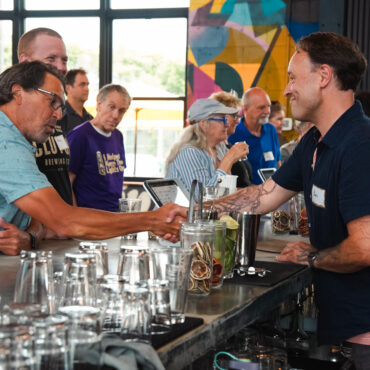
After graduating from law school, Nicholson built her first salsa kitchen around 1995 instead of pursuing a law career. There, she began to mass-produce salsa to be sold at local farmers markets around the Twin Cities. After five seasons of bartending at the market, she lined up deals to sell Salsa Lisa products on the shelves of surrounding co-ops and local grocery stores, including Lunds & Byerlys.
For about ten years, Salsa Lisa stayed within community grocery spaces. That changed in 2009 when Nicholson received a call from food and beverage manufacturer Calavo Growers. “I remember sitting there at that point thinking to myself, ‘I’ve done pretty much everything I can touch here in my backyard,’” she said. “And I’m certainly not going to be able to repeat that in other markets–I’m not gonna be able to build from the ground up. So, I thought I could really use a partnership at this point if I’m going to grow any further past here.”
Calavo was attracted to Salsa Lisa’s high-quality products and scalable business; it wasn’t too big or too small, said Nicholson. After a visit to Salsa Lisa’s plant, Calavo and the salsa brand signed a deal in February of 2010 that created a new LLC where Calavo became a majority owner and Nicholson stayed on as a minority owner.
This was the start of a seven-year partnership, said Nicholson, where Calavo did some experimentation with Salsa Lisa, including a more collateral-branded approach, such as selling the salsa alongside Calavo’s guacamole. The partnership also led to Salsa Lisa being privately labeled for brands like Kroger. As part of the deal, Kroger took the Salsa Lisa product, added extra ingredients, repacked it, and sold it under the Kroger brand. Though the Salsa Lisa brand itself remained heavily localized, the private labeling was what expanded the product throughout the country.
“Up at that platform I was seeing at the national level the whole Salsa Lisa business and industry at a much different level, which was really cool,” she said.
At the end of the seven-year partnership, Calavo decided to go through with buying out Salsa Lisa. When this happened, Nicholson didn’t feel as connected to the direction of Salsa Lisa, she said. “It felt different, and it wasn’t as creative for me anymore. I was in charge of operations but I wasn’t really in charge of sales.”
Calavo, whose core business is avocados, had trouble fully integrating salsa into its main business initiatives. “The salespeople are to be selling salsa and guacamole, but they’re mainly guacamole salespeople,” said Nicholson. “They might bring salsa along on a sales call, but there wasn’t ever a unit that was just salsa.”
Then along came a new CEO for Calavo in 2022, who took a hard look at the company as Calavo stock began to decline.“When it came to salsa, this CEO had zero connection to it. I think they didn’t have enough runway to do what they needed to do to incorporate it into the core,” said Nicholson. “That’s when it became in play for me to take it back.”
In Calavo’s fiscal report for Q1 of 2023, the company announced plans to restructure its operations due to a “challenging start” in 2023. The company said it experienced an 18% decline in total revenue from the prior year. Its restructuring plans included initiatives to “exit the non-core salsa business.”
Calavo’s plan to exit the salsa business is part of a larger cost-cutting initiative for the company. The company’s execs said the restructuring plan is estimated to save Calavo at least $1.5 million a year.
The salsa business drew revenue of $446,000 in 2022’s first quarter, but Calavo’s main moneymaker is still avocados: The company’s Q1 report noted that it made over $102 million in avocado sales that quarter.
After a two-month-long process, Salsa Lisa officially returned to Nicholson’s ownership on April 1. “These last couple of years I do realize how much I was starting to miss [the sense of ownership]. So now, feeling that again, knowing that these opportunities are out there and are actually within our reach to be able to make those happen.”
Playing Whac-A-Mole
Since Salsa Lisa’s return to its home turf, there’s been a never-ending list of to-do’s for Nicholson, but she’s enjoying every bit of it. “All these accounts have to be changed over. [There’s] all the detail work to do on this … freight, payroll, and all of these different things,” she said. “These last two weeks, it’s just been like every 40 minutes there’s a new hot button. I actually feel like it’s like Whac-a-Mole.”
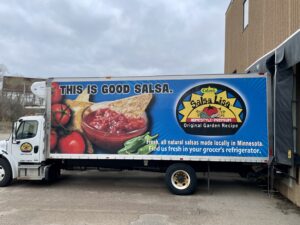
Salsa Lisa still retains some partnerships with Calavo and is also private labeling for the brand Homeboy, a social enterprise that provides support for gang members and previously incarcerated individuals. But for Nicholson, there’s a sense of lightness that comes with having Salsa Lisa back in her backyard. Salsa Lisa, for the first time in its nearly 30 years, is now woman-owned. Before, it was co-owned between Nicholson and her ex-husband.
Her next steps are reintroducing herself and Salsa Lisa. That includes looking into untapped areas like social media. She’s also working to onboard her team, which includes leveraging the national relationships she was able to retain from her experiences with Calavo. Although her current focus is reconnecting the brand to the local community, she still plans to stay national—but do it her way.
“I’m leveraging the knowledge, the sense of market, how our product fits compared to other competitors. What we’re still really good at and what makes us different and somebody to join forces with,” she said.
“There still might be another buyer in our future, but there doesn’t have to be for me at this point,” Nicholson added. “I have plenty to do right now. Before I was feeling like, ‘I’ve done everything I know how to do at this point.’ And so now, I’m at a different point. I’m here with it again, and I see a lot of opportunity that I didn’t see before.”