


Rochester Rising: Transportation
To maintain its vitality and growth, a city needs to be accessible. What makes accessibility especially crucial for Rochester is, of course, Mayo Clinic. It draws patients from all over the world, and they often have medical conditions that urgently need to be addressed. What’s more, the medical specimens it handles need to get to labs and hospital staff—and fast.
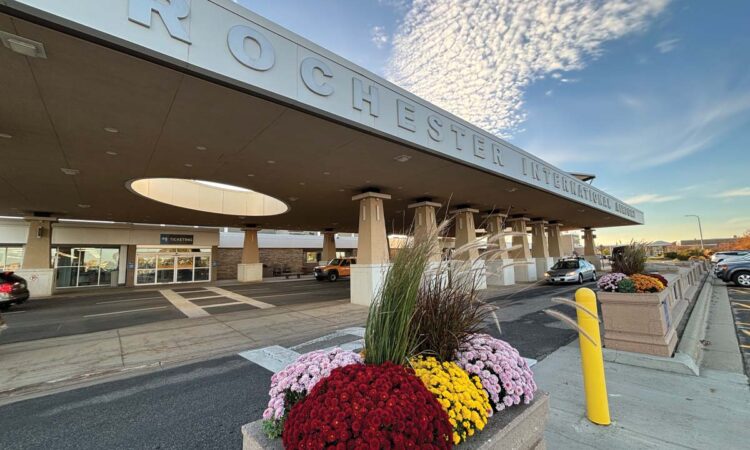
Rochester International Airport’s (RST) role in supporting Rochester’s extensive health care infrastructure is a key reason why it’s so essential to the region’s well-being—but it’s not the only reason. “We have a bigger regional impact than a lot of people might recognize,” says John Reed, the airport’s executive director. With its access to Interstate 90 and other major highways, people and businesses in Southeast Minnesota, northern Iowa, and parts of western Wisconsin all use RST to get to where they need to go.
RST is served by American and Delta, which both provide daily nonstop service to the Twin Cities and Chicago, thus providing a major connection to the international market, says Reed, allowing travelers from across the country and the globe to easily make their way to Rochester. General aviation aircraft also fly in from all parts of the world. To help smooth the arrival of international travelers, RST has a dedicated U.S. Customs officer on premises.
RST’s cargo-handling capabilities also are critical to the region’s health care providers and its economy in general. Two FedEx transport planes arrive and depart daily between Rochester and the package carrier’s Memphis and Indianapolis hubs. FedEx uses a Boeing 757 for medical deliveries. FedEx staff in Memphis load containers with medical cargo last—that way, they’re positioned to be the first cargo removed when the plane lands in Rochester early in the morning. Rochester cargo handlers then immediately ship them to Mayo Clinic Laboratories. (All that noted, FedEx also provides cargo services for numerous other regional businesses, both large and small.)
Not surprisingly, RST is one of the busiest air ambulance airports in the country—and the second busiest in Minnesota (behind Minneapolis-St. Paul). Medical evacuation (medevac) aircraft also use Rochester International extensively. These too fly in from all over the world.
Given the critical nature of its role in the region’s economy and in the world’s health, RST needs to make sure that it functions smoothly regardless of flying conditions. Since 2020, the airport has been undergoing a nearly $80 million runway improvement project. RST’s main runway is being rebuilt with a 1,600-foot extension to boost its all-weather capabilities. The entire project will be completed by the end of 2027.
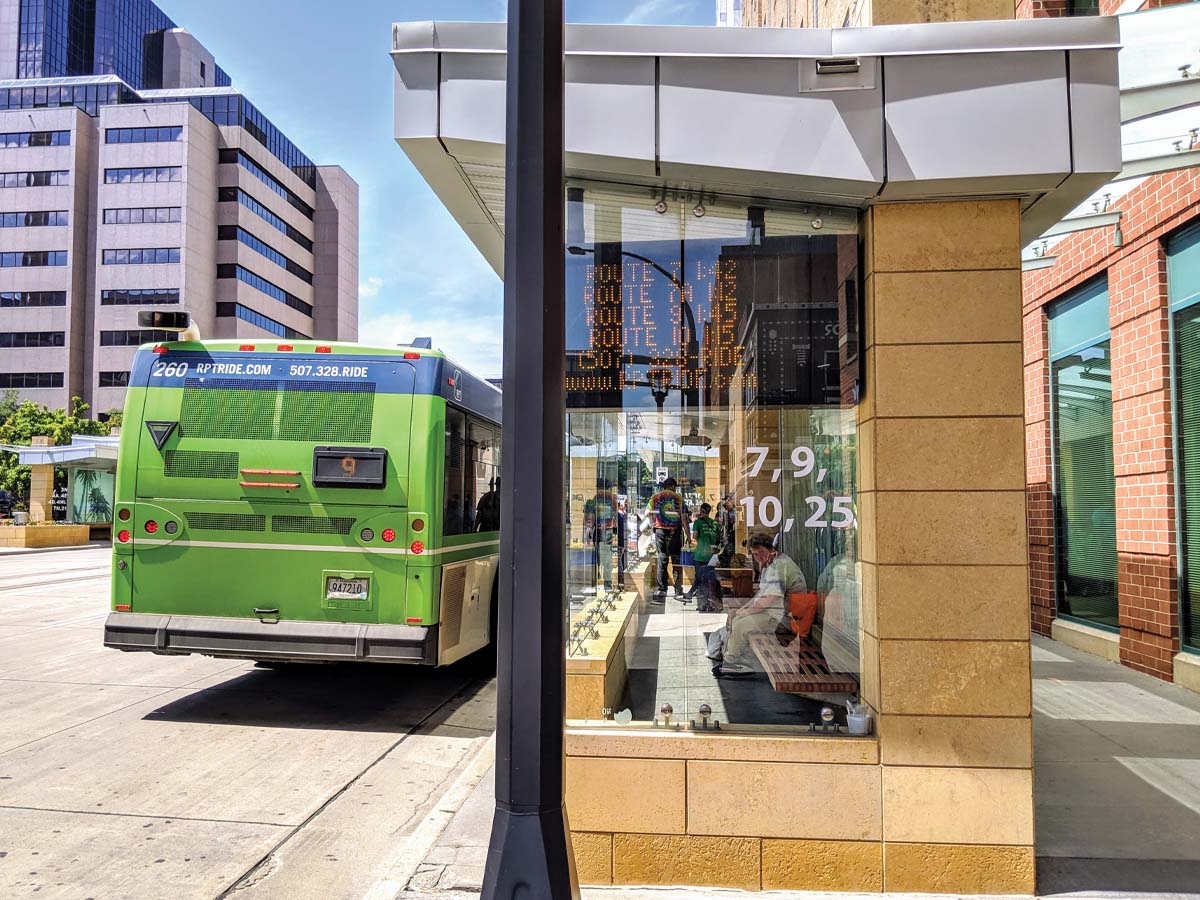
RST’s runway improvements aren’t the only notable infrastructure construction underway. Since 2020, the City of Rochester has been developing the LINK bus transit initiative. Construction on the LINK system will begin in the spring of 2025, with operations expected to begin in the fall of the following year. The system will follow a three-mile route on a dedicated, signal-prioritized bus lane that will run through the city’s business, government, and entertainment districts as well as the Mayo Clinic campuses. LINK’s electric buses, which will run frequently around the clock, are expected to move 2,000 employees, visitors, and patients quickly and efficiently each day.
What’s more, LINK will do so without charging riders a penny. Mayo Clinic and other sources will be funding the line’s operating costs. The fare-free arrangement “will support the Mayo Clinic’s growth and encourage redevelopment of underutilized sites along the LINK corridor,” says Destination Medical Center executive director Patrick Seeb.


Explore the following pages to learn more about Rochester: