

Return to Sender
An ignored letter to a Minneapolis city councilmember (CM) opened a window into a worsening relationship between the area’s housing development community and elected officials, and spot-lit ominous prospects for near-term housing development in Minneapolis.
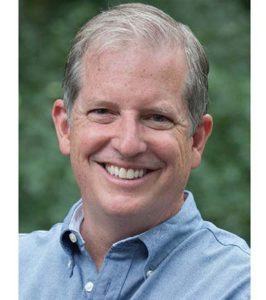
Curt Gunsbury is the founder and leader of Minneapolis-based Solhem Companies, which has, since 2008, developed 22 apartment projects in Minneapolis and continues to manage eight of them. He wrote his CM, Katie Cashman, to share his perspective about the safety climate, declining market conditions, and an impending tax valuation crisis in the city. (Solhem’s managed buildings are in Northeast Minneapolis and the North Loop.)
Cashman, who joined the council in January and votes with its leftist bloc, replaced longtime moderate and housing expert Lisa Goodman, who retired from politics at year’s end. Cedar Lake neighborhood resident Gunsbury says he hoped to engage his new CM and explain the challenges local property managers and developers face.
Gunsbury notes that though he didn’t always have common ground with Goodman, “she worked toward solutions.” He calls Cashman “incredibly non-responsive to anyone who asks hard questions, she’s basically evasive.” Gunsbury describes himself as a DFLer, former teacher and union member, and “a one-time young socialist.” He’s backed off that label, noting, “I’m older now and I see what’s at stake, people’s safety, people’s livelihoods. Every action has a reaction.”
Gunsbury says “Solhem has typically delivered 10% to 15% of all the new housing units in the city of Minneapolis each year for the past dozen years. We have built over 2,300 units in the city since 2009, about $750 million of new construction.”
Excerpts (with minor edits) from his letter follow:
- Gunsbury said falling rents and rising costs of ownership are pushing down building values and making it impossible to justify new construction. Solhem has not undertaken new projects in the city for three years. “Any new building we could build in Minneapolis would be worth less than the cost to build it. The model is broken. … It is vastly safer to develop housing in other regions of the country.”
- Gunsbury says property crime remains out of control in the city. “We own and manage eight properties in the city constituting commercial, industrial, and residential uses, including 1,000 apartments. Some sites see multiple break-ins per week. The rest weekly. … We’ve had one murder and one attempted murder adjacent to our properties in the past few years. Our property insurance costs have tripled—or more—since 2019. Our staff is regularly at risk of harm. None of this is sustainable.” Gunsbury wrote that pre-2020 his properties averaged crimes once per quarter.
“They are crazy crimes like out of the movies. In the past a bike would get stolen from the parking garage. Now, a pickup truck crashes through a secure garage door and steals a dozen bikes,” he says. He notes that his team no longer consistently reports non-violent acts because the police lack manpower to respond and “our criminal justice system has swung to the premise that the criminal is actually the victim.”
- Gunsbury warned of dire outcomes for the city were trends to continue, noting the city assessor’s 2024 report of a 3.1% general decline in the tax base. “How will you manage a 3.1% decrease in the city budget?” Because valuation declines are a lagging indicator of problems in the housing market, he expects further dips in the city’s tax base in the years ahead, noting all his buildings lost value in their forthcoming 2025 assessments.
Gunsbury says he sent his letter February 4 and did not receive a reply. He re-sent it March 20 by email. He again got no reply. At that point he offered the letter to his neighborhood newspaper, the Hill & Lake Press. It published the letter in early April at which point Cashman responded and agreed to make a site visit to one of his properties, which has not yet taken place. TCB reached out to Cashman for comment, but has not yet received any.
In an interview with TCB, Gunsbury expressed concern about a growing sense of the wheels coming off Minneapolis’s capacity to self-govern. “With three bomb throwers on a council of 13 you’ve got the makings of an interesting debate,” he says, “with nine of 13 you’ve just got a war.” The council’s majority bloc has little life or work experience outside political and social justice advocacy. None of the council, even its centrists, have a business background.
Gunsbury says that pre-pandemic his buildings could sell at a value equal to $290,000 per apartment unit, but that’s fallen to $180,000 to $220,000 per unit, and “there’s no way” he would build a unit for $250,000, if it’s worth 25-35% less on the day it’s done. Gunsbury says the national real estate market has “drawn a red circle around Minneapolis,” as a market with questionable long-term prospects and have focused back on investing in the suburbs. “When rent control is re-debated every term, no one can figure out what the future holds.”
He says after the George Floyd riots his buildings saw a wave of vacancies in two-bedroom units as young families fled the city to suburban apartments. “That means they will settle in the suburbs, go to suburban schools,” he says. “That’s not good for Minneapolis.”
Cashman’s lack of response is a warning sign, he says. “If we elect people who are disinterested in business and its role in a healthy urban ecosystem, we can’t keep business in the city. He noted that in Edina, where he recently developed a 400+ unit building, The Fred, “the entire council understands business.” Yet, he notes, Edina is strongly “anti-development right now,” so he’s refocused his investments on projects in Maine and North Carolina.