

Lumber Exchange Begins to See Life Under New Ownership
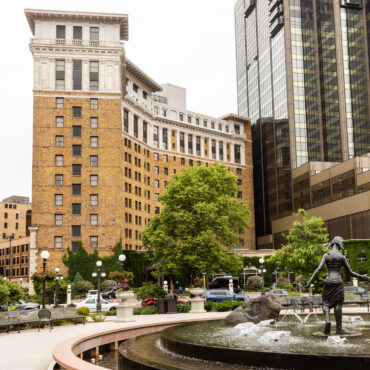
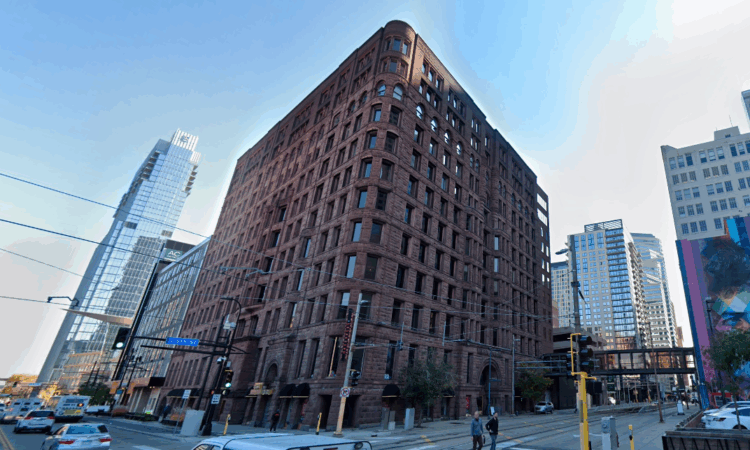
The Lumber Exchange has its first new tenants, as the 12-story building in downtown Minneapolis comes back to life for creative types under the vision of new owner Kristi Oman.
Eleven tenants have signed on since Oman bought the roughly 140-year-old edifice for $1 in February. The tenants include creative agencies, artists, an antiques seller, two lawfirms, and a therapist, she says.
The property’s dirt-cheap price reflected its high holding costs, says Oman, who owns Space Unlimited, a Minneapolis real estate company specializing in restoration of historic buildings. Plus, she paid a $20,000 fee to take it off auction. When she took ownership Feb. 25, the 226,000-square-foot space was 18% occupied, with nine tenants, she says. It is now up to 28% occupied, and Oman is in negotiations with at least five other tenants.
About two years ago, she also bought the Kickernick Building, another old downtown building—and just one block from the Lumber Exchange. She turned it into a hub for artists, and her approach will be the same for the Lumber Exchange.
“We bought the Kickernick with one tenant, and the streets were completely empty, and there was absolutely nobody—it was a ghost town,” she recalls. “Now, you walk outside and it’s happening, it’s alive.”
She wants to foster a downtown network of artists, fashion designers, and other creative professionals. At the Lumber Exchange, the average square footage per tenant is 2,000. Rents vary but are about the same as the Kickernick and “not that much lower [per square footage] than some of these big, huge spaces you have downtown,” she says. Oman places the average at $20 per square foot, or $12 plus $8 for expenses. (She’s awaiting bills, to add up building costs.)
The plan is to chop up an 11th-floor recording space vacated by the former tenant (“Because of AI, they had to downsize”), creating smaller sound studios. “Everybody would share the common kitchen, this common living room area … but then each person has their own individual space,” she says, “and that’s part of creating community.”
She also wants a level dedicated to fashion designers. “We are in talks with a sponsor to help subsidize the cost of the studios,” she says. “This is really exciting because there isn’t a building in Minneapolis dedicated to fashion.”
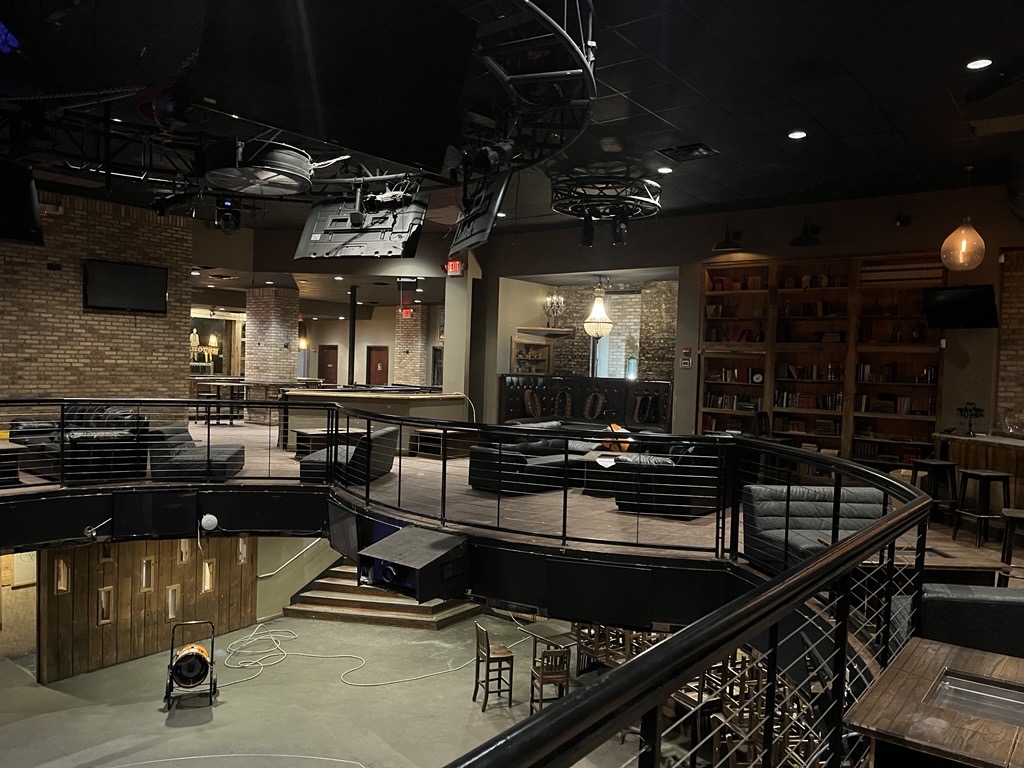
As for the Pourhouse, which closed about two years ago, she’s not interested in another ground-floor nightclub. Following a makeover, she imagines an event space for comedy sets, fashion shows, small concerts, TED talks—“you could rent it out for ‘opera in a box.’”
For now, she’s running back-to-back showings, largely by way of referrals. “What’s unique with us is we have about 300 tenants throughout the Minneapolis area.” She notes she’s not putting up signs or waiting for calls. “We hustle. We’re on social media. We’re not relying on a realtor. … [For] about 90%, we deal with the owner directly.”
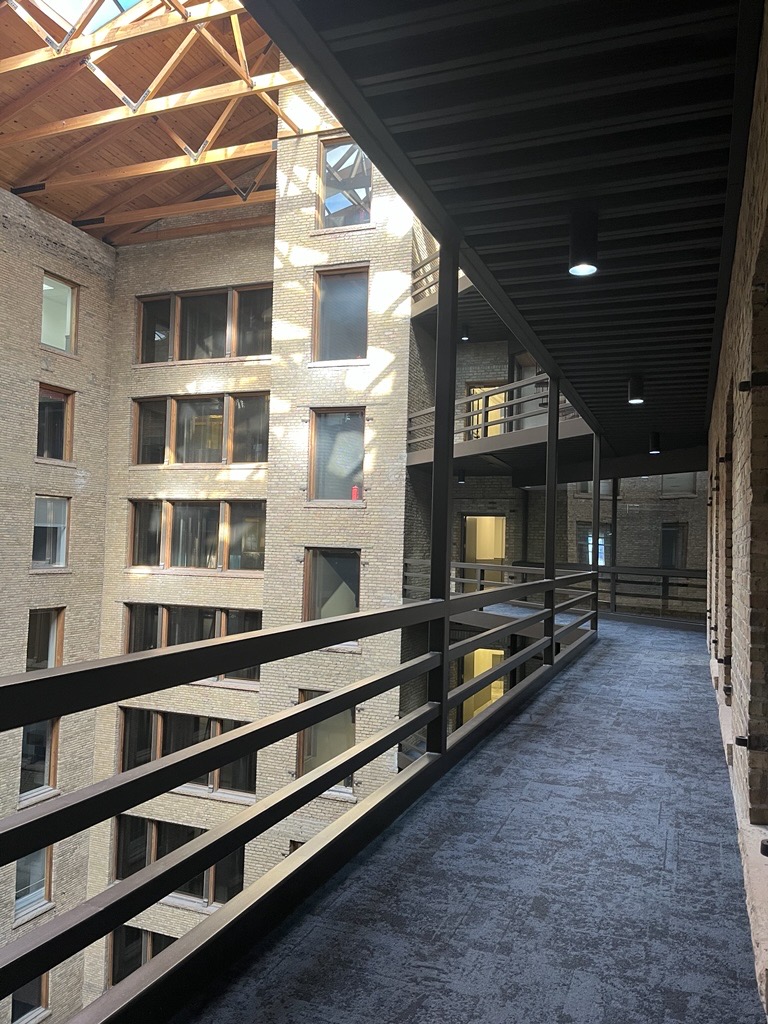
She says prospective tenants seem drawn to the top-to-bottom atrium that hollows out the center of the building, the result of its phased construction. Inward-facing windows ring the atrium, meaning tenants might glimpse one another across the way.
“Instead of just going into a space, shutting the door, and doing your business, you’re part of a community,” Oman says, “which people are really craving right now.”