

Minneapolis Downtown Council Unveils 2035 Plan
A redeveloped Mississippi Riverfront, a fully “pedestrianized” Nicollet Mall, and a new purpose for the giant, largely empty downtown post office are some of the chief goals in the Minneapolis Downtown Council’s latest 10-year strategic plan.
Released on Monday morning, the 131-page plan outlines priorities and goals for the downtown area over the next decade. As council leaders see it, it’s less a rigid blueprint, and more a fluid list of broader ideas that can change as the city’s urban core changes. Their vision includes several proposals that have been on the table for years. In the plan’s opening letter, MDC president and CEO Adam Duininck wrote that the idea is to embrace “design thinking.”
The plan “is not only a roadmap to our future: it’s a process,” he wrote. “Design thinking encompasses innovation, iterative progress, collaboration, and a natural inclination to challenge the status quo. … Let’s embrace the disruptions of recent memory to design and build the downtown we want to enjoy and the downtown Minneapolis deserves.”
Among the priorities on the list is a call to “complete the Central Riverfront with authenticity and urgency.” The plan points back to the Minneapolis Park and Recreation Board’s 2016 vision for the riverfront and suggests completing a continuous trail system on both sides of the river, reestablishing the historic East Falls, and improving connections to the Gateway area along Hennepin Avenue between 1st Street South and Washington.
“It’s not uncommon for tourists or even daily commuters to come downtown and not even realize we have a jewel of a river a couple blocks away,” Duininck said in an interview with TCB. “In some cities, that would be prominently featured. … I think one of the biggest assets downtown has going for it is our parks, green space, and access to the river.”
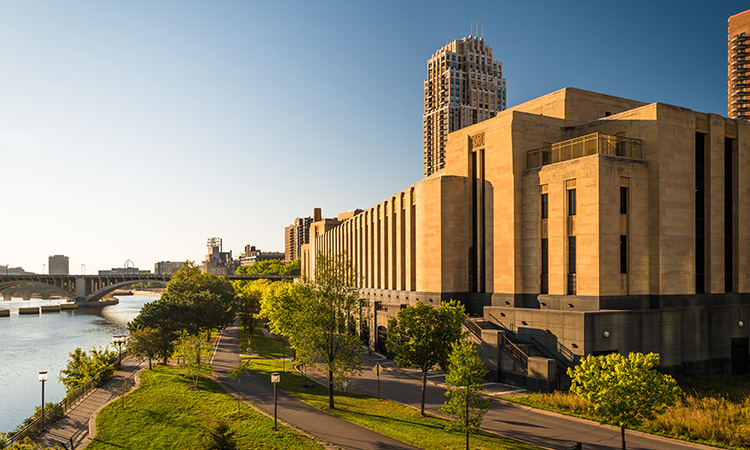
The plan is less prescriptive on ideas for the massive U.S. Postal Service building on 1st Street and instead advocates for just figuring out what to do with the site, which spans 8 acres along the west bank of the Mississippi.
“Aside from a study or two, there is no current proposal on the table,” the report notes. “So this is our moment to set the agenda, name the task at hand, and build the coalition. What could we make of it? A big visitor destination? Residential units? Office space? Hearken back to plans past and turn it into a Mississippi River Gateway park? It may take a literal act of Congress to get this to happen, and some aggressive lobbying effort to move towards a local community vision.”
Echoing continued calls for office-to-residential conversions downtown, the council suggested restructuring the central business district into “Minneapolis’s next great residential neighborhood.” That includes a call to convert 3 million square feet of commercial to residential downtown. “There is a rising awareness that the downtown Minneapolis tax base is a material concern to taxpayers in Minneapolis and the state,” the report stated. “It is clear that the downtown office market will reach a new equilibrium sooner and the greater good will be served if a fraction of this space is put to another use. Let’s align public incentives and private investment to get this done.”
Meanwhile, the plan aims to position Nicollet Mall as an “indoor/outdoor ‘living room’ for all.”
“The physical updates needed to go fully pedestrian and become ‘downtown’s living room’ seem tantalizingly doable,” the report says of Nicollet Mall. “Budgeting for this living room remodel is doable, too. … Funding for capital improvements can be relatively minor by focusing on high-impact changes.” The report notes that private sources are already providing hundreds of thousands of dollars for free programming along Nicollet in the summer.
The council also seeks to build “hassle-free” access to downtown for residents and visitors alike. That includes things like making parking and transit easier and clearer, as well as providing more seating and public restrooms. “We need to make things simpler wherever we can so that goodwill can become action can become investment and ultimately the jobs and live-work-play services that we need to see,” the report said.
To be sure, the council’s new plan is one of many floated by both public and private entities over the years. The Minneapolis Foundation, for instance, released its own report about the future of downtown not even a year ago. Speaking to TCB, Duininck acknowledged the work of the foundation and other groups, but emphasized that “what really matters is that the work gets done.”
“There’s a lot of energy around downtown, but luckily, we’re almost all heading in the same direction and working on the same thing. It’s a question of prioritization and collaboration,” he said. “I think there’s a way in which the downtown council’s plan can be a little bit of a convenient place and a central gathering place for those ideas and energy.”