

Making Sense of Medtronic’s Planned Diabetes Spinoff
Medtronic this week said it plans to cleave off its diabetes business into a separate, publicly traded company.
The new, yet-to-be-named company would be headquartered in California and have about 8,000 employees around the globe, according to a news release issued Wednesday.
In an investor presentation explaining the rationale for the move, company officials noted that the diabetes business unit represented just 8% of Medtronic’s total revenue in its most recent fiscal year. The diabetes unit pulled in $2.8 billion in that year, notably lower than Medtronic’s three main other business units: cardiovascular (at $12.5 billion), neuroscience ($9.8 billion), and medical-surgical ($8.4 billion).
And where the other three units have a mostly business-to-business model, the diabetes division is predominantly direct to consumer. The spinoff, Medtronic officials said, would create “ a leading, scaled, direct-to-consumer diabetes business focused on accelerating innovation as the only company to commercialize a complete ecosystem to address intensive insulin management.”
The company expects the spinoff to be completed over the next 18 months. Que Dallara, who currently oversees the division, would become CEO of the new company.
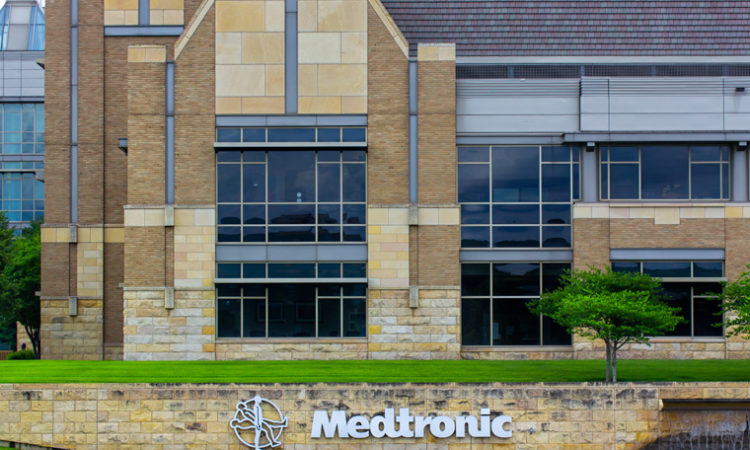
Medtronic, which is technically based in Ireland for tax purposes but keeps an operational headquarters in Fridley, wouldn’t be the first or only Minnesota business to conduct a spinoff. 3M and Pentair, for instance, each coordinated similar maneuvers of their own within recent history. 3M officially spun off its health care business into a new company known as Solventum in April. Pentair, for its part, spun off nVent back in 2018.
There are, of course, challenges that come with a spin. At the end of 2024, Solventum laid off about 800 people amid CEO Bryan Hanson’s stated pledge to create a “more nimble” organization. At Solventum’s annual investor conference in March, Hanson acknowledged that the company “may have lost our way recently.” But, he added, Solventum has “brands in the marketplace today because of the capabilities that we have in this organization that are second to none, that are clinically preferred.”
There can be other risks, too. “You really need to be sure that each business can survive well on its own,” said Aseem Kaul, a professor of strategic management at the Carlson School of Management. “You may not realize that there are ways in which one business is supporting the other. It can be hard to know the level of connection between the two.”
What prompts a company to consider a spinoff in the first place? “Very broadly, it happens when companies realize they have two businesses that are no longer worth as much together as they would be separately,” Kaul said.
Companies also may prefer the whims of the stock market instead of trying to haggle the price of a business unit with private buyers. “When you sell a business, you have to engage in negotiation, and you may not get the full value of your business,” Kaul explained. “You typically sell a business when you feel there’s something lacking in it and that it might be better owned by somebody else.”
Medtronic’s diabetes division does come with its own baggage – the division in 2021 received a warning letter from the FDA over issues with its insulin pumps, though it was resolved within a couple years. More recently, in late 2024, Medtronic recalled some models of its insulin pumps due to shorter-than-expected battery life. Still, company officials evidently see value in the division and would rather turn to the public markets instead of hunting for a new buyer.
That’s not to say a sale is totally off the table, though. “Management has indicated a two-stage IPO would be its preferred path, which suggests to us that Medtronic believes the market will reward diabetes as a standalone business once its profile and potential become more clear,” noted Morningstar senior equity analyst Debbie Wang in a research note published this week. “Nonetheless, we wouldn’t completely rule out an outright sale, if the right buyer came along.”
Wang also said that “this is a good time for Medtronic to separate its diabetes business, which has been growing robustly thanks to its 780g pump and improvements to its sensors. We think it’s been difficult for the diabetes unit to get credit for the progress it has made.”
And though the diabetes division is smaller than Medtronic’s other units, it has been growing. For another analyst, that prompted questions about the planned maneuver.
“We’re left asking why? Why spin off a growth business in one of the best end markets in MedTech?” asked J.P. Morgan analyst Robbie Marcus in a research note published Wednesday. “We’re left with the conclusion that either Medtronic’s Diabetes business won’t sustain the current high-single-digit organic growth it’s been delivering, or the fact that this is not a value-creating tactical option for the company. Both options aren’t favorable, and for that reason we don’t view this news favorably.”
At the close of business on Wednesday, Medtronic’s stock slipped about 2%.
This story was updated on May 23 to include a comment from Morningstar analyst Debbie Wang.