


MN Cup 2026: KinectXions Materials
Fossil fuels play a major role in global warming, but other big culprits involve emissions from the infrastructure that underpins our built world—think concrete, metals, and plastics. KinectXions Materials is developing a triple-threat product that improves the performance of material, reduces emissions, and cuts costs.
Division Judges
Eric Nealy, Andersen Windows
Gregg Mast, Clean Energy Economy Minnesota
Michael Stutelberg, AURI
Keith Waxelman, Wax Enterprises
Cathy Connett, Sofia Fund
Stephen Wolff, MN DEED
Linda Hofflander, The HANDA Group
Peder Sandhei, Minnesota Pollution Control Agency
Philip Hult, Generation Atomic
Nina Axelson, Grid Catalyst
Ryan Schafer, Ankura
Steve Van Tassel, Bepex International
Charlie Spanjers, Berd Spokes
John O’Connell, Plug and Play MN
Katie Youtsos, Carbontec Inc.
Josef Hofmeister, Bridgewater Bank
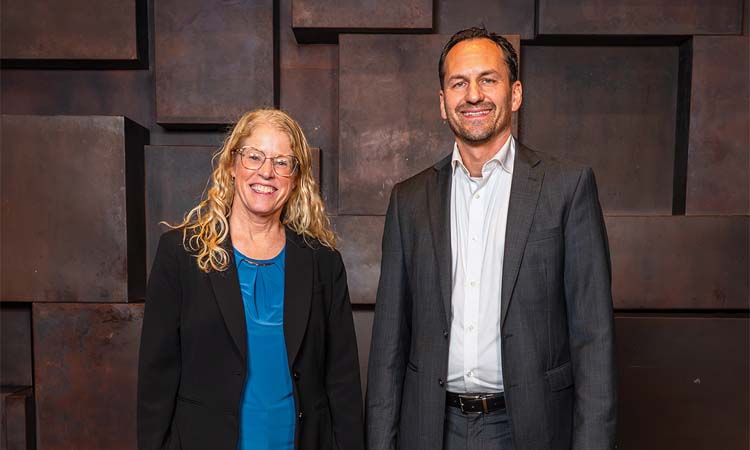
Founded by CEO Laura Nereng in 2025, the Woodbury company aims to partner with industrial manufacturers on incorporating carbon nanotubes (CNT) into their products. Then manufacturers can harness the power of the technology to the benefit of the Earth and to their bottom line.
“About 23% of global emissions come from making industrial materials—they build the backbone of our society,” Nereng says. “This is an opportunity to make a meaningful dent in emissions.”
A microscopic material made from natural gas, CNTs resemble fluffy dryer lint and get added to materials like concrete. The tubes then make the concrete stronger, lighter weight, more conductive, and longer lasting. CNTs also cut the amount of ingredients used to make concrete. For example, adding a tiny amount (.05 weight percent) of CNT to concrete increases its strength by 40%. This, in turn, reduces the amount of concrete needed for something like a building wall by 15%, Nereng says.
KinectXions Materials is creating a more efficient way to produce high volumes of CNTs. Its modular reactors process natural gas into carbon nanotubes and hydrogen, a low-cost and low-carbon gas. This gives materials manufacturers ready access to supplies of CNTs and hydrogen, which they can deploy for their operations. This new process costs 10 to 40 times less than existing CNT manufacturing methods, Nereng says, while providing two revenue streams for KinectXions.
A chemical engineer, Nereng was a sustainability leader and filled other diverse roles during 37 years at 3M. After learning about the Pacific Northwest National Lab’s new method for developing CNTs, Nereng decided to pursue the opportunity to license and commercialize its technology.
Now with four employees, KinectXions is working to become an indispensable partner to industrial manufacturers, with the big-picture goal of changing how the world makes important materials, Nereng says. Instead of being a supplier that sells CNTs by the pound, KinectXions will target forming joint ventures with willing partners and generating revenue from licensing.
KinectXions has big potential in the $1.5 billion global CNT market, with high-performance tubes made at a lower cost, Nereng says. This will allow the company to operate in industries like metal, infrastructure materials, and plastics.
Nereng thinks the company has a compelling pitch for future partners. “We tell them that we can help you make your thing more efficiently at a lower price point with improved performance,” she says. “We have this unusual combination of allowing them to use less of their expensive materials by adding these fillers so it’s lower cost and lower carbon. This gives them margin and makes them more competitive, which they love.”