

Houston, We Have a Corn Problem. How Do We Solve It?
When it comes to food, most consumers would likely agree that more is better. But with corn, that’s not the case. The U.S. currently is growing more corn that it can handle, and that’s a problem—both financially and environmentally.
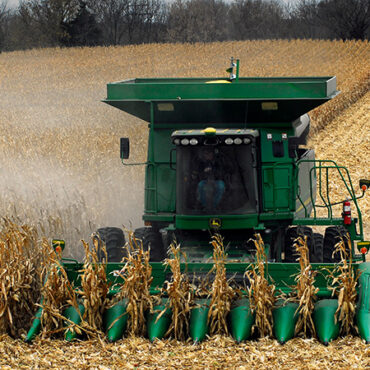
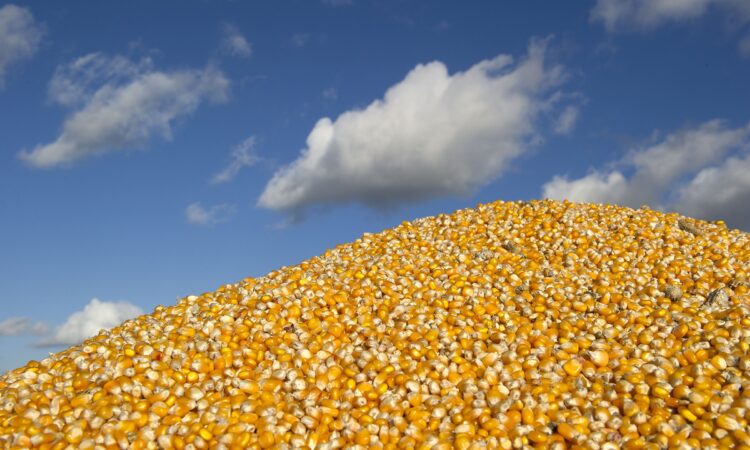
Last month, the U.S. Department of Agriculture estimated farmers grew more than 17 billion bushels of corn in 2025, which is a record yield. At the same time, the nation is sitting on roughly 2 billion bushels in surplus, the largest ending stock this decade. For reference, the country has capacity to store about 25.5 billion bushels of corn, according to the National Corn Growers Association.
For Minnesota farmers, that record production has translated into a painful reality. Corn prices have dropped by nearly half over the past three years. And with land rents, machinery, and input costs still elevated, many growers are struggling to break even. That’s why farm leaders are urgently pushing for long-term market solutions.
The Fastest Fix
Whereas biofuels represent a medium- to long-term strategy, trade may be the most immediate lever.
“At the national level, trade is critically important,” says Amanda Bilek, senior public policy director for the Minnesota Corn Growers Association.
Minnesota’s corn farmers rely heavily on exports to Canada and Mexico under the U.S.-Mexico-Canada Agreement negotiated during the first Trump administration. Renewing and maintaining that agreement is essential, Bilek says, as a significant share of the state’s exports flows to those markets.
The bigger opportunity lies in expanding access to additional international markets through new trade agreements, argues Dan Glessing, president of the Minnesota Farm Bureau. “That would be the most convenient solution,” he says.
Ethanol’s Role as a Solution
In the U.S., over 40% of the country’s corn is produced into renewable fuels. Each bushel of corn produces nearly three gallons of ethanol.
Industry leaders believe tapping more into ethanol—specifically via broader access to E15 fuel, a gasoline blend containing 15% ethanol—would present a pressure valve.
“Year-round E15 fuel would help us use corn fairly quickly,” Glessing says.
Currently, regulatory limitations from the federal government restrict E15 sales to certain summer months in non-Midwest states. Expanding year-round access nationally—and in key markets like California—could significantly boost demand, Bilek explains. In 2025, California authorized E15 sales after years of resistance, opening what Bilek calls a “significant market development opportunity” for mid-level ethanol blends.
Looking ahead, sustainable aviation fuel (SAF) represents a potentially transformative market for our corn problem. Minnesota-based Delta Air Lines has expressed interest, and environmental groups have signaled support.
But commercial-scale production remains distant due to its higher cost compared to conventional jet fuel.
“We are a way out from that,” Glessing says. “There is not a plan to make it, or anything permitted moving forward.”
The Efficiency Trap
The overlying issue is that the corn glut is, in part, a product of the industry’s own success.
“There have been increases in production efficiency each year of about 2.5 bushels per acre,” Bilek says. In 2024, data from the USDA shows Minnesota produced 1.35 billion bushels of corn.
Better seed genetics and improved farm management have pushed corn yields higher. But while productivity has climbed, demand hasn’t kept pace. The result is a structural imbalance.
There is a silver lining—just not for growers—as livestock producers, meatpackers, and food processors enjoy lower feed and ingredient costs. In the short term, cheaper corn can translate to stronger margins elsewhere in the food system.