

Fertilizer Prices Spike 20%, Pivot Bio Sees Market Opportunity
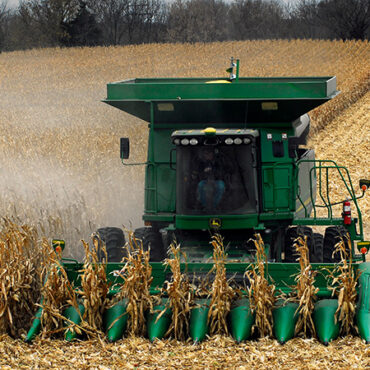
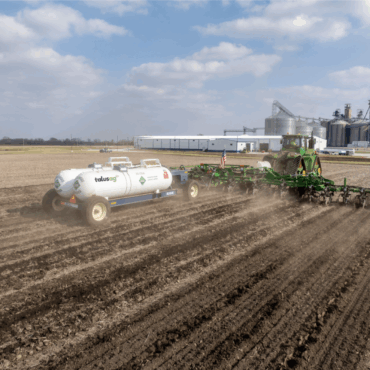
Wes Beck says he’s grateful he bought his nitrogen fertilizer back in December for the upcoming planting season, before fertilizer prices jumped 20% due to the war in the Middle East that began Feb. 28.
Beck, a southern Minnesota farmer who grows corn and soybeans, says some growers “got their fertilizer early, but not everybody.” For the Minnesota farmers who haven’t, the shift in fertilizer prices is painful, especially given that farm margins are already extremely tight with land rents, machinery, and input costs still elevated.
Practically all major farm crops require fertilizer for maximize yield, particularly nitrogen-intensive crops like corn, cotton, wheat, and sorghum.
Nitrogen, phosphorus, and potassium primarily make up the three macronutrients in farming fertilizer. Nitrogen is derived from urea and ammonia, and its supply chain is closely tied to where the Middle East conflict is happening. (The region accounts for about one-third of global urea and ammonia exports.)
The Strait of Hormuz, bordering Iran, is a critical shipping corridor for key fertilizer materials and finished fertilizer. The strait is functionally closed to most commercial shipping and oil tankers due to intense conflict. These supply chain shocks are expected to drive already record-high input prices even higher, some economists predict.
“If farmers are unable to obtain the remaining supplies in time, we could see reductions or shifts in planted acreage and lower yields, which affects our nation’s food security and the affordability of essential goods,” the American Farm Bureau Federation reported last week.
If there’s a silver lining, it’s that the United States imports more of its fertilizer from Canada than the Middle East, says Dan Glessing, president of the Minnesota Farm Bureau and a dairy farmer who grows alfalfa, corn, and soybeans. The rest of the world, especially Brazil, relies strictly on the Middle East.
A Minnesota Company Steps In
Amid the uncertainty, one Minnesota-based company is positioning itself as part of the solution.
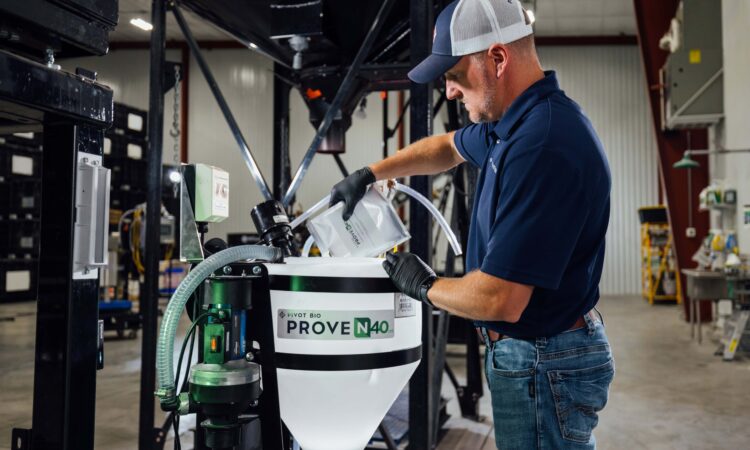
Pivot Bio, a fast-growing agtech firm that relocated its corporate headquarters to Minnetonka earlier this month, is betting that its alternative approach to nitrogen fertilizer can help farmers navigate both price volatility and long-term sustainability challenges.
The company produces microbial nitrogen products—living microbes that attach to plant roots and supply nitrogen throughout the growing season. Unlike traditional synthetic fertilizers, which can leach into waterways or evaporate into the atmosphere, Pivot Bio’s solution stays with the plant, says CEO Chris Abbott. “It’s essentially weather-proof nitrogen.”
RELATED: A Little Extra Wind Could Help Shield MN Farmers From Instability Overseas
That distinction matters. Abbott estimates as much as half of synthetic nitrogen applied in U.S. agriculture never reaches the plant. That inefficiency represents both an environmental challenge and a financial loss for farmers.
Pivot Bio says its products can help reduce that waste while maintaining—or even improving—yields.
Why Minnesota is a Great Match for Pivot Bio
Founded more than a decade ago in Berkeley, California, Pivot Bio says its products have helped domestic farmers curtail annual emissions equal to 3.4 gas-fired power plants, 7,200 rail cars of coal, or 270,000 homes’ electricity use. It also estimates farmers have used 129,000 metric tons less of synthetic nitrogen fertilizer, conserved more than 665 million gallons of manufacturing water, and avoided more than 102,600 metric tons of nitrate leaching since the company launched.
That has been a positive story for environmental advocates. And in today’s market, with fertilizer prices climbing, cost stability is becoming just as important as sustainability.
Abbott says the company recently lowered prices by 15% in response to the geopolitical shock—an unusual move in a rising-cost environment.
“You have to be the lowest nitrogen prices in a commodity market,” he says. “Growers win if we deliver a higher-performing product that helps them reduce synthetic fertilizer and improve yields.”
The company frames its offering as a premium product, but one that can deliver a strong return on investment. Minnesota, with its vast corn acreage, has become one of Pivot Bio’s top markets.
About 50 Pivot Bio employees are now based in the state, and Abbott sees the Twin Cities as a natural hub for agricultural innovation.
“There’s no better place to be an ag and food company,” he says, pointing to the region’s concentration of Fortune 500 firms and research institutions like the University of Minnesota. “We were in Berkeley and had significant presence there. Moving to Minnesota, there will be growth here. The more companies move here, the more there will be great-paying jobs.”
Could Farmers Plant Less Acres This Year?
Back on the farm, timing remains everything.
Glessing, who hasn’t yet purchased all his fertilizer for the season, is watching both markets and geopolitics closely. If the conflict is short-lived, the impact may be manageable. If it drags on, tougher decisions could follow.
“The longer this goes, the more people start thinking differently,” he says. “If you don’t fertilize, you won’t get as good of returns on your investments you’ve made.”
For now, most farmers are holding steady, with planting plans largely intact.
“Acres will all be planted to something,” Beck says. “Farmers don’t apply nitrogen fertilizer to our soybean crop because it makes its own nitrogen. Economists would suggest that if you didn’t have nitrogen fertilizer bought yet for corn, the numbers will tell you to plant more soybeans. I think that’ll happen.”
If farmers applied fertilizer last fall, he adds, it would “take a lot to switch farmers’ plans of total planting acreage this year.”
But as fertilizer markets tighten and global supply chains remain fragile, companies like Pivot Bio are hoping this moment becomes a turning point. Not just for prices, but for how farmers think about where they source feed for their crops.