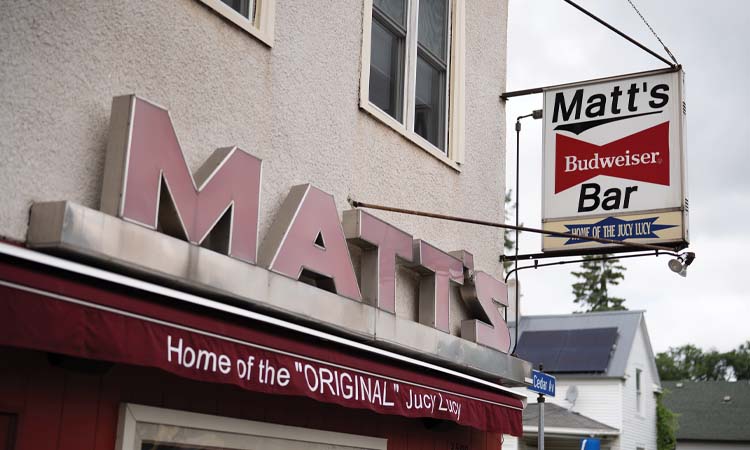
Nibs Martin had a problem. He owned a bar at 35th Street and Cedar Avenue in South Minneapolis—a two-story building on the southwest corner, dating to 1914. It had been a store and a dentist’s office, but sometime in the 1940s, Martin turned it into a bar, with a small griddle and deep fryer by the entrance. The problem in post-Prohibition Minneapolis was that city fathers were not big on neighborhood drinking. Bars could only sell low-alcohol 3.2% beer, which required too many trips to the bathroom for the desired effect.
Nibs decided to open a joint at 26th Avenue and 26th Street (known colloquially as “the hub of hell” for its density of sin establishments), where he could purvey real beer, booze, and entertainment. He sold the tavern on Cedar to his bartender, Matt Bristol, in 1954. Bristol changed the name from Nibs to Matt’s and ran the place for 36 years.
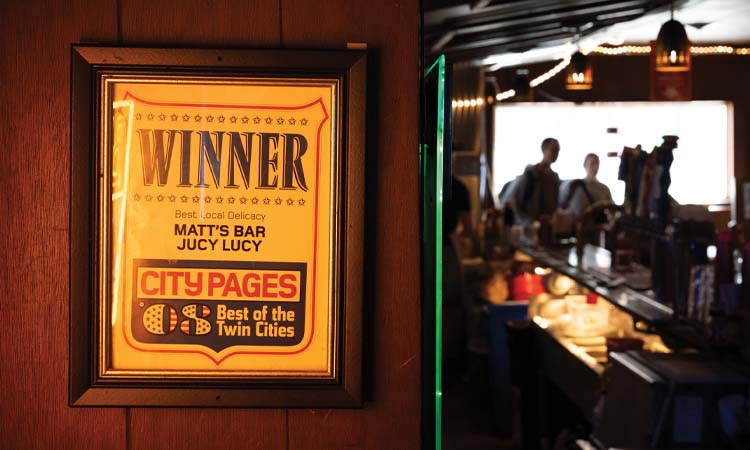
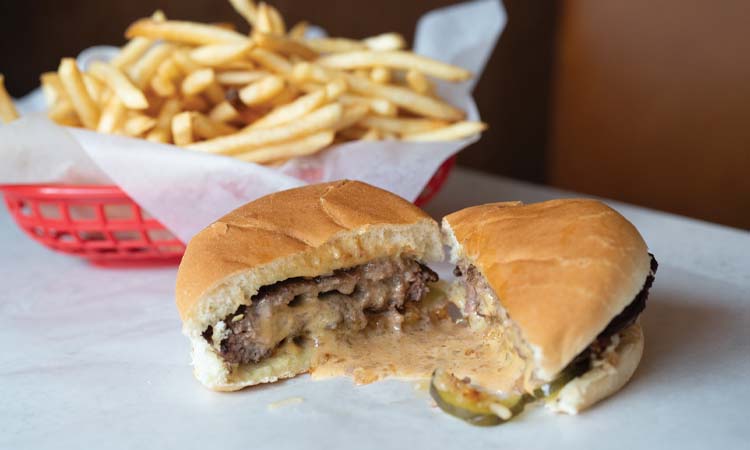
Early on, a customer asked for a burger with the cheese placed inside two patties. Bristol obliged. Biting into the thing, the diner exclaimed, “that’s one juicy Lucy!” Not long after, the gimmick made it on the bar’s tiny menu for 65 cents (today, $10.50). Spoiler: It’s no longer a gimmick.
The Matt’s experience is multifaceted—from the iridescent 1950s wallpaper to the perfectly thin foodservice fries—but without the Jucy Lucy (the “i” was lost in a menu printing/signage error that stuck), Matt’s would have been just another Minneapolis 3.2 bar that probably wouldn’t have made it out of the 1970s.
Bristol sold Matt’s to his daughter Cheryl in 1990. (Matt passed away on the day President Obama visited Matt’s in 2014. His wife, Donna, in her 90s, still lives in their Minneapolis home, where rolls of Matt’s old wallpaper sit in the basement.) Cheryl struggled to sustain the business while raising a young family and accepted a 1998 buyout from Scott Nelson, a corporate restaurateur looking for his own thing.
“I wanted a timeless place, not a trendy place. I liked burgers,” Nelson recalls. “It wasn’t as busy, it had plateaued. I was young and motivated. I didn’t want to ruin it; I wanted to grow it. I loved the simplicity of it. You just had to be consistent, do a couple things well.”
Over the 27 years of Nelson’s ownership, Matt’s has blown out, as a Lucy is wont to, transitioning from a local secret with a loyal following to a nationally recognized destination. Seventy years after Matt Bristol agreed to a customer’s special order, the Jucy Lucy is the gift that keeps on giving, sustaining multiple Twin Cities restaurants and putting an overlooked region on the map of American foodways.
As for Matt’s, it’s the rarest of stories: A business that has grown from obscure to iconic while retaining its essential soul. It’s doubtful Nibs Martin or Matt Bristol would have believed that their neighborhood bar would one day become the most successful tavern in the state.
But such is the miracle of Matt’s.
Ten old guys at the bar drinking coffee
“Matt’s has an incredible vibe, one that’s been built over decades like an oyster builds a pearl. It’s 100% genuine, and these days that’s really unique.”—Andrew Zimmern
So what is Matt’s and why is it so popular? Some say it’s a dive bar, that déclassé strand of the urban fabric where the upper classes migrate to reassure themselves they’re still bohemian.
St. Paul’s Bill Lindeke literally wrote the book on Twin Cities dive bars (Closing Time, co-authored with Andy Sturdevant). He says no: “It’s true that Matt’s doesn’t have windows,” a hallmark of dive bars, “but it also doesn’t have regulars, it’s too busy. It’s more of a vernacular food mecca, a historic treasure like Al’s Breakfast.”
Matt’s popularity is in part due to its ability to avoid polarization. High-profile eateries have constituencies: The suburban SUV crowd. The Subaru neighborhoods. Blue collar. White collar. Hipster. Establishment. Matt’s appeals to almost everyone. “Matt’s is a unifier, not divider,” says Lindeke.
Nelson bought the bar 23 years after graduating from Edina High. Though he’d labored on the corporate side of the restaurant business, he’d worked for the best: TGI Fridays in its Carlson Cos. glory days and Lettuce Entertain You in Mall of America’s growth years.
Matt’s in the 1990s was already well-known, but locally so. “When I bought it, we’d still get Matt’s friends, ten old guys at the bar drinking coffee,” says Nelson, “But it’s still a [multi-] generational restaurant if we can take care of people.”
“We had regulars we would call if they didn’t show up,” remembers Renée L. (who prefers her last name not be used), a Matt’s server whose tenure dates to just before Nelson’s ownership. “It was still a neighborhood bar in that way.” Matt’s stayed open until 1 a.m. for the nurses and cops who needed somewhere to go post-shift.
Though Matt’s has grown beyond the realm of a neighborhood tavern, in difficult times it reverts to that role: after winter storms, during Covid, or after George Floyd’s murder, which took place a mile to the west. That weekend, Matt’s picture window was smashed and the restaurant boarded up. Nearby businesses were being firebombed or vandalized and were afraid to reopen. Nelson returned from his Florida home to the bar, took up residence, and reopened Monday morning.
“The neighborhood becomes a food desert in times of trouble. We’re used to feeding everyone, the neighborhood needed us,” he recalls. Matt’s fed the National Guard, which was not popular on social media, but Nelson was undeterred. “I was terrified for my bar and my people, but we needed to be there.”
Scott Nelson has owned Matt’s since 1998.
“There’s something about the environment; I can’t put my finger on it. Because you can get a burger anywhere.”
—Scott Nelson, Matt’s owner
You go home with onions in your shoes
We’ve all sat at Matt’s, smelling the sizzling burgers and steaming fries, staring at the grill man’s back, wishing he could move a little faster. Though the grill maxes out at 40 Jucys, it can optimally manage up to six tables at once. (It’s common for diners to order multiple sandwiches.) Raw Jucys start at the rear—flat and barely dissimilar from a regular burger—where they’re doused with a salt/pepper mixture. As they cook, they balloon but shrink in diameter. When the grill man flips, they move to the front. When done, the Jucys stack almost vertically against one another, like a customer at a bar, and very little surface contact with the grill.
“The grill man can’t be too fast or too slow,” explains Renée. “Too fast and you have no time to clean, to BS with a regular. Too slow and you’re standing around. The sweet spot is 20–35 minutes to get your order.”
Matt’s offers a cheeseburger, double cheese (don’t sleep on this one), a grilled cheese, and a chicken sandwich (which has supplanted the hot ham and cheese due to changing tastes). There’s ketchup, mustard, and tiny paper cups of mayo, for a charge. That’s it.
It takes 15–17 minutes to melt the cheese in a Jucy, arguably a bit too long to keep the meat optimally moist. The double burger takes twice the space on the grill but cooks in half the time. Buns aren’t toasted; Matt’s has no oven and toasting on the grill would slow it way down.
“We had a guy, we called him grilled ham and cheese guy, he would come in and order four or five,” recalls Nancy Neuman, who cooked at Matt’s from 2006–08. “I’d panic when I’d see him. It took up so much space on the grill.”
“It’s the same burger as 1954, the same grill,” adds Nelson. “We’re just five times busier. You have to have great cooks for the volume we do, it’s not easy.”
In Matt’s basement sits a locked door, just past the bathrooms. Behind the door are a series of coolers with racks and production numbers ranging from 500 to 750 taped to a wall.
Nearby is a squat $60,000 machine, the Hollymatic, which turns massive tubes of ground beef into patties—which look to be about a sixth of an ounce (the grind is a secret)—separated by thin sheets of paper. Next to the Hollymatic is a press with a large handle. A patty is placed inside, topped with two small slices of Kraft American cheese cut from a foodservice log, then topped with another patty. The press, custom designed for Matt’s, is pulled four times to get the proper seal.
It’s called “squeezing,” and was done by hand until roughly a half-decade ago. That was back when maybe you’d need just a few hundred in a day. The grill man could do them in his downtime. Now, though, there is no downtime, and a typical day requires a minimum of 600.
Matt Bristol liked his burgers rare, an option not available today—temperature orders are politely declined. On a recent Wednesday, genial grill man Mitch Ditlefsen, in his second year at Matt’s, was slicing whole onions for old-timers who like a raw slice on their burger. He expected two onions to last the entire shift. Diced onions for the Jucy are rehydrated from dry and then caramelized on the flattop. (“You go home with onions in your shoes,” says Neuman.) The grill man also handles fries, dumping half and full orders from hot oil into red baskets for service.
The dividing line is the oyster knife. It is at the grill there to pierce the Jucys as they cook, allowing grease to drain out and forestalling blowouts. But not all grill workers agree on its merits. Ditlefsen thinks it creates blowouts rather than eliminating them and leaves it off to the side.
Matt’s goes through as much as 500 pounds of meat a day in peak season, sells 500-plus Jucys a day in the bar, and roughly 300 pounds of fries. In the bar’s closet-like storage room sit 34 racks of buns (Village Hearth), about enough for a day and a half.
The staff seems to miss the hot ham and cheese, but it left the menu because it required the space of three Jucys on the flat top.
Where the magic happens. (A Jucy was 65 cents when it debuted, it’s currently $10.50.)
People steal everything
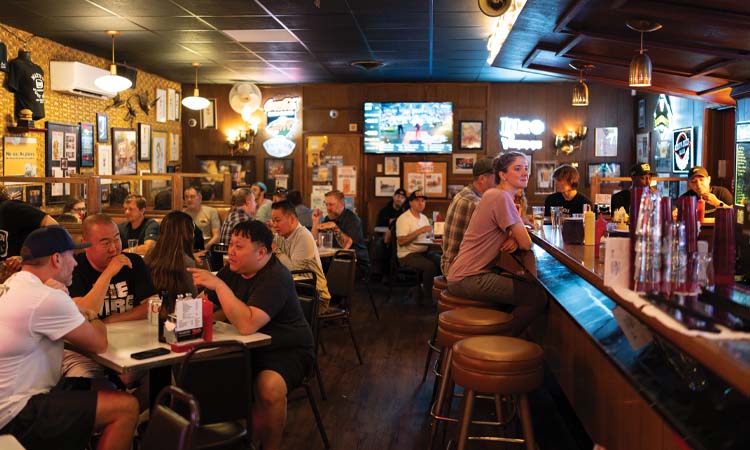
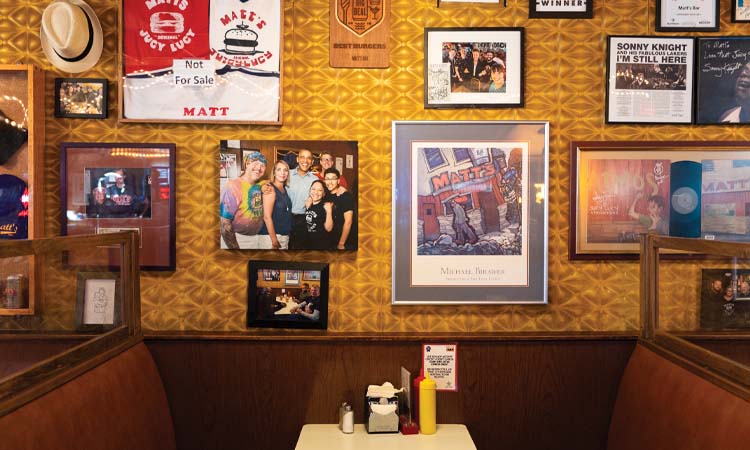
A walk through Matt’s in the minutes before opening, shades pulled to keep the A/C at peak, is like a moment in a time capsule. There’s the textured wallpaper, different at the booths than behind the bar. Napkin dispensers from the same era (general manager Amy Feriancek buys up all she can find on eBay).
“There’s something about the environment; I can’t put my finger on it exactly,” says Nelson. “Because you can get a burger anywhere.”
Among the 1950s pictures of Matt’s and ancient Formica and Naugahyde booths are “advertisements” made for Matt’s in the ‘oughts by a local ad agency, Maverick Englehart, press clippings spanning generations, and wall odds and ends both classic and modern.
Much of it is nailed down because for many, a T-shirt (Matt’s has sold 100,000 over the years, $25) is not enough. “People will steal anything,” chuckles Feriancek. Customers have stolen a vintage carved duck from the wall, glassware, salt shakers. “They steal our laminated hours sign out of the entryway.”
The booths, Formica tables, and napkin holders are original. Matt’s requests you don’t steal them.
Cheryl has a space for you
Matt’s is not a Minnesota Nice experience, with a lot of forced smiles and fake bonhomie. The service is direct, with an eye to efficiency. If you don’t ask for ranch or a burger wrapped in lettuce, you might get a sentence or two of genial chat. It’s hard, relentless work, but turnover is low.
“I work from 11 to 5 and I work a six-hour rush. Any shift at Matt’s, you assume you work from start to end,” says Renée. “Some people don’t like the way we talk to them, the rules, the things we don’t have. I know there are people who leave dissatisfied. No ice surprises people. But if that’s what ruins your day, you’re doing pretty good.”
Renée has been with Matt’s since just before Nelson bought the bar. Her sister worked at Matt’s at the time. “She called me and said Cheryl has a space for you. I was planning on going to college.” (Matt’s is a family place: Current servers Jessi and Tina are sisters.)
Recently, Matt’s had eight 20-year employees. “Customers love to see the same people,” says Nelson.
“It’s a great job. Working here is like theater. It leaves room for your personality,” Renée explains. “That’s what makes Matt’s so great, freedom and money. And profit-sharing. Money goes a long way.”
You get used to lifting the bull
Beyond the nostalgia and romanticism, Matt’s is a business—with certain features that provoke envy in other restaurateurs. It’s all cash—no checks or cards, meaning no NSFs, no interchange fees. There are two ATMs in the bar in case one goes down, because no one carries cash anymore.
“We cut hours after Covid and it didn’t hurt sales,” notes Nelson. “The smoking ban helped business.”
Matt’s is optimized for efficiency and its limited space. All drinks but beer are served in a can or bottle because there’s little room for glassware or ice. Matt’s is no longer a 3.2 bar, but Nelson is just fine with strong beer alone. It’s Grain Belt Premium’s largest Minnesota account, but Matt’s gets less than 20% of its sales from liquids, melted cheese notwithstanding. “I’ve never wanted the problems that came with a lot of alcohol sales,” Nelson explains.
Three employees work the entire place (grill, bar, server), plus sometimes a helper who restocks. Nelson owns the building and lives on the second floor when he’s not in Florida, so there’s no rent. A major remodel or expansion would require moving bathrooms out of the basement to comply with code, but Nelson is content with Matt’s in situ.
Feriancek says in the summer roughly 70% of customers are visiting, while in winter 50% are. Sports events, concerts, and local gatherings drive crowds. Matt’s is a bucket-list box to check off. That was not the case when Nelson bought the bar.
“We just got busier and busier after Scott and [wife] Cathy bought it,” says server Renée. “We got college hipsterish. The internet and [food] TV shows boosted us. People travel and come to Matt’s. It’s a pilgrimage. We learned to adapt, it was gradual. I call it lifting the bull. It gets a little heavier each day. For the newbies, the pace is a lot to get your arms around.”
It’s been more than Nelson might have imagined—a quintupling of business with no marketing or physical expansion. “I was 41 when I bought it,” he recalls (he’s now 69). “I wanted to feed my family, make a decent living, eventually move to Florida. I don’t like stress, and I’d seen a lot of failure. I wanted to do it right. I think I’ve run it pretty well, all things considered.”
Feriancek has worked for Nelson for almost as long as he’s owned the bar. She started at 21 as a server and though she had dalliances with corporate jobs, she always kept a shift at Matt’s. “I’ve learned so much from Scott,” she says. “He’s really got a genius for this business.”
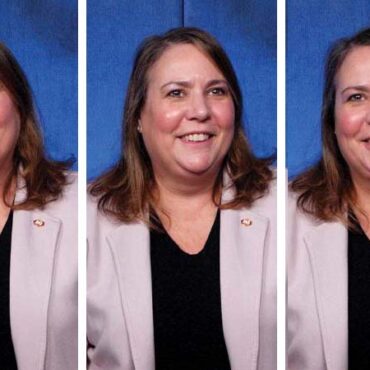
Nearly a decade ago, Feriancek gave Nelson a polite ultimatum. She wanted to be in leadership, stop working nights, see her commitment rewarded. Said she would probably leave otherwise. Nelson worked 200 consecutive days when he bought Matt’s, but now spends most of the year in Florida. Feriancek had become his eyes and ears. She says Nelson seemed peeved at first, but soon after named her general manager.
“It’s a big step, but scott trusts me with his brand. There’s already enough demand to keep two [food] trucks busy.”
—Amy Feriancek, Matt’s general manager
The concept of enough
Matt’s doesn’t use a computerized point-of-sale system, servers place orders on old-fashioned paper guest checks, which go in the trash after service. But Nelson tracks Jucy sales, every day, every week, and “we’ve never had a down year.” Matt’s, he says, maxes out at 750–800 on a weekend day, basically 10 for every seat in a restaurant that is open 12 hours a day. (Takeout is limited and inconvenient and only comprises 5% of Matt’s revenue.)
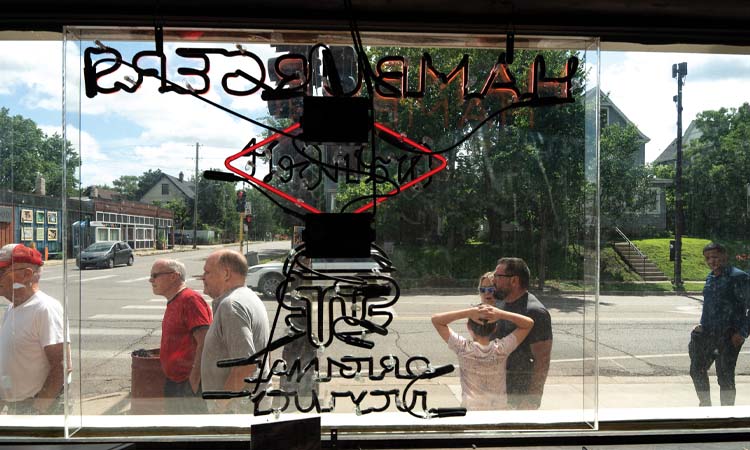
Customers have to wait to get a table at Matt’s virtually from open to close. 10 p.m. in winter might be the only reliable time to find an open table or stool. “When we see a line, we relax,” quips Feriancek. For Matt’s to grow, it would either need to alter the historic bar or add another location, which would not have the vibe of the original. Neither option appeals to Nelson.
Feriancek had been fielding requests for Matt’s to cater special events or close for private parties for years, requests she couldn’t fulfill. But recently, she began to explore the idea of a food truck.
“Customers want more of us, but I don’t want to cannibalize the restaurant,” Nelson explains. “So we’re going to grow the truck and then turn most of that over to Amy. I owe a lot to her and want her to have something for her family.”
Renée puts the generosity into context: “Scott has enough” and is content to grow the business to support others, she explains. “The concept of enough is hard for some people to understand today.”
Nelson has that luxury because Matt’s is a very successful business. Almost every component of its operation is optimized. “Everything we do is based on eliminating steps,” he says.
Twin Cities food icon Andrew Zimmern—who operates his own burger joint, Patty and Frank’s, out of an Atlanta food hall—has been observing Matt’s for decades. “Their hard and soft costs are as tight as you can find,” says Zimmern. “Because they serve an iconic item, it’s going to attract visitors from out of town [which fills the dead hours that afflict most bars and restaurants]. … I would guess they’re doing between $3 million and $5 million a year in [food/beverage] sales, and I have to assume they are bringing 50% to the bottom line, and it wouldn’t shock me if that number was bigger.”
A typical restaurant produces margins around 10%, with the most lucrative generating around 15%. Many do far less. Zimmern’s estimates, which TCB ran by several other longtime local restaurateurs, would place Matt’s among the most profitable restaurants in the metro area, with earnings similar to the highest-grossing steakhouses.
One or two food trucks, which operate seasonally and for limited hours, may not ever outpace the original bar, but given Matt’s margins, they extend its brand (further bolstering 35th and Cedar) and deliver incremental profitability. Since the truck can serve twice as many customers per hour as Matt’s can, a six-hour shift at a popular event could generate nearly the same revenue as the bar on an entire day.
Family or sell
For the first time in a very long time, Matt’s is in a time of transition. “A lot of my original hires are aging,” explains Nelson. “It’s a new regime. My son’s cooking for us, and he’s starting to learn it.” Add the challenges of managing a food truck, and Matt’s future is suddenly not just more of the same.
Nelson is vital and has no interest in selling—yet. But he wants to figure out if son Sean has a feel and thirst for the business. Otherwise, sometime in the next decade, Matt’s will once again change families. Feriancek is a logical successor. “Family or sell is the question,” Nelson says, “but I’m not there yet.”
Expansion may unnerve Matt’s traditionalists, but Feriancek frames it this way: “We needed something new that kept us the same.” Once she matures the food truck operation, there’s another peak to scale. “The ultimate goal is the State Fair,” she says, estimating it would require six grills cooking 600 Jucys an hour.
Time marches on, and the old bar at 35th and Cedar will never again be the joint that Nibs Martin or Matt Bristol built. But a couple days each winter—when ice and snow keep the visitors in their hotels and the suburbanites afraid to brave the not-yet-plowed city streets—Matt’s fills with locals, as it did back in the day. And on those days, reputedly, one can find an open stool, order a double cheeseburger and a cup of coffee for $12.50, and watch Mitch Ditlefsen tend the grill while snowflakes fall.
No consultant can engineer it, yet now and then a joint becomes so special that it simply transcdends the sum of its parts.
“I detest overcooked burgers; I am not a fan of cheese on my burgers. I am persnickety about beef and bun quality,” Zimmern says. “And yet I would crawl across a desert of broken glass to have a hot-off-the-griddle Jucy Lucy.”
Matt’s on Wheels
Matt’s is basically full, open to close. General manager Amy Feriancek and owner Scott Nelson had mused for years about how to say more than “no” to requests to cater special events and grow a business that had no way to physically expand. The answer eventually became clear: a food truck. It would allow Matt’s to add business while maintaining the specialness and exclusivity of the dine-in experience.
Feriancek bought a truck in March that had been used by the University of St. Thomas. (She co-owns the truck.) It went into service this past spring. She believes the truck, at maturity, could be as large a business as Matt’s, even operating just seven months of the year, the extent of food truck season hereabouts.
“It is a big step, but Scott trusts me with his brand,” she says. “There’s already enough demand to keep two trucks busy. We’re overwhelmed by requests; I have two staff just answering emails.”
Feriancek is particularly eager to work on fundraisers and serve suburban and older exurban customers who lack the capacity to drive to Minneapolis and wait in line. She doesn’t foresee a lot of truck events in the bar’s trade area. And there’s no ice on the truck. Or ranch. But it does take credit and debit cards. (It’s not a policy change; many food truck events require it.)
Celebrity Sightings
Celebrities at Matt’s aren’t as common as you’d think, because no one escapes the line (even takeout, which is processed in order of customer arrival). Or maybe the staff is just too busy to notice.
“Mick Jagger came in a bucket hat to order takeout. No one recognized him,” recalls server Renée L. “I tell my colleagues [If someone famous shows up when I’m not working], ‘I live nearby, you better well text me.’ ”






 It takes 15–17 minutes to melt the cheese in a Jucy, arguably a bit too long to keep the meat optimally moist. The double burger takes twice the space on the grill but cooks in half the time. Buns aren’t toasted; Matt’s has no oven and toasting on the grill would slow it way down.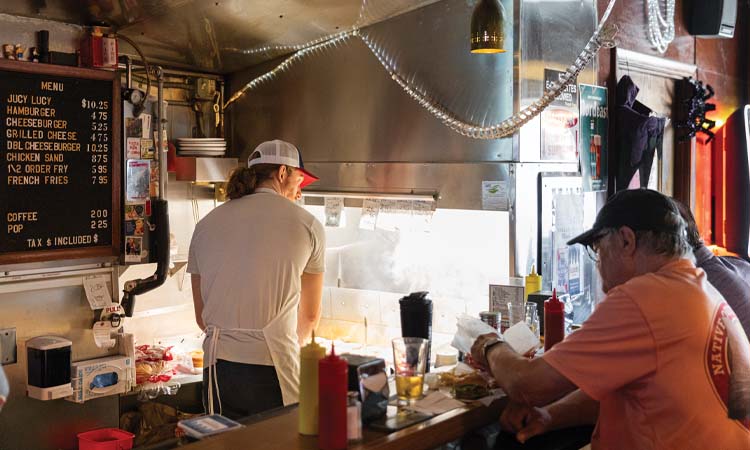
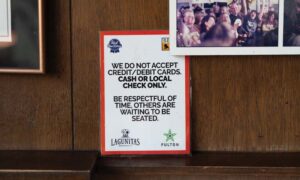 Beyond the nostalgia and romanticism, Matt’s is a business—with certain features that provoke envy in other restaurateurs. It’s all cash—no checks or cards, meaning no NSFs, no interchange fees. There are two ATMs in the bar in case one goes down, because no one carries cash anymore.
“It’s a big step, but scott trusts me with his brand. There’s already enough demand to keep two [food] trucks busy.”