

The Business of Death and Dying is Changing
Jeff Johnson wants to be clear that his funeral must only ever be referred to as “Jeff Johnson’s Awesome Funeral Party.”
This party is “designed to make people cry like avenging Sicilian grandmothers,” he wrote in his funeral directive, a 7-page legal document included in his will. Further down the page, he continues: “I wish for nothing more than an awesome party for all the people with the temerity and questionable standards that allow you to love me.”
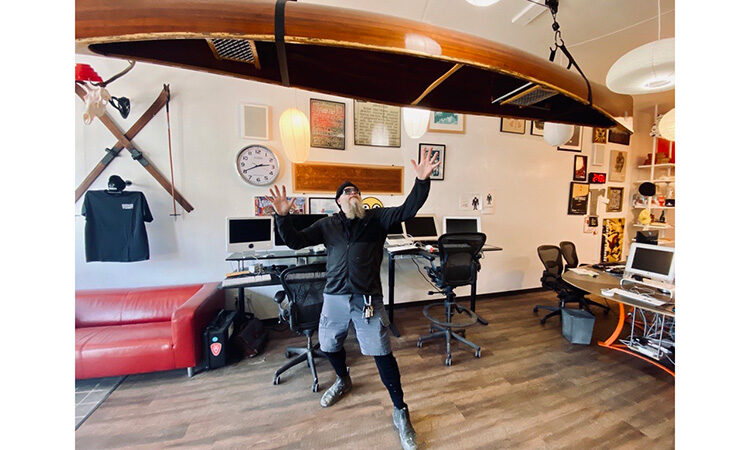
Johnson is among a growing portion of the population looking to rethink the oftentimes taboo topic of mortality. He thinks of investing in an end-of-life celebration as “a worthy lifestyle choice,” Johnson said while sipping espresso in his South Minneapolis boutique design studio Replace. “It’s really a last thank you to your friends and loved ones for putting up with you,” he joked.
The human struggle with mortality is a universally shared experience. TCB recently checked in with multiple death and dying industry experts to learn more about how the field is changing. They all said the same thing: The future is proactive.
Younger generations are talking about death and dying more as they learn lessons from how their parents and grandparents die. There are lots of conversations to be had. As we see with Johnson, some of these conversations can be fun and light, but others are hard. Outside of planning the party, there are plenty of planning details regarding estate, power of attorney, and health care directives, for instance. Working through those topics ahead of time can lessen the burden placed on loved ones after someone dies. For those less afraid of death and more afraid of dying, there are resources out there to help process that, too.
We only get one death. So let’s talk about it and the industry built around it.
Moving away from the traditional funeral
Last year, a couple of years after Johnson wrote his funeral directive, Replace began designing marketing material for an end-of-life event company Johnson says caters to “weirdos like me.” Johnson was approached by Kelly Roberts, owner of Roberts Family Funeral Home, to help with marketing material for the funeral home’s spin-off company Sendoff. Roberts was looking to break away from the traditional funeral service to provide people and families an option to plan a personalized sendoff for themselves or a loved one. Partnerships with other local businesses and venues helped make it possible.
“It’s about letting the consumer know that it’s okay to do things differently than what they already know. The funeral industry often only guides families down this one path and it’s very traditional,” Roberts said.
Sendoff, which coordinates specialized events in addition to providing cremation or burial, launched in November of last year. The company is still picking up momentum, Roberts said, but it has provided a handful of specialized services, including one for former Team USA hockey player Steve Griffith.
How people want to be celebrated and what they want to be done with their body is changing, Roberts said. When Roberts Family Funeral Home opened in 2005, 60% to 70% of funeral services were held in a church. “Now that that’s flip-flopped. We do the majority of the services within our space here and maybe just 30% off-site in churches.” Notably, the Roberts family put a bar in the funeral home when it first opened, which could contribute to the appeal of that venue.
People also are looking to be buried or cremated differently now. While there has been growing interest in green burials, the Midwest hasn’t seen as much as the West Coast has, Roberts noted. Alcohol hydrolysis, which is often referred to as “green cremation,” has also picked up traction. Still, the majority of people opt for a traditional cremation.
Places people choose to be buried or remembered are also changing. Cemeteries themselves have been reconfiguring their approach, too. Last year, Lakewood Cemetery announced plans to make its space a destination through an expansion project. The expansion would include a half-mile walking trail and four new garden areas. Even obituaries — a longtime staple for the newspaper industry — are changing, too.
While remembrances don’t always have to be a cemetery, Roberts said his company tells families it’s still important to have a place to go to remember a loved one.
“They can eat at a favorite park where that individual love to spend time, or go to that favorite lake where they loved to fish, the favorite ski hill that they love to ski on. They can scatter those remains in those spaces as well,” he said.
Younger generations want to talk about it
The changing landscape of end-of-life planning could be happening in part because people are starting to talk about it more and earlier.
Younger generations are more curious about death and dying, said estate planning and elder law attorney Rachel Schromen. “They want to talk about it, they want to learn about it, they want to have a plan in place. One thing that I think has given rise to that is you have a whole generation whose parents didn’t talk about any of this stuff, maybe didn’t get their planning in place,” she said. That can leave kids “feeling totally unprepared.”
“They’re having to administer a parent’s estate with no plan in place, and they’re realizing that there can be a better way.”
At a minimum, estate planning involves designating a person’s power of attorney and establishing a health care directive, Schromen said.
“Those are documents that, frankly, people should be doing when they’re 18,” she said. “Those documents plan for who will step up and manage finances or make medical decisions for a person who is alive but incapable of doing those things themselves. Many young people don’t think about that.”
Shromen Law offers a range of community events, most of which are free to the community, that address topics like writing an obituary, green burial, conversations on grief and legacy planning, and fears around death.
Many attorneys will do a free consultation. Schromen says it’s good to at least ask questions and get advice from an attorney to determine what estate planning is needed. Probate Court can cost more money in the end if people do not plan ahead, she noted.
Hospice industry shifts
There are few who work more closely to death than hospice workers. Many people struggle more with the process of dying than death itself, Grace Hospice chaplain Chris Peterson told TCB.
A shift Peterson has noticed in hospice care is people looking to begin hospice care earlier rather than waiting until their last few weeks of life. When Grace Hospice receives feedback from families, two major themes come up often, he said: Many say they wish their family member received hospice care sooner. Many also note how grateful they are for the love of the people who provided care.
“It’s not, ‘Oh, the medicines helped so much.’ It’s not, ‘Oh, you did this intervention or you provided this service.’ It is, ‘This team of people came in and they loved my mom or dad,’” he said.
Relationships are what people remember, and there are typically five important conversations that lend the most to a peaceful death, Peterson said. “It’s not rocket science. Those conversations are: I love you, thank you, I’m sorry, I forgive you, and goodbye.”
Peterson said he has learned a lot in his 11 years working as a hospice chaplain. Mostly he thinks about those five conversations. They seep into daily conversations with his teenage sons. “If I need to tell them I’m sorry, I tell them I’m sorry. If they need to hear I forgive you, then I tell them that. I tell them I love them. I tell them thank you. And when I go to work every day, everybody gets a goodbye.”
While Peterson is a chaplain, he said he meets patients where they’re at, working with people of all faiths and spiritualities or lack thereof. “We aren’t pushing an agenda,” he said.
He sees patients struggle with life decisions that were good in the moment but they regret at the end. Hospice workers watch for estrangements, and they learn from the wisdom of patients’ struggles and successes. “They have a lot to tell us about living a good life,” Peterson said.
Conversations around death and dying remain difficult. We all grapple with them. But, perhaps there’s space for hope and comfort in these conversations. Because, as Peterson told me: “There is such thing as a beautiful death… We die like we live, by and large.”
You die how you live
Death is not imminent for Jeff Johnson, but he says he’s prepared for it. He repeated the same sentiment as Peterson: “You die how you live.”
Investing in a funeral can be approached in the same way people invest in a wedding, Johnson said. His party will likely cost around $20,000, but he’s already started saving for it. After going through the trials of his father’s unexpected passing, Johnson made sure to work with his mother leading to her death. He was her power of attorney and made sure to ask questions like: What music do you want playing at your funeral? What flowers do you like best?
“It made for a much more pleasant experience,” he said.
As for what Jeff Johnson’s Awesome Funeral Celebration will look like? It’ll go something like this:
His remains are to be cremated, then his ashes are to be cut with tobacco, PopRocks, coffee, and biodegradable glitter before they are spread between Lake Nokomis, Lake Hiawatha, Minnehaha Creek, and Lake Superior Harbor in Duluth.
Johnson does not have one “Awesome Funeral Mix” planned for the event. He has two, which will be provided to party-goers. They will canoe through Cedar Lake, Lake of the Isles, and Lake Bde Maka Ska, landing on the lake’s east shore. They will disembark and walk to dinner and an open bar. Once they return and canoe back through the lakes, the party will end with a rendition of “If I Should Fall From Grace With God” by The Pogues, followed by the Lutheran Benediction. Seven archers shoot biodegradable arrows into the lake. Everyone hugs, then leaves with a parting gift: a Nalgene water bottle wrapped in 5 feet of duct tape and filled with a small bottle of gin, a bag of whole bean coffee, a cigar, a lighter, a small knife, and a pack of firecrackers.
“There is an unhealthy relationship we have with mortality in the West,” Johnson said. “We fear getting old. We fear death. We fear looking old. But we all face it. You don’t get on a roller coaster because you fear the end. You get on the roller coaster for the fun.”