

Q&A: Nate Westgor of Willie’s American Guitars
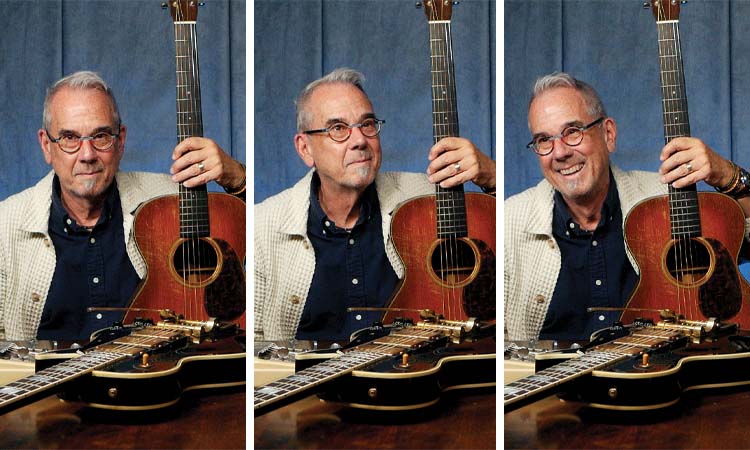
On Eustis Street in St. Paul, just across the border from Minneapolis, is a small guitar store. Nate Westgor, aka Willie DelMar, opened in 1989 with a $15,000 bank loan. Since then, the music industry has shifted rapidly—while the vintage guitar market keeps getting stronger. Willie’s has become a must-stop for some of the world’s biggest artists. Its client list includes Bruce Springsteen, The Who, Sheryl Crow, and more. Westgor shared lessons about building a business, how entrepreneurs can start cheap, follow their passion, find a lane, and go for it.
What is Willie’s Guitars, and how does the business actually work?
We’re really in service to musicians. We also send instruments out to studios sometimes. There might be a need for something specific—guys will use it in a recording and send it back. It’s not uncommon for someone to ask, “Do you have a sitar?” and I’ll say, “Yeah, I’ve got something,” and send it. I’m there in service, and I know guitars. That’s really what the business is.
Who are your customers today? Is it collectors, working musicians, both?
It’s both. There are collectors—guys that are really into guitars—and then there are working musicians. And then there are artists at a very high level. They don’t need a new friend; you’re there to help them. I never ask for autographs. I never bug them. Everybody needs their privacy. You just have to keep your space. I’m just there in service and I know guitars.
You’ve talked about guitars almost like assets—how do you think about them from an investment standpoint?
Yeah—vintage guitars have gone up in value. There’s a publication, Vintage Guitar Magazine, that tracks this. According to them, those instruments have appreciated about 13.5% a year. During the Great Recession, they flattened out—just like houses and stock portfolios and other collectibles—but over time, the trend is up. If you look at a graph, there are plateaus, but the overall movement is upward. I bought a guitar for $3,000 that’s now worth $60,000, and I still wouldn’t
sell it.
Why do people play old instruments?
The No. 1 answer is the wood. These guitars were made from very old trees. When you tap them, there’s a tone, but also aftertones and harmonics. There’s a depth and resonance to old wood that’s hard to explain until you hear it.
We deal in guitars, but it’s also advising—someone might buy something and want another set of eyes on it. If I know you, I can help with that.
Springsteen was in town. You’ve done business with him—how does that relationship work?
Every time you’re talking about someone like Bruce, there’s the band and then there’s a whole team. Bruce’s team has reached out over the years for things like gifts. Bruce asked if he could give Steven Spielberg my cell number. Spielberg bought a guitar for his son as a gift. It’s funny—if you’re Steven Spielberg and you need a guitar, who do you call? You call Bruce Springsteen. And if you’re Bruce Springsteen, who do you call? That’s where I come in. There might be a need for a gift or something for a recording studio. I’ve sent stuff out, they’ll use it and send it back.
You’ve spent time around the Rolling Stones—what’s that like?
When I went to a party for Ronnie Wood’s birthday, there was security everywhere. They told us, “If you bring out your phone, we’re going to smash it and throw you out.” But once you’re there, they’re great. I sat next to Keith Richards for probably four hours talking about things like camping, frogs, and guitars. He has a place in Jamaica, and there are tree frogs there that have this rhythm—like a “wheat, wheat, wheat.” There’s a cadence to it that’s part of reggae. We talked about that—how that rhythm exists and how it connects to music. He’s also an avid camper. He’s a Boy Scout and proud of it.
Tell us about the economic shifts in the industry.
There’s a miniaturization going on in the marketplace. Big amps don’t sell anymore because the big rooms—not the huge venues like stadiums and arenas, but the big rooms—are dying. It’s huge venues and small venues. Stadiums have no problem filling up, but the smaller rooms are where a lot of musicians are working.
“If you’re Steven Spielberg and you need a guitar, who do you call? You call Bruce Springsteen. And if you’re Bruce Springsteen, who do you call? That’s where I come in.”
—Nate Westgor, Owner, Willie’s American Guitars
What does that mean for working musicians?
The small club life is hard. You’re cutting back on everything—hotels, gear, travel. A lot of guys are going with no amps because it’s easy and lightweight. If you reduce your weight, you reduce your gas, you reduce your costs. You can get around better. Records aren’t where the money is. Nobody’s making money there. They make money on live shows and merch—T-shirts, hats, drink cups, all kinds of things. For a young band, you might be sleeping on somebody’s floor. For a traveling band, you’re cutting costs wherever you can. It’s a hard life.
What’s your assessment of the Twin Cities music scene right now?
It’s fractionalized. It’s broken into smaller pieces. There’s a lot of talent. The level of musicianship is very high. But it’s spread out. A lot of times, artists are more popular outside their hometown than they are in it. There’s room for a star, but in a fractionalized era, it’s harder to see where that comes from.
When you’re driving around, what do you listen to?
I’m pretty diverse. I love Elvis Costello’s writing. I listen to a lot of different things. And honestly, sometimes I just turn it off. When you’re in the music business and you hear guitars all day, sometimes it’s nice to listen to the motor.
What advice would you give someone who wants to start a business today?
Start cheap. I started very, very cheap. You don’t need a lot of money. You can buy used stuff. You can build something on the cheap. Find something that’s missing. The big companies are doing the top 10 things, and they have unlimited money. You’re going to be fighting giants if you try to do that. So you have to find your lane below that—something they’re not paying attention to. Be welcoming. People are nervous when they come in. The first word out of your mouth should be “Welcome.” That matters.
How has marketing changed for you?
It’s completely different. I used to spend thousands—tens of thousands—on magazine ads. Now we do videos and social media. We can reach a worldwide audience. We try to teach people. If you can teach, people connect with you.
Read more from this issue
Where do you see Willie’s Guitars in the future?
I’d like it to continue without me. I don’t care if I’m famous—I want the brand to be famous. I want it to continue with honesty, kindness, and knowledge. Seeking out talented people is important. I’ve hired people just because I knew they had talent, even if I didn’t have room. That’s how you build something that lasts.
If someone out there might take this over someday, what should they do?
You have to have the right character. You’ve got to have some money and be able to work with musicians. It’s a narrow window, but that person will come along.
Can folks still bootstrap a business?
You don’t have money? So what? You can do it. I did. I had nothing when I started. If you have a passion, go for it.