


 What’s this?
Where Workforce Development Meets Second Chances
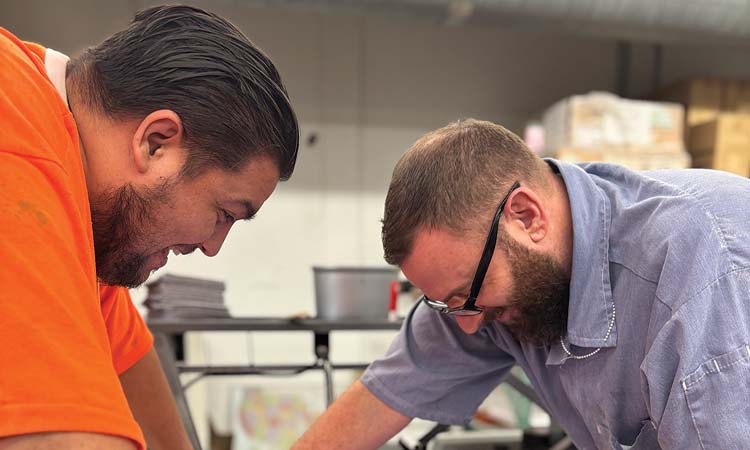
Transforming Lives for a Safer Minnesota is more than a slogan at MINNCOR Industries, a voluntary workforce development program that helps incarcerated people (IPs) gain marketable skills for their futures and successfully reenter their communities upon release.
Forget what you’ve seen in the movies or the stereotypes you’ve heard since childhood about prison labor. It isn’t about hard labor for no pay, and it involves a lot more than just making license plates.
In many cases, MINNCOR Industries partners with local businesses to provide training and work experience inside six Minnesota correctional facilities, producing everything from cabinets, furniture, textiles, and safety products to docks, piers, printed materials, upholstery, and more. MINNCOR participants have built furniture for the state senate offices and upholstered cushions for the Minneapolis Convention Center along with assembling a 160-slip pier at White Bear Lake.
“It often starts with the basics,” says Amanda Evenski, a MINNCOR communications specialist. “When someone enters a correctional facility, if they need treatment for chemical dependency or other interventions, treatment will take precedence. Next, if an individual lacks a GED or high school diploma, they are provided the opportunity to acquire this foundational educational credential.”
With treatment and education goals met, IPs can apply for a training assignment in the program. “It doesn’t matter if they have one or 15 years remaining in their incarceration,” Evenski says. “As long as they meet eligibility requirements, they are allowed to apply and will receive all of the necessary training.”
Established in 1994 by the Minnesota Department of Corrections, MINNCOR focuses on job training, meaningful employment, and developing strong work habits. Since becoming financially self-sufficient in 2003, it has operated without taxpayer funding and does not compete with private industry.
“Our business development team seeks out businesses that are looking to partner with us in ways that are beneficial to everyone: the business, the IPs, and the DOC,” says David Loeffelmacher, interim vice president of business development. Beyond covering material costs and wages for IPs, MINNCOR’s industry programs return funds to the state each year, supporting correctional officer positions, equipment reinvestment, and facility improvements.
From IP to the Workforce
There are currently 900 participants in the MINNCOR program, 803 men and 97 women, reflecting the much-smaller female incarceration population overall.

“All IPs who have an assignment pay taxes,” Evenski says. “Some also pay restitution, child support, and family support. It’s all deducted when they get paid.” Participants additionally contribute a cost of confinement payment. Any remaining wages may be used to purchase items from the canteen or set aside in personal savings.
Wages vary, with some participants earning close to Minnesota’s minimum wage. “We want people to leave with some financial stability so they can get back on their feet quickly,” Loffelmacher says.
Participants leave the program with stronger job skills, better communication abilities, and greater confidence. Many find employment after release, and some have even started their own businesses. MINNCOR participants have a 22 percent recidivism rate, compared with 40 percent among nonparticipants.
Beyond technical training, MINNCOR emphasizes soft skills such as teamwork, communication, and workplace safety. Participants learn that marketable skills and steady employment can open doors that once seemed out of reach. Ultimately, the program goes beyond job placement, helping participants build the confidence, stability, and foundation for long-term success as they return to their communities.
Learn more at minncor.com