

Otter Tail County Is Growing, Defying Rural Population Trends
In 2017, population analysts predicted that Otter Tail County, along with many other counties in Greater Minnesota, would decline in labor force and population in the years that followed, with numbers from the Minnesota Department of Employment and Economic Development suggesting the county’s labor force would fall 6.8% by 2030.
The county, however, has proved that projection wrong. Its population and labor force have increased in the past couple of years, and more people have migrated to the county than have left it.
Erik Osberg is the county’s Rural Rebound Initiative coordinator, a job created in 2017 to help prevent population and workforce loss.
He remembers learning about research out of the University of Minnesota that showed nearly all of Minnesota’s rural counties growing their populations of 30- to 49-year-olds between 1990 and 2010 — a phenomenon the researcher calls the rural “brain gain.”
While that showed people of a certain age were interested in moving to rural areas, the county needed to put itself on the list of attractive places to live. Part of Osberg’s job is marketing life in Otter Tail County – whether partnering with college athletes to promote tourism or promoting winter recreational activities — in efforts to rewrite the narrative that rural areas are on the decline.
He wants to put the county, whose population topped 60,000 in the 2020 U.S. Census, “on the map” like better-known places such as Duluth and Alexandria.
The county’s population growth has been driven by net migration, with more people moving in than out, said Anthony Schaffhauser, the northwest regional analyst for the Department of Employment and Economic Development. In 2022, 475 more people moved in than left.
In 2021, that number was closer to 300. Schaffhauser said part of the spike in 2022 is because of the increased opportunity for people to work remotely.
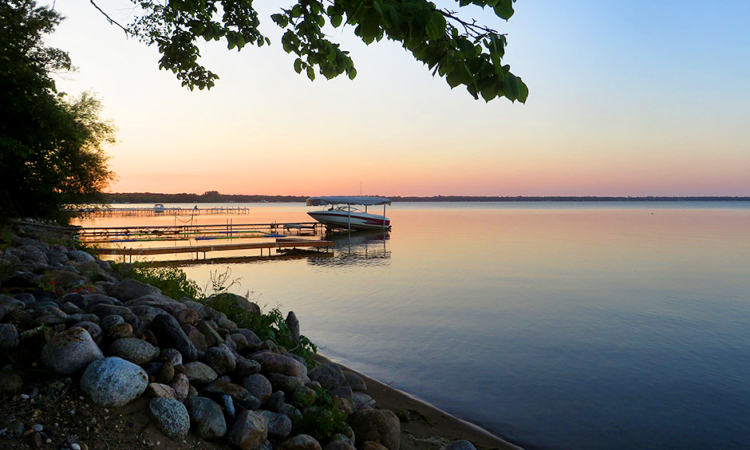
The western Minnesota county, whose 1,048 lakes are a natural draw, also has a strong healthcare/social assistance and manufacturing workforce — the county’s top two industries, according to state employment data.
A trendsetter in the region
In the years before 2018, the county’s population was increasing due to there being more annual births than deaths. But that year and until 2020, the county had more deaths than births while the population still increased, meaning the increase had to be due to people moving into the region, Schaffhauser said.
Schaffhauser said Otter Tail County is a trendsetter in a 26-county region that stretches from Stevens and Pope Counties north to the Canadian border, being the first of those counties to grow its population through net migration.
Outside of increasing public awareness about what the county has to offer, the Rural Rebound Initiative also includes a focus on infrastructure, such as housing, childcare, broadband and other things people who are relocating would need.
So far in 2023, $100 million has been invested in new home construction and housing rehabilitation, which will create 320 new single-family homes, 18 duplexes and 72 multifamily units, according to Amy Baldwin, the county’s community development director.
Related | Long drives, fewer visits and lost ties: Rural Minnesota residents struggle to adapt when a nursing home closes
“If we’re not creating new housing or building new housing, your population is going to decline because of aging households, aging population and smaller family sizes that we’re seeing across the population,” Baldwin said.
Osberg said research has shown that if a place has been exposed to tourism advertising, people’s perception of the liveability of that place goes up. And usually, once someone visits, their perception of that place improves even more.
“The analogy I use is, you wouldn’t walk up to somebody and say, ‘Hey, do you want to get married?’ You would say, ‘Hey, do you want to go out on a date?’ he said. “And then the goal of that first date is to get a second date and then a third date. And, eventually, if you fall in love then you get married. We’re not asking people to just flat-out move here. We’re asking them to come visit first. Try it out. See if you like it. If you love it, you don’t have to leave.”
A study done in 2019 found that just 25% of the roughly 1,600 surveyed newcomers to a community had lived there before. Baldwin is one of those migrants. She and her husband had visited Otter Tail County and were familiar with the area. Most of all, they wanted to be closer to family and have a more relaxed lifestyle, so they decided to move.
That study was conducted by Ben Winchester, a rural sociologist who works for the University of Minnesota Extension and whose “brain gain” work inspired the creation of Osberg’s position in Otter Tail County. His prior research looked at rural migration between 1990 and 2000 and showed that for people who were relocating to rural areas, jobs didn’t necessarily come first.
“The job didn’t come first a lot of the time,” Osberg said of the findings. “A lot of the time they were making a lifestyle choice.”
Winchester’s subsequent research has affirmed the rural migration pattern of 30-49-year-olds moving into rural areas, although it has been at a slower pace than in the 1990s.
The 2019 Rural Movers study showed 41% of movers indicated they were moving primarily for a job. Among those not moving for a job, the top factors identified for choosing a destination were things like a good place to raise children, being closer to family, safety and a slower pace of life.
Today, many of those moving to Otter Tail County are primarily in the 55-70s age range, with some ages 25-49, as well, Schaffhauser said.
What does success look like?
Schaffhauser said jobs are growing in Otter Tail County, which “points to success.” Part of the job growth, he said, is due to many new residents being retirees who aren’t contributing to the labor market but are still demanding goods and services — and as a result creating jobs.
In comparison, he said the Fargo-Moorhead area draws more workers, but jobs in Otter Tail County are still attractive, given that many are manufacturing and healthcare positions with good wages.
This article first appeared on MinnPost and is republished here under a Creative Commons license.