

Impossible Germany … For Fliers
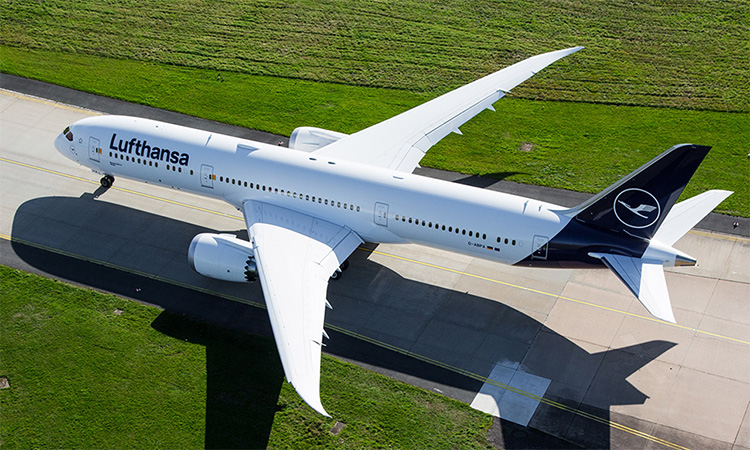
When German flag carrier Lufthansa’s final flight to Frankfurt departed MSP April 29 it marked a puzzling coda to the carrier’s 11 months of local service. Lufthansa has been among the holy grails of coveted carriers at MSP, yet it exited the market in less than a year, perhaps temporarily. The loss of Lufthansa was a blow to the Metropolitan Airports Commission’s (MAC) recent run of wins in the battle for new international airlines and destinations.
MSP has a moderate amount of European air service for a U.S. metro area its size (16th by population), besting only Phoenix of larger markets. (A few smaller, tourist-driven markets like Denver, Orlando/Tampa, and Las Vegas support more destinations than MSP.) Existing service is substantially due to the hub built by Northwest Airlines, and Delta Air Lines’ commitment to maintaining it after it merged with Northwest in 2008.
It’s also due to Delta’s immunized joint venture with KLM and Air France that Delta inherited from the Northwest merger. Delta serves Dublin, London, Amsterdam, and Paris from MSP (partners Air France and KLM augment in peak seasons), and has added every-other-day flights to Copenhagen and Rome for the summer. But Delta’s market power—and the Twin Cities corporate community’s allegiance to Delta—has made other European carriers reluctant to dive in.
We’re referring to UK flag carrier British Airways (allied with Dallas-based American) and German flag carrier Lufthansa (allied with Chicago-based United). British (BA) and Lufthansa operate large global networks over their London and Frankfurt/Munich hubs which rival or exceed KLM’s and Air France’s in scale.
Delta flies MSP-Heathrow, but BA would give local flyers access to its fare promotions and single connection global service. BA and Lufthansa also create theoretical fare competition in a market often lacking it. BA flies to Delta’s New York, Atlanta, Los Angeles, and Seattle hubs, but not Detroit, MSP, or Salt Lake City. Lufthansa serves all of Delta’s hubs except MSP and Salt Lake.
“If we ever land BA it will be due to decades of effort,” says Brian Peters, the MAC’s director of air service development, who notes that London is the top European air destination for MSP travelers.
Germany is an interesting case because as recently as the 1990s more Minnesotans descended from Germany than any single country. Frankfurt remains one of the largest European business centers, a theoretical point of appeal for a region with so many internationally focused Fortune 500s. Northwest operated nonstops to Frankfurt on and off in the 1980s and 1990s but deemphasized the route when its relationship with KLM blossomed and its Amsterdam hub became a focus. “Core demand to Frankfurt [as a final destination] is not that large,” says Peters.
Until this year, German leisure carrier Condor had served MSP each summer. But when a German court ruled Condor could no longer require Lufthansa to offer through-fare connections at Frankfurt, Condor dropped several American markets. (The court ruling is not final, and the MAC hopes Condor returns next year.) Lufthansa departed, citing the effect of new aircraft delivery delays. In Lufthansa’s stead, German leisure carrier Discover Airlines, controlled by Lufthansa, is replacing it for the next two summers.
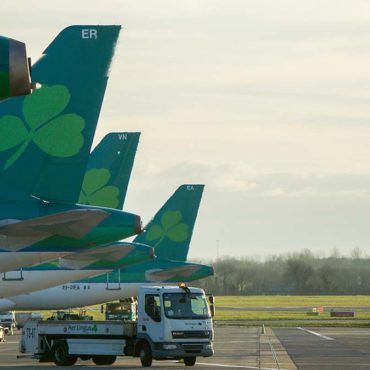
The MAC’s biggest European success story is Irish flag carrier Aer Lingus, which flies year-round to Dublin following an effort by the Regional Air Services Partnership (RASP), a joint venture of the MAC and Greater MSP, with an assist from Medtronic, which wanted year-round nonstop service to its corporate financial headquarters.
“The RASP is an always-on effort,” explains Greater MSP president and CEO Peter Frosch. “It’s an effort to listen to the large corporations that travel the most.” He describes the global travel environment as “always changing,” requiring constant monitoring.
Lufthansa tells the MAC that it plans to return to MSP in late 2026. Peters says the airline is short 12 intercontinental aircraft—so, it’s not as though it has left due to poor sales on the route. “They told us they need to get through the next 18 months,” when the aircraft shortages will ease. The MAC says it maintains regular contact with the airline and has no reason to believe it’s not going to return.
As for other prospects, in January Turkish Airlines’ chairman announced service from MSP to Istanbul beginning this spring, but that has not happened. As Scandinavian carrier SAS integrates into Delta’s joint venture, MSP becomes a likely home for year-round service to Copenhagen, Stockholm, or Oslo, although Northwest tried and failed to make those routes viable decades ago.
External factors are weighing on the industry beyond aircraft supply, including an evident decline in foreign tourism to the U.S. That’s behind Delta’s decision to halve its summer MSP-Montreal service and Air Canada’s recently announced decision to pull its daily flight in fall.
Peters says the MAC would also love to see nonstop service to the Middle East, Africa, and Latin America, places with limited access from the northern U.S. (Turkish does serve Chicago and Detroit.) Frosch points to India as a destination coveted by the local corporate community.
“The RASP,” Frosch adds, “is an example of how meeting the needs of area business benefits all people who travel. It’s an example of how what’s good for business is good for the entire region.”