

Effective Response to Community Crisis: Centro Tyrone Guzman
In December, south Minneapolis nonprofit Centro Tyrone Guzman was in the middle of a strategic planning process when more than 3,000 federal immigration agents started arriving in Minnesota.
It didn’t take long before the organization’s fears about Operation Metro Surge were realized, says executive director Xavier Vazquez. He recalls the moment that he learned about the detention of a father whose four-year-old daughter was enrolled in one of Centro’s education programs. He knew Centro had to pivot immediately.
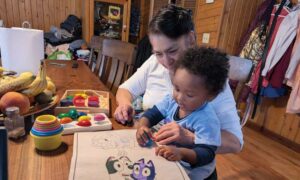
For more than 50 years, the nonprofit has been helping families in Minnesota. “Centro Tyrone Guzman advances the well-being of Latine communities through an intergenerational approach that nurtures lifelong learning, holistic health, and prosperity,” according to its mission statement. (The gender-neutral term Latine refers to people from Latin America or those of Latin American descent.)
In a normal year, Centro serves more than 3,000 people a year, with programming for children to senior citizens. Through its emergency and community response during Operation Metro Surge, it supported more than 8,000 families, which represented more than 24,000 individuals.
Shortly after the surge began, Centro identified the greatest needs among families and formed a staff committee for each: food and hygiene; rent and utilities; legal assistance; and health and well-being. Departments worked closely in the months that followed to source donations and collect resources for vulnerable community members.
“We developed systems to see their needs and respond to them. It was like running a second nonprofit,” Vazquez says.
Much of Centro’s efforts focused on home deliveries of groceries and other essential goods to families who were afraid to leave their homes or couldn’t provide for themselves. While staff, as well as the large network of volunteers who stepped in to help, recognized the importance of their work, it often took a toll on them.
“Most of our days started at 5 a.m. and finished at midnight, picking people up and taking them from home to work, from work to home, and then going to bed,” Vazquez says. “It was a lot.”

For many of Centro’s staff, 93% of whom identify as Latine, working on the front lines and putting themselves at risk of being targeted by Immigration and Customs Enforcement (ICE) agents also was a difficult decision to make.
“How do you go to your staff and say, ‘This is what we need to do’ when [the surge] is so close to them and they have relationships with program participants who they’ve known for years that are now getting caught, deported, or mistreated?” Vazquez says.
During the surge, Vazquez would go to Centro’s headquarters every day. Even though he worried about everyone’s safety as they made deliveries, in retrospect, he says the nonprofit’s rapid response efforts served as a reminder of Centro’s crucial work.
“We just sold the van where we would fit food boxes inside, and I used to complain about driving it, but when I went with my kids to serve food, they would call it ‘the adventure car,’ ” Vazquez says. “It was incredible to spend this time giving back to the community with them. … They’re going to read about this [when they’re older] and ask, ‘What did you do [during Operation Metro Surge]?’ And I can tell them, ‘You were also there.’ ”
Helping people recover from the surge doesn’t only mean serving their needs—it also means celebrating their strength and resilience, he says. The organization’s recent rebrand shows how it wants to continue building a space for families to prosper.
“We cannot say we’re doing this for our communities if we are not doing this with a lot of love,” he says.