

First Take: The Minneapolis Club’s New CEO
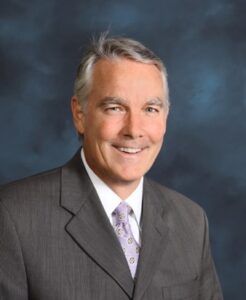
At the end of January, the Minneapolis Club welcomed new CEO Joseph “JJ” Wagner, who’s certainly no newcomer to the club management space. His 30-year career includes executive positions at prestigious clubs, including a 15-year tenure as CEO at the Bel-Air Country Club in Los Angeles, frequented by celebrities like Jack Nicholson and Tom Cruise. He also served as the national president of the Club Management Association of America.
But even with a career that’s taken him from California to Texas, Wagner says he’s an “engrained Minnesota boy” with a Minnesotan upbringing. He also has children and grandchildren living around the Twin Cities, though he admits he’s still not a fan of the snow.
It’s this combination of a prolific club management career and Minnesotan loyalism that made Wagner a sought-after contender for the highest seat of the Minneapolis Club, a membership-driven social club that’s long been angling to restore its position as the city’s social epicenter.
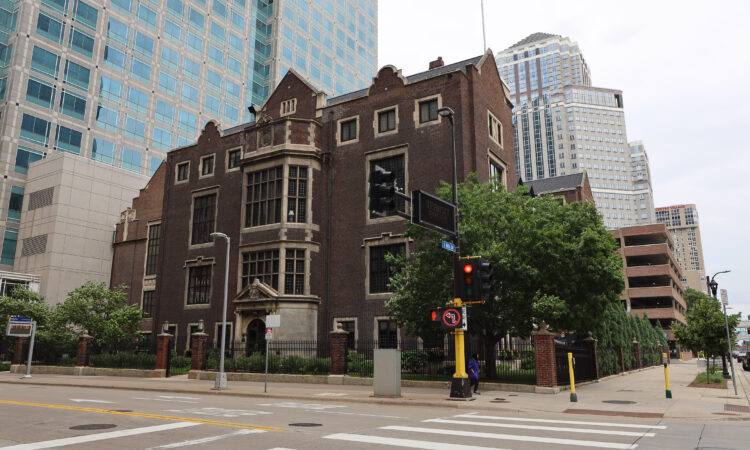
The Minneapolis Club, founded in 1883, is nearly as old as Minnesota itself and has been at its current location in downtown Minneapolis for 117 years. In the early to mid-1900s, the club was a bustling hub for executives whose companies were headquartered downtown. The club’s swanky, dark-wooded interior was the scene for many high-profile breakfast, lunch, and dinner meetings along with post-work drinks at its bar.
However the pandemic and remote working hit the club hard, and its expensive and exclusive membership model has struggled to take root with a new generation. Even before the pandemic, the club was pushing to make membership more affordable and draw a younger, more diverse group of members to stave off a poor financial state.
Currently, the Minneapolis Club has nearly 730 members; it hopes to onboard 100 more by the end of the year.
Now, on week three on the job, Wagner, flanked by an all-new board and armed with a streamlined, digitized membership process, aims to bring about reinvigoration and show prospective members that the Minneapolis Club is no longer “your grandfather’s club.”
This interview has been edited and condensed for clarity.
One of your top priorities is to bring about financial viability for the club and find relevance in a competitive market. What’s your plan to execute that?
I’ve been at clubs that have been struggling financially, and I’ve had to cut expenses and grow the membership. I’ve also been at very prestigious clubs where they just want to have someone continue their wonderful culture and enhance it. I believe the moments of truth of running a club are mostly between a member and the food and beverage, bar, and event [experience]. That’s what I’m concentrating on: making sure that those experiences are executed properly and professionally while building relationships with members and staff.
How do you plan to draw in younger, more diverse members into the club?
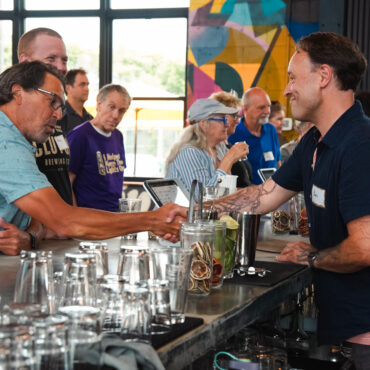
One of the first steps we decided was to open up [the bar] Charlie’s to the public during the week–that was kind of risky, but it was needed. We needed people to find out who we are [through letting] the outside come in and see our great staff and our great menu. Now, we’ve got members that have joined because of that. We hired a dynamic membership director and marketing director, and these two have now gone out to the community to market who we are. We’re now getting 15 to 20 members to join per month–that hasn’t happened in decades.
This is not your grandfather’s club anymore. These young people want to bring their kids here, and they want kids’ programs and movie nights. We’re being more relevant with the new generation coming in because the older, longer-term members are not going to be here in 30 to 40 years. We have to satisfy the new generation coming in.
The club has a widely regarded legacy. How do you plan to balance historic preservation with modern expectations?
You always have to honor the tradition, but everything changes: People change, demands change, families change, and generations change. We’re in a good place right now. We understand where we’ve been and where we want to go, and I’m in sync with the board and the key staff members. It’s unusual, I think, with all of us so committed to moving this club forward while honoring the past, honoring the younger people as well as the older members, and bringing satisfaction to everybody. That’s not easy, but I think we’re on our way.
The word reinvigoration is used a lot in regards to the Minneapolis Club’s strategic plans. What does reinvigoration mean to you?
The club used to be so busy as the center of Minneapolis–we want to bring that back. To do that, we need to add programs, like we’re doing book clubs now and we had a tequila tasting last week. We’re doing a speaker program series, we have a stitching group, and we have a meeting space for people to spend their day. There’s a fitness center, a restaurant, a bar, and events, we can do it all right here. This place has it all, a one-stop shop, and so we’re trying to promote that around the city.
How has the club’s definition of the word ‘prestige’ evolved from its founding to today?
I would say prestige was more old school, traditional, and stuffy a little bit. Now prestige, with our new generations coming to this club, it’s knowing your name but in a more casual environment–fun yet private. That environment also now includes more young people, men and women, and diverse people who want to work all day and people who want to play all day.
It’s still the same word prestige, but it’s just different than what it was 30, 40, 50 years ago. It’s still prestigious but in a different manner.