

First Take: Mamie Harvey, Alliiance’s New President
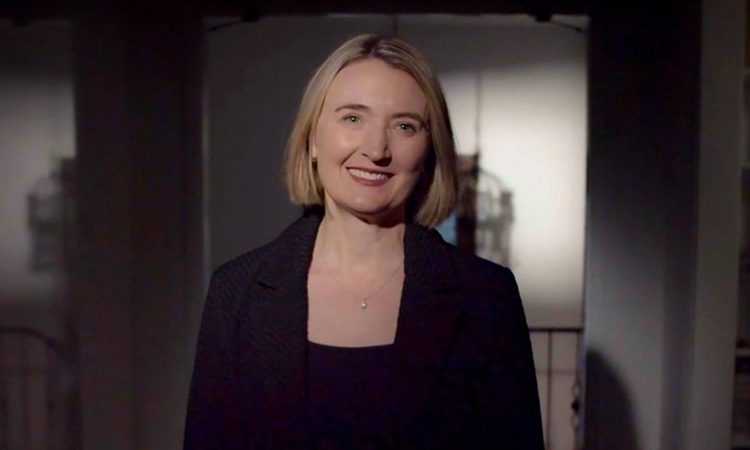
Twenty-five years into her career at Minneapolis-based architecture and design firm Alliiance, Mamie Harvey has several notable accomplishments under her belt.
She’s served as part of the design team for the Physics and Nanotechnology Building at the University of Minnesota and St. Jude Medical in St. Paul, to name just two local examples.
Now, as the firm’s new president announced Friday, Harvey says she plans to take what she has learned as a leader in the industry into the company’s “next phase of growth.”
The science and technology sector leader will replace Eric Peterson, who was president of Alliiance for eight years and will continue his role as the aviation sector leader.
Harvey sat down with TCB to talk through how she is going to incorporate past experience into her new role, her biggest accomplishments, and what she’s looking forward to at Alliiance.
This conversation has been edited and condensed for clarity.
You’ve done a lot of work with science and technology architecture, but Alliiance also does a lot of other types of architecture. In your new role, how do you plan to take what you’ve done and expand that to the other categories?
My role as co-leader in the science and tech studio won’t change as president. We have leaders in the other sectors that will continue to maintain their leadership. Our aviation studio has Eric Peterson, our past president of a couple of weeks ago, who will continue to lead that studio with a few other partners. We have higher ed, workplace, civic and community. Those sectors will continue to be led by those individuals. My role as president will be more focused on our overall firm, mission, and goals. We’re learning to share them and describe them publicly. On the board, the president is responsible for creating the agenda. It’s primarily a role about non-project specific issues for the firm.
What projects are you the proudest of?
I have one that’s a personal achievement of mine that goes back to my family. My mother was a Montessori trainer. I grew up in the Montessori school system. If you’re familiar with Montessori, it can be something that really impacts all parts of your life. It did for me because of my mom. I, as a master’s student, researched Montessori design for my master’s thesis. One of early projects was working with the Montessori Center of Minnesota in St. Paul to help move and expand. That was a really special project for me because I got to bring everything I researched and learned about during my master’s along with learning what my mother was up to all those years and bring that to reality. It was very well received. Our client there happened to be a close friend of my mom’s because the Montessori trainers in Minnesota is a tight-knit community. The projects I am the most proud of are the ones where I learned the most.
What are some of the challenges you’ve faced in your career, and what did you learn from them?
With many of my cohorts in the architectural industry, I worked and raised a family at the same time. I have three children. That constant battle for balance was pretty meaningful for me throughout my career and continues to be. That has brought me to a place where the value I have for balance is pretty far reaching in terms of the benefit we get when we have a balanced approach. We understand all sides of issues; we have a broad perspective. Part of what I hope to bring to the role is that balanced leadership. Toughness, fairness, and knowledge without overload. Confidence, humility, and consistency with innovation. That balance that I have worked towards and found value in can be drawn on in a really productive way.
What does it mean for you to serve as president of a company in a field that has historically been male dominated?
As I was contemplating this position and looking industry wide locally, our architecture industry locally has really a good number of strong women leaders. Just in terms of our local community, we’ve made amazing strides relative to the leadership. There continues to be an issue with balance, raising families, and caretaking. In our culture, [those duties] can fall more strongly towards women. One thing I’ve learned over time is it’s really important to not have bias towards men with families either because men with families are also stretched. In terms of culture, I think we just need to be supportive of everyone. But I think it’s true, the core of your question, that women in the industry have a slightly different experience than men because of our culture. It is improving; we are talking about it internally. For a couple of years now, we’ve been working with an intercultural leadership training where we bring together a cohort of 30 or so and do some training about gender and race issues. It’s about personal responsibly and being able to see patterns. We’re working towards awareness within Alliiance so that we can all be better and create a safe space for everyone to bring their best self. I will say that in the science and technology field, especially starting out 25 years ago, there weren’t very many women in the room. That has definitely improved.
What are you most looking forward to in your new role?
I’m definitely looking forward to expanding some of my connections beyond that science and tech focus that I’ve had. Whether it be in our community but also just internally at Alliiance, I want to engage more of our staff rather than the focus I’ve had in the past.