


Drawing Battle Lines Over Noncompetes
Noncompete agreements, in Minnesota and elsewhere, historically have provided employers a way to protect trade secrets and proprietary information. But in a wave of both state and federal government pressure, restrictive noncompete covenants, prohibiting a departing employee from working for a competitor for a specific period, are under fierce and widespread attack.
From the White House to Congress, from the Federal Trade Commission to the Department of Justice, and yes, to the Minnesota House of Representatives, noncompete agreements are not only disfavored, but seemingly headed toward the dreaded legal abyss of “void and unenforceable.”
Minnesota H.F. 1237, making covenants not to compete illegal in Minnesota, was introduced on Feb. 2, one day after U.S. Sen. Chris Murphy, D-Conn., and Sen. Todd Young, R-Ind., introduced the Workplace Mobility Act of 2023. The congressional bill upsets what critics cite as centuries of legal precedent featuring a fact-specific inquiry, by a judge, into the scope and duration of a noncompete given the business interest of the employer.
In Minnesota, attempts by an ex-employer to enforce a noncompete clause in court routinely included judicial invocation of the “blue pencil” doctrine. That means that a Minnesota state court, in its wisdom, could delete or soften any provision it saw as too onerous or burdensome to the former employee, such as reducing a two-year noncompete to one year.
Such judicial oversight will no longer play a role in noncompete law if the Minnesota bill (or its federal counterpart) passes. Virtually all noncompetes would be outlawed, with the very narrow exception, on the federal side, of a sale of a business or dissolution of a partnership. The Minnesota bill prohibits any agreement that restricts a departing worker.
Even if the Minnesota bill or the federal bill are not passed this year or next, the momentum for abolishing noncompetes appears unstoppable. While significant attention and fact-gathering on the issue occurred during the Obama administration, it was President Biden’s July 2021 executive order on Promoting Competition in the American Economy that catapulted the anti-restrictive covenant movement across the states.
Biden issued a competition order to address “overconcentration, monopolization, and unfair competition in the American economy,” going so far as to create a White House “competition counsel” with the charge to scrutinize everything from bank mergers to high prescription drug prices to the “freedom to change jobs.”
By elevating the noncompete discussion beyond the oft-heard plea of pushing low-level employees into intractable servitude to one employer (i.e., forcing them to sign a noncompete), Biden’s anti-monopoly approach apparently spurred on the Federal Trade Commission.
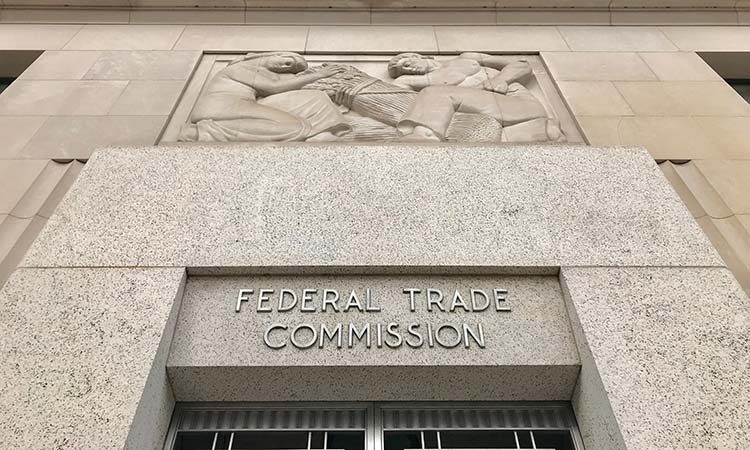
That agency, like Congress and dozens of state legislatures, has taken on the task of abolishing noncompetes. On Jan. 5, the FTC issued a notice of proposed rulemaking. The rule? Outlaw all noncompetes with federal authority to preempt those states still allowing noncompete agreements.
One well-versed and well-funded sector that wants to keep noncompetes includes veteran trade secret lawyers who draft and litigate noncompete language for their clients. In an articulate and lengthy letter to the FTC this past July, 45 trade secret attorneys bemoaned the “misconception that noncompete clauses hurt workers and competition.”
In their letter, the practicing attorneys pointed to two relatively recent studies by Symantec Corp., citing the 53% of ex-employees who admit to stealing company data and the 40% who say they will use such data in their new jobs.
Even more dramatic than the stealing statistics were the lawyers’ explication of what a client’s legitimate business interest is that makes noncompetes necessary. They emphasized how “nonsolicitation” and “nondisclosure” agreements cannot effectively counteract what an employee has stored in his or her memory.
The “negative information” or “blind alley” problem, meaning information that was “considered or rejected on the path to finalizing the right solution,” illustrates their point. The example they gave, for a chemist jumping ship after formulating the components for the lubricant product WD-40, was compelling:
“WD-40’s website [states that], ‘you need only two things in life: duct tape and WD-40; if it moves and shouldn’t, use duct tape; if it doesn’t move and should, use WD-40.’ …WD-40 stands for Water Displacement perfected on the 40th try.”
In other words, 39 formulas were rejected before the WD-40 formula was finally perfected. The hypothetical WD-40 chemist, working for a new competitor would never have to go through 39 failed tries in his effort to formulate a viable competing product.
It saves the raiding competitor a stunning amount of time and money in very quick and unhindered fashion. Is this fair to WD-40, its investors, or its remaining hard-working employees? Such is the nature of the noncompete quandary.