

Bush Foundation Picks 24 Minnesotans for 2025 Fellowship
Twenty four Minnesotans will receive 2025 grants from the Bush Foundation to advance their work on a wide range of issues, from affordable housing to culturally rooted farming practices.
The St. Paul-based Bush Foundation received nearly 1,000 applicants this year and selected 29 fellows who will each receive up to $150,000 to support their self-designed leadership plan. The program, designed to “inspire and support creative problem solving,” is open to residents over the age of 24 from Minnesota, North Dakota, South Dakota, and the 23 Native nations within those states.
The foundation gives out grants every year to support leaders of all types across different sectors, with a particular focus on racial and rural equity, said Adora Land, the Bush Foundation’s grantmaking director.
Land said the fellows were chosen through a selection process that includes former Bush Fellows, foundation staff and community members from around the region.
“Leadership isn’t a role or title. It can come at any time in your career. It’s the record of impact in the region we are looking for, as ‘This is what I’ve done, this is what I’m doing and with the (Bush) fellowship, this is what I will do,” Land said.
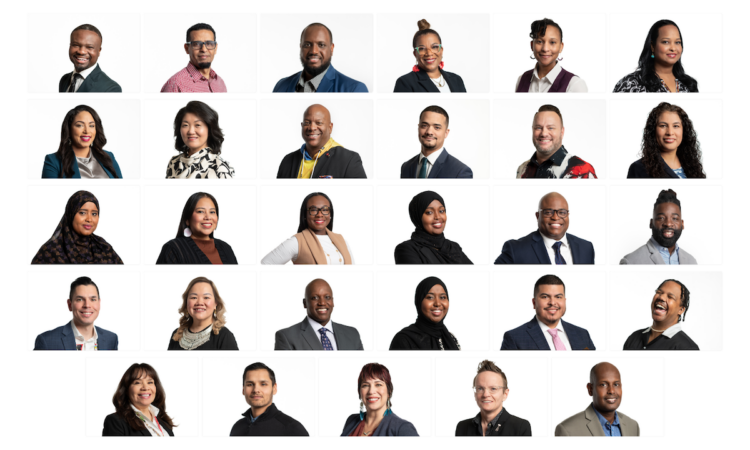
Here are the 24 Minnesotans who will participate in the Bush Fellowship program:
Jeffrey Aguy (Maple Grove): A co-creator of the Bloomington Economic Partnership and a builder at GroundBreak Coalition, Aguy wants to “reimagine how capital can unlock opportunity for communities historically left out of economic growth.”
Mohamed Ahmed (St. Paul): An advocate for amputee rights after losing his leg in a car accident, Ahmed is working to ensure equitable access to prosthetic care for underserved communities in Minnesota and globally.
Arif Bakar (Blaine): Founder and executive director of Bultum Academy, a charter school serving mainly East African families, he is studying global education models to develop new strategies that improve experiential learning and immigrant student achievement.
Chanda Smith Baker (Minneapolis): A longtime philanthropic leader and host of the podcast Conversations with Chanda, she plans to use her fellowship to “build a leadership development ecosystem that supports diverse leaders.”
Talaya Dendy (Hastings): A cancer survivor and founder of On the Other Side, which provides non-medical support for cancer patients, caregivers and survivors throughout the state, Dendy plans to pursue wellness certification and champion holistic, personalized care for cancer patients and survivors.
Naima Dhore (Dalbo): Founder of the Somali American Farmers Association and one of Minnesota’s first certified organic Somali American vegetable farmers, Dhore plans to deepen her knowledge of public policy, business sustainability, and agricultural leadership to promote culturally rooted farming practices in Minnesota.
Georgia Fort (St. Paul): An Emmy-winning journalist and founder of BLCK Press and the Center for Broadcast Journalism, Fort plans to continue building a journalism ecosystem that “affirms community, develops talent, and ensures that all voices are seen and heard.”
James Garrett (St. Paul): Co-founder of 4RM+ULA, a Black-owned architecture firm, Garrett plans to study sustainable, climate-responsive materials and building methods.
Nathaniel Gibbs (Maple Grove): A third-generation educator who has held principal and school district leadership roles, Gibbs will pursue graduate study with the goal of recruiting, developing, and retaining school leaders from backgrounds historically underrepresented in education leadership.
Ma Elena Gutierrez (Sauk Rapids): Founder and executive director of Fe y Justicia, Gutierrez mobilizes Latino meatpacking and agricultural workers, who have faced systemic exclusion and legal vulnerability.
Anisa Hagi-Mohamed (Blommington): A linguist, writer, and neurodivergent mother of autistic children, Hagi-Mohamed is working to reshape how Somali and East African communities understand and talk about autism.
Leya Hale (West St. Paul): An Emmy Award-winning documentary producer and citizen of the Sisseton-Wahpeton Oyate and Dine Nations, Hale plans to use her fellowship to expand her film making skills and build a global network of indigenizing filmmaking through rooting the process of filmmaking in Indigenous language and mentoring up-and-coming Indigenous creatives reshaping the future of media.
Kelis Houston (Minneapolis): The founder of Village Arms, an organization supporting African American families affected by child protection, Houston is working to transform the child welfare system by “centering family preservation, racial equity, and community accountability.”
Fatimah Hussein (Minneapolis): Founder of ASIYA, the first U.S. brand to create sport hijabs for Muslim girls, and GIRLSWIN, a nonprofit that provides empowering and safe athletic spaces and mentorship for young women, it’s her goal to develop a curriculum to increase the number of Muslim female coaches and referees.
Carl D. Johnson (St. Paul): As founder of St. Paul East Side’s first Black-owned grocery store and the George Washington Carver Cultural Center, he is helping transform economic opportunity and food access through community ownership.
Marvis Kilgore (St. Paul): helped create the Sirtify program at Normandale Community College, grew the number of Black men pursuing teaching careers and continues to help close the equity gap in education.
Maychee Mua (Cottage Grove): Aa first-generation Hmong Chinese American with neurodivergent children, she helped establish Minnesota’s Medicaid autism program for children under 21 and created the state’s first cultural competency training for autism providers. She plans to continue developing resources that bridge Southeast Asian traditions with Western systems of care.
Deqa Muhidin (Apple Valley): She led the creation of the Somali Heritage Language Program in Minneapolis Public Schools and continues to advocate for language justice and cultural preservation through education.
Akram Osman (Elysian): Osman leads Mankato East High School as one of the first Somali American high school principals while working to make schools more equitable and inclusive.
Elvis Rivera (Brooklyn Park): A first-generation Guatemalan immigrant who serves as a financial advisor and policy advocate, Rivera is working to close the racial wealth gap through financial empowerment initiatives that promote generational wealth in Black, Latino, and immigrant communities.
Curtis Rogers (Lake Park): As deputy director of the White Earth Nation, Rogers is working to build resilient leadership systems and strengthen tribal governance.
Amáda Márquez Simula (Columbia Heights): Columbia Heights’ first Chicana mayor is building a replicable framework for community-led governance in diverse cities.
Megan Treuer (Esko): An experienced tribal court judge and citizen of the Leech Lake Band of Ojibwe, Treuer is working to revitalize Indigenous justice by returning tribal court systems to their cultural roots.
Muhidin Warfa (Columbia Heights): As the executive director of Multilingual and Magnet Programs for Minneapolis Public Schools, Warfa is exploring African traditional education models to deepen community-rooted approaches to language learning that “uplifts student voice and identity.”