

A Year Past Launch Date
There’s nothing quite like shoveling boatloads of cash from your retirement savings to build a business unlike anything done before—especially one using disruptive AI technology—when you’re not even a tech guy. Betting your future on an idea you believe in, all while battling imposter syndrome, wondering if someone else is creating something better, and reassuring your wife you’re not crazy, brings a unique kind of pressure. Especially at 59. An apparel guy launching a tech startup? It sounds insane, but that’s the reality of RoboArt—a journey I began in early 2023.
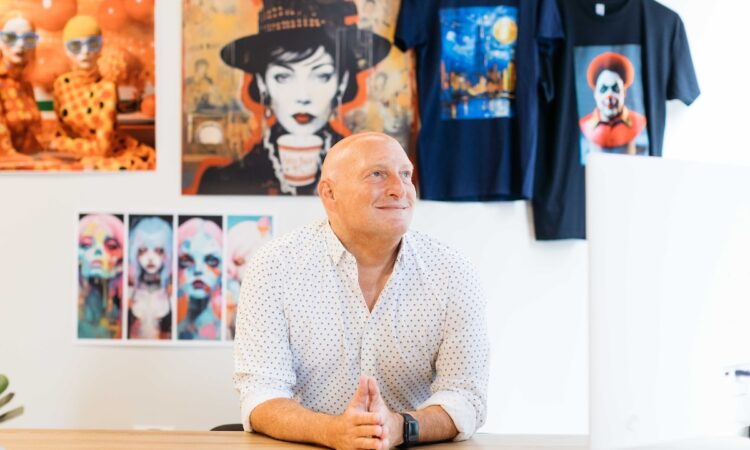
RoboArt started with a simple vision: to allow anyone, even the non-artist, to create custom art and print it on a wide range of products through digital print-on-demand, which is now possible through AI tools. But it has evolved into something much bigger—we’re pioneering a new way to sell seasonal merchandise to major retailers and offering them a unique customization experience that allows them to engage their customers. Think: ugly Christmas sweater, custom pajamas for Mother’s Day, or a blanket for Grandma featuring her dog in different art styles—the possibilities are endless. Once an order is placed, the RoboArt platform prepares the art file for production, ensuring it’s sent to the nearest factory for printing, packing, and shipping—all one unit at a time.
The old retail model, where buyers select seasonal collections and place bulk orders, often results in excess inventory, wasted resources, and high shipping costs. Print-on-demand offers a more sustainable solution by minimizing waste and eliminating the need for excess inventory. Plus, the end product is unique and personal to the buyer.
I’ve been working with three different tech companies, and all of them are taking three to four times longer than their original estimates.
Developing an AI-generated art platform with print-on-demand has taken much longer than anticipated, for two main reasons. First, the steep learning curve of working with AI, which is still in its early stages. I’ve been working with three different tech companies, and all of them are taking three to four times longer than their original estimates. Second, tech developers must learn the new world of art prompt engineering and how to apply the best tools and models to generate AI art that works across various garments and products. This requires mastering different art models and staying on top of constantly evolving technologies that drive the creative process. And of course there’s a cost to all of that: we are currently 50 to 75% over my initial budget projection.
But that’s one of the things about being an entrepreneur: you get used to taking risks with money. As a business owner for almost my entire career before RoboArt, I learned to get used to this risk. You have to be confident in what you’re building and keep moving forward. Of course it hurts when you have to pay lots of money, but I’m investing in myself. That’s what makes this journey so exciting.
I’ve been taking advantage of every minute before launch to make connections with potential partners. We’re close to finalizing an agreement for RoboArt to be integrated with a rewards program offered by Augeo, a global employee loyalty and marketing firm based in St. Paul.
We’re not just building another platform—we’re creating a “wow factor” product for e-tailers that offers their customers a truly unique purchasing experience. This is what keeps me motivated, even when the road gets tough.