


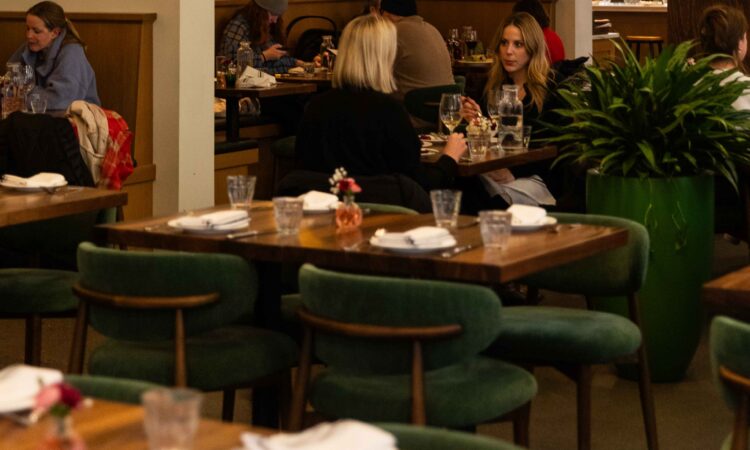
Local Restaurants Face an Extinction Event
As the federal immigration enforcement action in Minnesota drags into another month, ripple effects are being felt in business. The industry most affected seems to be restaurants, where a broad-based cross section is reporting revenues off 50% compared to a typical January. (Restaurants also have struggled with labor shortages due to the loss of workers. Twin Cities restaurant kitchens are predominantly staffed by Latino workers, many of whom have felt unsafe leaving home.)
Restaurants typically lack deep cash reserves or lines of credit. Most pay rent every month and have a mix of salaried and hourly workers. Though restaurants adjust staffing to expected business, they cannot sustainably staff for a night with 12 customers.
TCB spoke with a group of prominent Twin Cities restaurateurs—household names—who shared details of their financial distress. They are among the most sophisticated local operators with the greatest access to resources. They said if business does not improve in the coming weeks, the industry is facing an extinction event in the Twin Cities.
“This has become catastrophic,” said one restaurateur, who operates several restaurants in Minneapolis. “We are tired after carrying the weight” of so many urban crises.
The industry has become a pawn in the vicissitudes of immigration politics, facing backlash from the right for defending its Latino workforce and from the left for resisting repeated calls to shutter in “solidarity” with the community. “We’re not a political forum,” says Brent Frederick, who leads Jester Concepts and Rustica.
Restaurateur Daniel del Prado, who just completed a wave of expansion in Edina, is fearful layoffs could become necessary if business doesn’t return. “You can call vendors and ask for one to two weeks [of forbearance],” but restaurateurs doubt the crisis will be over in one to two weeks.
Frederick says Jester’s suburban locations are also struggling, but not as badly as its city restaurants. “Corporate spending has just stopped,” he notes.
The immediate crisis is a call for a second weekly retail business shutdown on Friday, Jan. 30, after most restaurants were forced to close last Friday as front-of-house staff chose not to work or was unable to work due to the boycott. This week’s actions are being led by university-affiliated organizations that have no connection to organized labor, which led last week’s boycott. They are the Somali Student Association, Black Student Union, and Graduate Labor Union at the University of Minnesota.
The thesis behind these actions is that they get government’s attention by depriving it of tax revenues and essential productivity. Local restaurant boycotts in fact drain local coffers of sales taxes, and the state of payroll taxes, but likely won’t register on Donald Trump’s radar.
“Heavily stressed restaurants can’t be forced to shutter for a day every weekend,” said one local restaurateur. “For many of us, Friday lunch and dinner is 25% of our weekly revenue.”
“This is an existential crisis,” explains Twin Cities-based food entrepreneur and media personality Andrew Zimmern. “I’ve talked to over 100 local operators who have been struggling since Covid, and this crisis is worse.” Zimmern, who is vocal on social justice issues, is nonetheless pleading with the public to return to restaurants and not see them as a fulcrum in a battle with federal misconduct.
“These are small businesses who have been the hardest hit by this crisis,” Zimmern says. “We are asking them to be neighborhood activists, community watchdogs.” He believes some sort of state or federal aid is going to be necessary if the immigration crisis drags on. Zimmern wonders why so many struggle to have empathy for the hospitality industry and its workers. “We have tribalized compassion in this country. It’s a horrific place to find ourselves.”
At press time, details were released of an effort to assist the industry. Called the Salt Cure Restaurant Recovery Fund, and administered by the Minneapolis Foundation, it is actively soliciting donations to assist restaurants in meeting basic functions like payroll and rent. Its organizer, former MplsStPaul Magazine editor and restaurant advocate Stephanie March, said in a statement: “We are on the verge of losing the soul of our dining scene. Restaurants don’t exist without immigrants, and our community doesn’t thrive without these shared tables. We are here to ensure they stay set.” Donations are being accepted at thesaltcurefund.org/donate.
In an interview with TCB, March put the situation starkly: “We either resume patronizing these places,” she said, “or there will be no more places.”