


Minnesota Nonprofits Pass the Torch to New Leaders
“If we look at the next six or seven years in the nonprofit sector in Minnesota, there will be a generational change in leadership across many organizations and across the state,” says Eric Jolly, recently retired president and CEO of the Saint Paul and Minnesota Foundation, the largest community foundation in Minnesota. “The question is, what can we do as a field and sector to listen to, welcome, and be ready to change as a new generation assumes leadership?”
That’s the question on the minds of many in the nonprofit sector as baby boomers retire and a new generation steps into leadership roles. How are we preparing future leaders? How well are organizations planning for a generational shift in approaches to leadership? And how can seasoned leaders continue to contribute their knowledge and experience without getting in the way of new ideas and approaches?
“At the foundation, we began on day one, when I started in the job,” says Jolly, who served nearly a decade in the role and holds a doctorate in psychology. “Our goal was to establish the long-term, mid-term, and emergency succession plans that would create the road map for leadership development and succession while I was CEO.”
Succession plans extend beyond the CEO position. “In terms of the long term, the goal was to be ‘two-deep’ in leadership capacity for every role on our staff,” Jolly says. That approach requires constant attention to development of leadership capacity across the organization and in every management role, whether it’s in fundraising, grantmaking, communications, investment, or other areas of the foundation’s work.
Jolly notes that during his tenure, three of the foundation’s senior staff became CEOs of other organizations, with his support. Rather than seeing their departures as causes for distress, their moves into CEO roles validated the foundation’s commitment to internal leadership development and allowed new internal leaders to emerge.
“We have talked a lot about values and how to continue carrying them forward.”
—Chanda Smith Baker, president and CEO, Saint Paul and Minnesota Foundation
‘Power of a clean break’
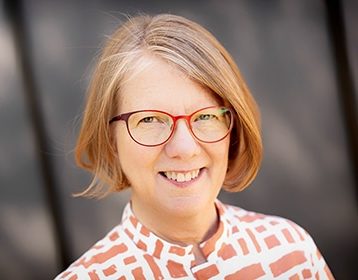
Jolly’s successor is Chanda Smith Baker, herself an accomplished leader of organizations and people. “Eric is retiring well,” she says. “He is excited about his grandchildren and new assignments and adventures. He has let me know that I can call him anytime. And I will.”
Both executives support a clean-break approach to succession. “The power of a clean break is important,” Jolly says. “You have to give your successor a solid footing, give them access to you at the level that they choose, and never be a public face when they are the leader.”
Smith Baker agrees. “While I may not lead in all the same ways, I support the tenets and values of the organization. We have talked a lot about values and how to continue carrying them forward. Executives that retire but still hold on don’t create the space that the new leader needs,” she says.
Jolly echoes her comments. “The board [of the foundation] understands that it may bring a person with different experiences and different approaches to the role, but it looked for someone with aligned values—aligned with our board, our staff, and our history,” he says. “Staff are not worried about the transition, because they know the values are ever-present. What brings them joy in their work is the values, and we are not walking away from them. We are walking toward them.”
Not every organization plans thoughtfully for succession or can proceed in as orderly a manner as Jolly and Smith Baker describe. Some organizations are faced with a leadership crisis, an emergency, or an unexpected opening when their leader is recruited to a new organization.
“You have to give your successor a solid footing, give them access to you at the level that they choose.”
—Eric Jolly, former president and CEO, Saint Paul and Minnesota Foundation
Ready to let go and walk away
In her online series “Leaving Well,” Kate Barr, the retired CEO of Propel Nonprofits, blogged about the year leading up to her departure and described the conditions needed for an orderly transition.
First, the leader must be truly ready “to let go and walk away.” This requires personal work on the part of the leader to prepare for a major life change. Her second step is “positioning the organization to thrive” when a new leader arrives. The departing leader should be making plans to transfer knowledge and ensure stable finances and a solid team. Third, Barr says that the board needs to consider how its work will change. Her key questions ask the board to consider its practices and governing style and how these can be developed, strengthened, and put into action to support the leadership transition.
Read more from this issue
“Succession Planning for Nonprofits” was published by the Annie E. Casey Foundation (AECF) in 2008. It provided a blueprint for Bruce Karstadt when he prepared to retire as president of the American Swedish Institute in 2022. The publication’s stated goals are “to continue detoxifying the topic of nonprofit succession planning so that executives, boards, staff, and funders can take up these activities without unnecessary fear or concern” and “to provide nonprofit boards and executive directors a framework for their own succession planning activities.”
AECF is correct in asserting that the topic itself is sometimes considered an untouchable “third rail” among boards of directors and leaders of nonprofits, for whom the topic can seem disrespectful or too critical of the current leader’s performance. “In the social sector we tend to see feedback as a criticism, not as a gift,” Smith Baker says.
But that’s changing as a generational transition begins to take shape. The AECF publication lays out three ways of thinking about succession planning: as strategic leader development, in an emergency, or a “departure-defined succession” wherein a leader allows multiple months or years of deliberative preparation planning. Both Jolly and Smith Baker talk about a two- to three-year readiness phase that started in their own minds before they shared their intentions beyond a close inner circle.
Kate Barr, retired CEO of Propel Nonprofits, says the departing leader should make plans to transfer knowledge and ensure stable finances and a solid team.
Checklist for succession readiness
AECF includes a checklist for succession readiness, which reads like good business practice whether succession is imminent or not. What makes an organization ready for succession? Factors like a strong strategic plan, practices in place for executive evaluation and feedback, a financial reserve with at least three months of operating capital, up-to-date operational manuals, and adequate financial systems and controls, among others. With these in place, AECF’s authors assert that the organization will be ready for leadership transition, whether foreseen or not.
In practice, complicated and tough issues can be a defining element of succession. Some executive departures are board-initiated, which can happen for a host of reasons. Sometimes leaders do not realize or are not ready to face the fact that it’s time to move on. During an annual evaluation, boards and executives may separately or individually realize that the fit is no longer a good one. Or an executive may simply be worn out and need to rest.
“In Minnesota, we are seeing a succession of stress peaks in the nonprofit arena,” Jolly says. “The Covid-19 pandemic, George Floyd’s murder, and now the uncertainty in federal policy and funding. At some point we have a number of very experienced people who are going to say, ‘It’s time.’ We are going to see a new generation of leadership across all of Minnesota. This is a great opportunity to refresh our approaches, change the narrative, and become bolder, with people who don’t carry battle scars. This is a good thing.”
What might a new generation of leaders bring? “They will be bold in new and different ways. They will be willing to try new approaches,” Jolly asserts. These new leaders grew up within a different context of technology advancements, networked relationships, flattened hierarchies, and a stronger call for addressing social justice and racial inequities.
“It’s always the case that you don’t know what you are getting into in any new role,” says Smith Baker, who started her new job Aug. 25. “Your openness to the unexpected, that’s part of a leadership role.”
It’s a good reminder that planning only gets an organization so far. Succession is challenging, and the best you can do is to be as ready as you can: The unexpected will unfold, and you’ll be ready for it. Here’s to the boards of Minnesota nonprofits that already are working on this essential part of their governance role.