

Q&A: Work That Makes a Difference
When first meeting someone, people often define themselves by what they do. As the conversation continues, they may talk about their families and hobbies. But it’s commonplace to be viewed through an occupational lens.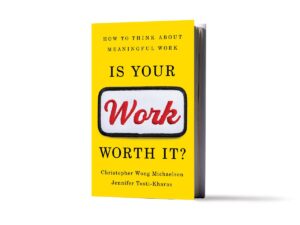
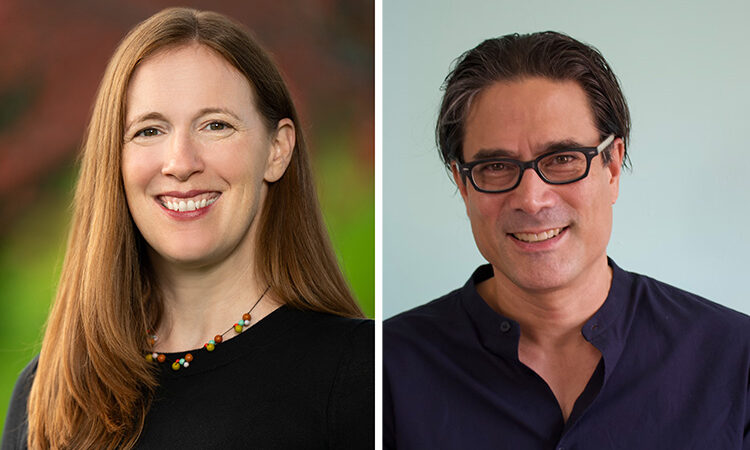
In a new book, two college professors raise the provocative question: Is Your Work Worth It? Christopher Wong Michaelson, a business ethics professor at the University of St. Thomas, co-wrote the book with Jennifer Tosti-Kharas, a management professor at Babson College in Massachusetts.
Their book examines how to think about meaningful work at a time when employers and employees are trying to figure out how best to complete work and strengthen workplace culture in a hybrid environment. Twin Cities Business recently conducted a joint interview with the two professors.
Q: In your book you state, “Work can confer a sense of purpose that makes life worth living.” During the early months of the pandemic, many people took stock of their work and personal lives. How has that influenced people’s expectations of the work they want to do?
Tosti-Kharas: When Christopher and I wrote this book, we really hoped that this could be a book that would get people to stop in the middle of their workaday lives to take a step back and ask the big questions about why we work and what we hope to get from our work.
During the Covid pandemic so many people not only asked “What am I doing and why?” but came to the conclusion that they didn’t like what they were doing. They left their jobs. So we have the so-called Great Resignation. When the 9/11 attacks occurred, it made a lot of people say, “If the unthinkable were to happen to me or a loved one, [I’m reminded] that life can be short, life can be completely unpredictable, and that I better be making smart choices today.”
We wanted this book to exist so that people can turn to it and get some thought-provoking questions and hopefully get some answers for themselves in the absence of the next big crisis.
Q: When you pose the question “Is your work worth it?” is that a question that can be pondered by everybody of every income level? Or is it a luxury of people who are upper-middle class and above? We know that many people are economically insecure, and will stay in a job because they need that paycheck, and another better job is not immediately available to them.
Michaelson: Whether we have a choice in what work we do or whether we work, I think this question occurs to just about anybody, particularly if they are having a bad day.
Whether they can wish for something else or whether they can actually make change happen, I would like to believe that it’s not a luxury.
There are ways of making small changes, even if somebody can’t actually get out of the job that they are in or get out of the line of work that they are stuck in over time. Maybe they can voice their concerns to management. Maybe they can connect with other co-workers in a way that they wouldn’t if they weren’t having these kinds of concerns about work being unworthy of the time and effort that they put into it.
People who might actually take the time and spend the money to buy the book might often be in a privileged position to ask the question. We would hope they would also ask about the work of the people who work for them and within their sphere of influence. Hopefully they can think about their work as well and make work more worthwhile for everybody, not just themselves.
Q: Your book is published at a time of a workforce shortage. How does that affect some of the key concepts you’ve raised in the book? On the one hand, workers may have more leverage with their employers, but many people may constantly be working in places that are understaffed.
Tosti-Kharas: Two topics have surfaced. There’s the phenomenon that is sometimes called “quiet quitting,” where people are staying in their jobs but doing the bare minimum, and the return to office issue.
Before Covid, it was unthinkable that so many jobs could be done remotely, but workers were successful. Now many managers are trying to get people back in the office and there’s been this negotiation. Is it two days? Is it three days? It’s certainly not going to be five days. Which days will it be?
I see these all as negotiations between employers and employees, certainly which are facilitated by employees having the leverage to do so. They are indicative of this overall rethinking of the worth of work and the level of engagement in work. It’s reasonable in a world where work took more and more of our time and attention whether we wanted it to or not pre-Covid.
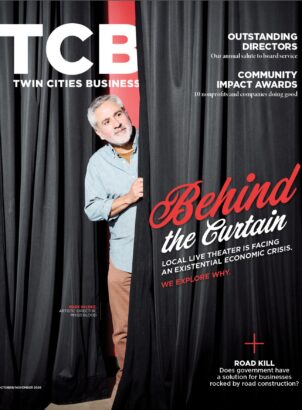
Read more from this issue

Then during Covid, people found that their work and non-work time bled into each other. People just started working at all hours.
In many regards, [now as workers assert themselves during a worker shortage] I see this as a very healthy re-establishment of boundaries. Employers have called the shots for a long time. I hope optimistically that there can be a real renegotiation and rethinking by both managers and business leaders as well as employees at all levels about what is really necessary.
What hours are necessary? What work is necessary? What is necessary to come into the office? Take a hard look at it, because it’s too easy for things just to happen thoughtlessly because there’s a way we’ve always done it. Are there newer models that would really be beneficial for employees and not only wouldn’t detract from organizational performance but might even enhance it? That’s the dream.
“Is this societal expectation that the way to succeed is to hustle and be always on sustainable?”
—Jennifer Tosti-Kharas, Babson College Management professor
Q: We are four years beyond the beginning of the pandemic. We started out with white collar employees working remotely. Do you now see many employers operating with more structure, such as requiring or strongly encouraging that people be in the office three days a week? If every individual decides when they want to work, does that introduce an element of chaos if you are trying to lead in a workplace?
Michaelson: There are timely forces that bring the salience of the question, “Is your work worth it?” to the surface. But we also ask: What is work? When and how much should we work? Should you work for love or money? These are all questions that aren’t just salient today.
Another one of the questions that we ask in the book is: Should you work for a higher purpose or can work have a higher purpose? In the pandemic, we developed a better social appreciation for so-called essential work. Those of us who had the privilege of working at home hopefully appreciated the fact that there were some people who didn’t have that luxury. Their work was so important that they had to still show up every day at the risk of their health to perform that essential work.
But we have short memories, so this appreciation for essential workers faded over the course of the pandemic. Why does the most essential work sometimes get paid the least? There’s a lingering effect of just thinking consciously about why do we do the work that we do and how much should we give to it? How much do we get from it? Hopefully part of that conversation that we have with ourselves about whether our work is worth it is also: How much does our work give to the world?
To get to your follow-up question, we’re still trying to figure out what the new normal in workplaces is going to be. It varies from industry to industry. It also maybe varies place to place or workplace to workplace. There are some workplaces that are what they refer to as fully back to normal. Then there are other workplaces that are discovering a new normal.
There are phenomena that have been around for a while that are getting more of a test right now, such as experiments with four-day work weeks, universal basic incomes, permanent remote or hybrid work arrangements, and unlimited paid time off.
I wish I could tell you that we had the answers for what the workplace of the future is going to look like. Even though many of these experiments have been successful, it probably is going to take a long time, years if not decades, before some of these current experiments become permanent fixtures of our workplaces.
Q: It’s been 50 years since the seminal book Working by Studs Terkel was published. Some of the people he wrote about had very physically demanding jobs. But we know all work has dignity. What do you see as the biggest changes in workplaces since the Terkel book was published? Are today’s workers more satisfied than they were 50 years ago?
Tosti-Kharas: One of the most amazing things about Terkel’s book is he went so broad in who he talked to—workers in illegal and illicit industries, blue collar workers, white collar workers. He tried to get this representative spread of the working world. Since that book was published in the ‘70s, there’s been the proliferation of technology, the internet, globalization, global work, global careers. These are trends that we teach.
We teach our students, who are business majors, about the careers they can expect. Even before the pandemic, they might expect to work in multiple different countries. They might expect to work in Minneapolis for a company that is located in Japan or Singapore. The globalization and proliferation of technology just means that you might be interacting with people who are not physically located with you.
There’s been a high speed of change and advancement of knowledge work. The coders, the engineers, the people who are designing the futuristic AI and everything that’s hitting right now, it’s making people question: What will work look like in the future?
Now we have smartphones and apps, just continual technological innovation. We’ve had this real glorification of what we sometimes call hustle culture or always on. People used to say things like rise and grind.
I teach at Babson College, outside of Boston, Massachusetts, which is really known for a focus on entrepreneurship. I get a lot of students coming in who want to start their own companies. They all want to be the next Mark Zuckerberg or Steve Jobs. They just picture themselves really working fast and furious, and then some of them cashing out and living however they want.
Back in Studs Terkel’s era, we still had these boundaries around whether work happened in the office or work happened at the factory or work happened on a physical site. The idea that we would ever need to, as a society, dial down our investment and engagement in work—because we were almost obsessed with it—might have seemed strange.
But I think all of these factors have come together in a really unique and interesting way that we are now in this cultural moment where people are asking questions, and I think rightly so. How much are we giving to our work? Is this societal expectation that the way to succeed is to hustle and be always on sustainable? Is this desirable?
Michaelson: Jen talked a lot about what’s changed. I think there are a couple of really key things that have stayed the same. One is, as Studs Terkel so beautifully put it, work is still about a search for daily meaning as well as daily bread. And I think for a lot of people, work is still a search for, as he put it, “a sort of life rather than a Monday through Friday sort of dying.”
“People want to work for an employer whose values don’t conflict with their own personal values.”
—Christopher Wong Michaelson, University of St. Thomas Business Ethics professor
Q: Beyond providing challenging work and good compensation, many workers want their employers to be positive corporate actors. That could translate to a company’s philanthropy and commitment to the environment, DEI, and civil rights. What are your thoughts about that aspect of employee expectations of companies?
Michaelson: People want to work for an employer whose values don’t conflict with their own personal values. In our morally charged society, people are very much on the lookout for signals of what values our employers espouse, what values individuals espouse.
Every generation has a sense of the crises that it faces that have been gifted to it. Gifted, I’m using that word sarcastically. You referred to one, the climate crisis. Emerging generations are going to have to solve it because of the problems that were left to them by previous generations.
Similarly, the failure of our society to truly, in a genuine way, embrace diversity, equity, and inclusion, has come back to show us how many problems we have yet to solve.
Employees want to not only work for a workplace that supports their values, but ideally that advances the sense of what kind of difference they can make in their lives through their work itself and through the communities in which they participate.
One’s workplace is a significant community where we spend a large share of our waking adult hours with the potential to make positive change. So, I think emerging, young workers have been referred to as the purpose generation. We are living and working in what has been referred to by [journalist] Adam Davidson as the passion economy.
In some sense, that has something to do with the idea that one way to find your purpose in life is to find your purpose in the work you do. But another related element of that has to do with finding meaning and purpose at your workplace, whether it is in the work or in the community of your workplace.