

More of Minnesota’s Public Money Should Work in Minnesota
Every Minnesota city, county, township and school district has the same job with its cash: keep it safe, keep it available, and earn something on it until it is spent. Many use statewide investment pools like the 4M Fund, the MAGIC Fund and MSDLAF+. They do that job well, alongside local bank accounts.
The money going into them comes from property tax levies, state aid payments and utility bills paid by Minnesotans. But ultimately, how much of that cash directly finances Minnesota communities while it waits to be spent?
The June 30, 2025 annual reports for MAGIC and MSDLAF+ show about $4.8 billion invested in their main portfolios. Neither schedule lists a single municipal bond, and the issuers include Barclays, BNP Paribas, Credit Agricole, Mizuho and MUFG, banks based in Britain, France and Japan, along with Bank of America, Citigroup and other large institutions. Wells Fargo is on the list and employs thousands of Minnesotans, but it’s one bank in a state with more than 200 banks headquartered here, and none of them made the list.
No report shows where those banks put the money from there. The names suggest little of it finds its way back to Minnesota.
Part of the reason is how the pools are built. Minnesota law generally requires public investments in local-government general obligation bonds to carry ratings of A or better, and revenue bonds AA or better. Those requirements put many small, unrated local issues outside the pools’ permitted investments. A pool managing billions also has to stay liquid, which narrows its options further.
A small city selling water or street bonds directly to a bank may have little reason to pay for a rating. A township’s equipment or infrastructure financing can be smaller still. Those communities need lenders willing to understand the project, evaluate the borrower and hold the obligation.
The need is large. Minnesota local governments requested more than $3 billion for the 2026 capital budget. The governor recommended $907 million across local and state projects, and lawmakers approved about $1.2 billion.
In the state’s July 2025 preliminary list, I counted more than $1.1 billion in drinking water, wastewater, stormwater and flood protection projects, including combined street and utility work. That is more than 40% of the dollars requested.
Those totals include the whole project, not just the water piece. Even so, the list shows how many communities are working on basic infrastructure that needs repair or replacement. Whatever the state does not fund, they cover with local revenue, reserves or borrowing, or they put the work off.
Community banks help fill that gap. As of October 8, 2026, Security Bank & Trust Company holds 97 bonds, notes and lease obligations from 72 Minnesota public entities, about $122 million in all, and towns like Glencoe and Winsted have come back to us issue after issue. We buy directly from the community, do the credit work ourselves and keep those obligations on our own books, and the public deposits we hold are part of what makes that lending possible.
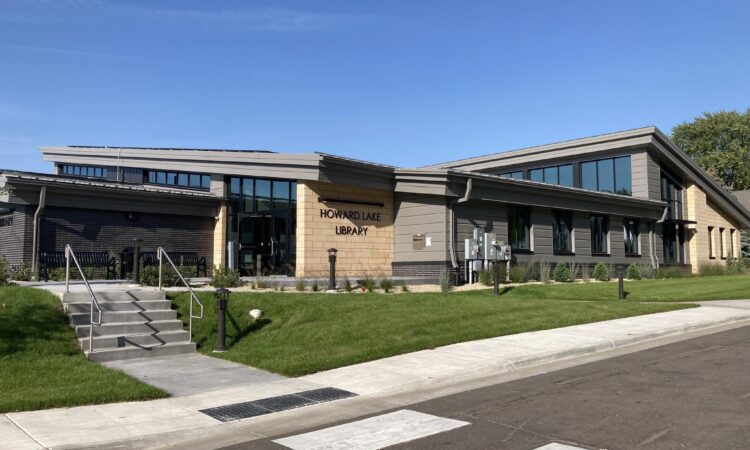
Howard Lake’s library, which opened in 2024, shows how that works in practice. The city’s financing plan counted on about $4.5 million in USDA loans and a $729,102 state library grant, but none of that money would arrive until construction was finished, so we provided $5.2 million in construction financing to carry the project until it did.
Rural health care needs the same kind of access. In April, the Minnesota Hospital Association reported that 31 hospitals in the state met formal financial distress criteria. Glencoe Regional Health, an independent nonprofit, is choosing to invest anyway, with updated operating rooms, an expanded Wound Center, two new procedure rooms and better imaging space. When the hospital financed it with $9.75 million in tax-exempt revenue bonds issued through the City of Plato, we bought them.
That is what local lending looks like. Deposits at a community bank turn into loans for public projects, businesses, farms and families nearby, and those loans support jobs and grow the tax base that pays for public services.
So here is what I would ask of the pools, their sponsors and the public officials who use them.
Report the Minnesota number. Participants should be able to see how much of each pool is invested in Minnesota-headquartered banks, obligations of Minnesota public entities and other Minnesota-headquartered issuers. Report those categories separately, and distinguish pooled holdings from other investment programs. Doing so would not capture every indirect benefit of depositing and/or investing with Minnesota-based institutions, but it would show council members and taxpayers how much of their public money is being put back to work in Minnesota.
Give qualified Minnesota banks a chance to compete. The 4M Fund’s information statement already permits insured, bonded or collateralized bank deposits. S&P Global’s September 2025 portfolio breakdown showed that collateralized bank deposits represented nearly one-fifth of its holdings. The question is how much of that goes to Minnesota banks, and what it would take for more of them to take part.
Banks would still have to meet the requirements for credit quality, collateral, liquidity and concentration, and rates and costs still matter. When a Minnesota bank meets those terms, keeping the money in Minnesota should count for something.
Ask the question when reviewing depository relationships. Finance directors and treasurers already weigh protection, access and return. Add one more question: how does this bank finance the communities it serves? Operating cash and reserves have different needs, and each belongs where it fits. There is still room to weigh local impact.
This puts an obligation on community banks, too. We need to offer competitive terms, make public deposits easy to manage and show the local financing we do. A Minnesota address alone is not enough.
The pools were created to serve Minnesota public entities. Measuring how much they invest here, and choosing qualified local options when safety, liquidity and return are comparable, fits that purpose.
Someone will finance the next water system, the next library and the next fire truck in a town like yours. More of Minnesota’s public money should help make that possible.
Andy Schornack is president of Security Bank & Trust Company, a Minnesota community bank with 21 offices.