

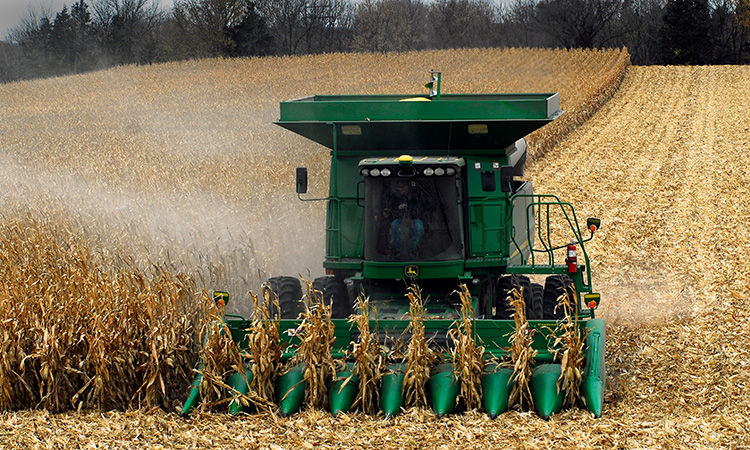
What’s Driving the Financial Crisis on Minnesota Farms?
National political figures have visited Minnesota to acknowledge that farmers are grappling with a severe financial strain that they didn’t create.
Some leaders use the term crisis to depict the state of affairs in farm country, while others avoid it. But it’s undeniable that today’s farmers are being hurt by more than the usual risk factors of unpredictable weather and shifting world markets.
The reality of farm woes was made clear by two high-profile individuals who are on opposite ends of the political spectrum.
Musician Willie Nelson, who often has raised money for Democratic politicians, called attention to farmers’ problems when he performed in September at the 40th Annual Farm Aid Concert at Huntington Bank Stadium in Minneapolis.
Brooke Rollins, secretary of agriculture in the Trump administration, traveled to Morgan, Minnesota, this month to convey a variety of messages to Farmfest attendees, including an understanding that the Iran War has caused higher input costs for farmers.
Before the Trump administration ignited a war with Iran six months ago, crop farmers already were struggling because of years of low commodity prices.
In advance of Minnesota’s fall harvest, here’s a primer on why many farmers have a difficult time being profitable in the private marketplace.
Why can’t farmers make a profit off their crops?
Manufacturers know how much it costs to produce apparel, electronics, and household items, so they sell them at prices that will yield a profit. They aren’t merely covering their costs of production.
Minnesota farmers don’t have the ability to set prices for their major crops, because prices are determined in the world marketplace.
“Without federal assistance, farmers growing nine principal crops will lose $32 billion (national average returns over total costs) in 2027, compared to $31 billion in 2026,” according to a report by Faith Parum and Daniel Munch, economists for the American Farm Bureau Federation. “On a per-acre basis, every crop analyzed is projected to remain below breakeven in 2027.”
The two most widely planted crops in Minnesota are corn and soybeans. “Corn losses are projected to increase from $131 per acre in 2026 to $167 per acre in 2027,” based on the Farm Bureau analysis—when federal government assistance is excluded. “Soybean losses are projected to increase from $80 per acre to $138 per acre.”
Farmers decide what crops to plant and on how many acres, and they regularly do so with knowledge of the provisions of federal government subsidy programs.
American crop farmers have been in a vicious cycle for several years.
“Crop farmers continue to face elevated production costs, lower commodity prices and tight margins—with no relief on the horizon,” according to the American Farm Bureau Federation analysis, which “projects 2027 will mark a sixth year of negative returns over total costs for major row crops.”
How have Trump’s tariffs affected the financial condition of farmers?
President Trump’s imposition of tariffs in 2025 exacerbated the financial problems of some farmers.
Joseph Glauber, a former chief economist for the U.S. Department of Agriculture, took an in-depth look at tariffs in a 2026 paper “Evaluating the Impact of Tariffs on U.S. Agriculture a Year After Liberation Day.” Glauber, who holds a Ph.D. in agricultural economics from the University of Wisconsin-Madison, did the analysis for the American Enterprise Institute, a center-right public policy think tank. He worked for USDA for more than 30 years.
“The tariffs had mixed effects on U.S. agricultural exports, with exports to China and Canada falling partly because of retaliatory tariffs and consumer reactions,” Glauber wrote.
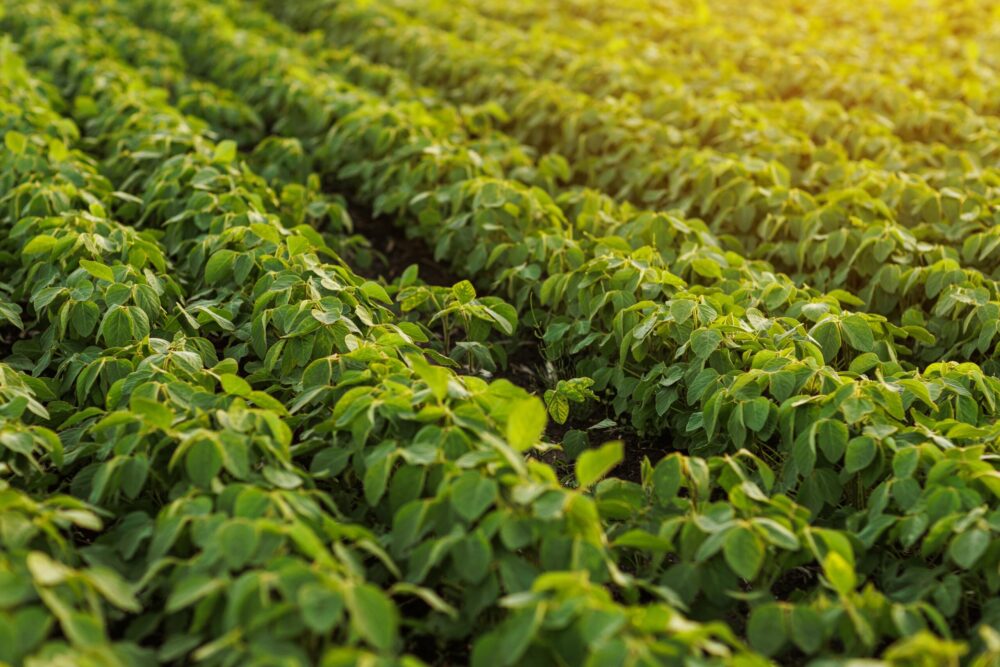
Soybean farmers were particularly hard hit by the U.S. tariff actions.
“China implemented retaliatory tariffs against a wide range of U.S. agricultural products in February 2025 following U.S. imposition of so-called fentanyl tariffs against China,” Glauber wrote.
China levied a supplemental tariff of 10% on U.S. soybean exports. “U.S. soybean exports to China in 2025 totaled just 7.4 million metric tons, almost 20 million metric tons less than in 2024 (a decline of over 72%),” Glauber wrote.
Acknowledging the financial harm to farmers, the Trump administration announced $12 billion in aid in December 2025. It said that $11 billion would go to row crop farmers through a Farmer Bridge Assistance Program. The U.S. Department of Agriculture stated the payments would “help address market disruptions, elevated input costs, persistent inflation, and market losses from foreign competitors engaging in unfair trade practices that impede exports.”
By late January, Scott Gerlt, chief economist for the American Soybean Association, released an analysis with the headline “Soybean Losses Continue Despite Assistance.”
Gerlt characterized the severity of the problem this way: “The 2025 harvest is projected by the U.S. Department of Agriculture (USDA) to be the most expensive soybean crop ever on a per acre basis. Concurrently, geopolitical factors undermined soybean demand, suppressing prices received by farmers. These factors combined leave soybean producers with a third straight year of significant market losses. Soybean farmers have been at the tip of the spear in international trade turmoil yet have received very low assistance rates to help absorb this loss.”
Here are some of the actions taken that put American soybean farmers in a trade bind: “From the end of May 2025 to the end of November, the U.S. exported no soybeans to China,” Gerlt wrote. “During this time, China depended on Brazil to continue imports. Additionally, the U.S. government announced negotiations on a $20 billion currency swap to Argentina in September. Following the currency swap, Argentina immediately suspended its export tax on soybeans and sold 5.1 million metric tons (MMT) to outside buyers, primarily to China, in two days. This helped China avoid purchasing U.S. soybeans for even longer.”
He also argued that soybean farmers should have fared better when the Trump administration devised its approach for distributing Farmer Bridge Assistance funds.
Gerlt wrote: “Due to this loss in demand from geopolitical issues, soybean farmers have suffered real losses. While it is too early at this point to fully quantify the impact of lost sales to China, during the previous trade war, research showed that soybeans accounted for 71% of the losses at $9.4 billion annually. Despite this, soybeans only ranked ninth in terms of payment size per acre in the recently announced Farmer Bridge Assistance program. Even when total market losses, upcoming farm bill Price Loss Coverage (PLC) payments, crop insurance, and Farmer Bridge Assistance are included, soybeans still face a loss of $75 per acre. Of the nine largest crops based on area, this is the second largest outstanding loss on a per harvested acre basis.”
Why does the Iran War have implications for Minnesota farmers?
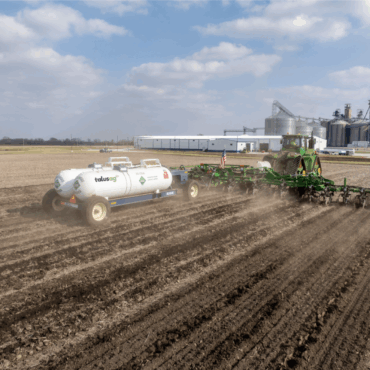
The U.S. war against Iran has a direct economic impact on American farmers in the form of higher fertilizer and fuel prices.
CoBank, which provides credit to the rural economy, published a mid-August article on its website with the headline “Why Higher Fertilizer Prices Are Here to Stay.”
“The Middle East plays a critical role in the international fertilizer market, supplying over 60 million tons of fertilizers and raw materials worldwide, with 45 million tons shipped via the Strait of Hormuz,” CoBank reported. “Notably, 50% of globally traded sulfur and over 30% of global urea exports originate from this region, making these commodities particularly vulnerable to supply disruptions.”
CoBank cited research by North Dakota State University, which estimates that fertilizer prices will remain elevated until 2028. “NDSU projects 2027 averages for fertilizer at $496 [per ton] for urea, $666 for DAP, $660 for MAP, $619 for ammonia, and $361 for UAN,” CoBank reported. “These estimates are lower than NDSU’s estimates in the spring following the conflict’s greatest surge in prices but still forecast higher prices than pre-war levels.”
Farmers use diesel fuel in their tractors, combines and harvesters. In an August article published by DTN/Progressive Farmer, Urban Lehner, editor emeritus, explains in detail why diesel prices have risen so rapidly.
Earlier this month, the national average retail price of diesel was $5.50 a gallon, which Lehner noted was 40% higher than when the war with Iran began in late February.
What kind of financial support is the federal government providing for farmers?
In May, the USDA’s Economic Research Service estimated that direct federal government payments to farmers are expected to be $44.3 billion in 2026. That amounts to a 45.2% increase, or $13.8 billion more than the $30.5 billion total in 2025.
“This overall increase reflects higher anticipated payments from Farm Bill programs that trigger payments when commodity prices fall while supplemental and ad hoc disaster assistance payments are expected to remain high,” the USDA said on its website.
How do Upper Midwest agricultural lenders assess the state of the farm economy?
To gain some insight into the financial condition of Upper Midwest farmers, the Federal Reserve Bank of Minneapolis conducted an ag credit survey of lenders in April.
Farm incomes dropped despite strong 2025 harvests, according to Joe Mahon, director of regional outreach at the Minneapolis Fed.
“The outlook for the beginning of this year’s growing season was pessimistic, as respondents expected further declines in farm incomes and spending,” Mahon said in a Minneapolis Fed article.
“Financial difficulties have affected farmers’ ability to repay debt, and almost half of lenders reported a decrease in repayment rates,” Mahon wrote. “Meanwhile, 24% of banks said they increased the amount of collateral required on farm loans.”
More than 75% of agricultural lenders in the Federal Reserve’s Ninth District indicated that farm incomes had decreased in the first quarter of 2026 compared with the year earlier quarter.