

Minnesota Is Becoming a Living Lab State. Then What?
A few years from now, Minnesota may be the best place in the country to test hypersonic rockets, make sustainable protein, build advanced semiconductors, trial bioindustrial manufacturing to replace synthetic chemicals and materials, create sustainable aviation fuel, and deploy innovative energy technology to transform our electric grid.
At least, Minnesota is on track to become America’s testing lab in several key areas. The big question is, what happens after that?
Major economic development bets and private-company investments have been growing Minnesota into a place to test, build, and implement advanced technology across a number of industries. These bets have flown under the radar, but together, they’re a big story.
This list isn’t nearly comprehensive, but a few highlights include:
- North Wind is building one of the country’s most advanced hypersonics facilities in Rosemount for testing aerospace devices and rockets.
- BioMADE is pioneering the largest bioindustrial manufacturing test facility in Maple Grove, which will use advanced fermentation to replace chemicals, materials, and ingredients that are currently made through petrochemical or conventional chemical synthesis.
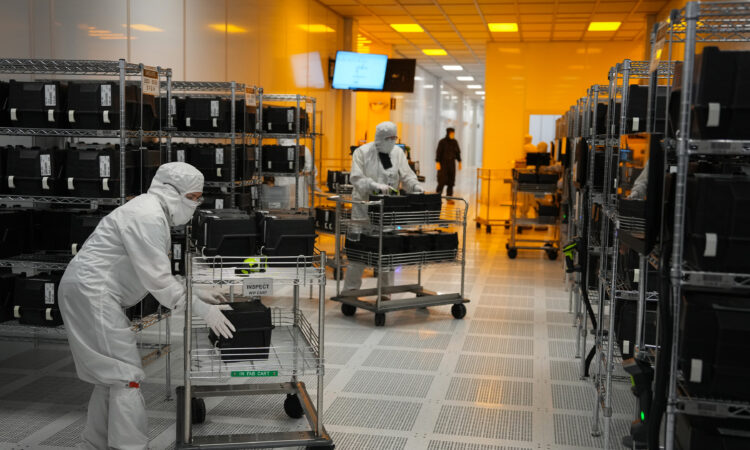
- Skywater and Polar are two Bloomington-based foundries building specialized advanced semiconductors for automotive, electronic, and industrial companies.
- Grid Ready and the National Resources Research Institute (NRRI) are working to actually deploy innovative energy technology, not just study it.
- MBOLD, a collaborative effort from some of Minnesota’s biggest food and agriculture companies, is working with companies around the world to own the sustainable protein industry.
- Minnesota SAF Hub, a large state partnership with Delta to advance the development of sustainable aviation fuel in the state.
- Protolabs, Stratasys, and Chromatic 3D Materials are pioneering advanced 3D printing technology for manufacturing companies across the world.
- BioLabs, one of the premier life sciences innovation platforms in the country, partnering with the Mayo Clinic and Destination Medical Center to open a brand new office in Rochester for companies looking to test and build a football field away from the world’s best hospital.
The list is extensive – and zooming in on any one area can show you just how big the opportunity could be.
New energy programs show how the future gets built
Taking a closer look at the energy ecosystem, highlighted by Grid Ready, can offer up a glimpse at what’s possible.
Nina Axelson has spent her career working to move Minnesota’s innovative energy technologies forward. This month, one of her dreams is coming true with the launch of a first-of-its-kind program to pilot real-world technology with energy utility companies.
“The thing that makes an innovation ecosystem thrive is that we have parts of what makes things work—great universities, state leadership, and innovation,” Axelson said in an interview. “But they don’t always work together. But now it’s getting pulled together with more intention than it has before.”

The Grid Ready program brings together Minnesota Energy Alley initiative, a partnership between the Minnesota Department of Commerce, Clean Energy Economy Minnesota, and Grid Catalyst, which Axelson founded and runs. It has received partnership and funding from the Wells Fargo Innovation Incubator (IN2) and Evergreen Climate Innovations.
The program is a triumph for anyone that wants to get their technology out of a lab and into the world. The organization has pulled together partnerships with four local electric utlities—Xcel Energy, Minnesota Power, Great River Energy, and Otter Tail Power—to test innovative technology with companies that can use, scale, and share their results.
These tools could allow the state take a leap forward in efforts to bring down electricity costs at a time when they are skyrocketing along with many other basic items. This innovation will be critically important as the state moves toward its mandate to require utilities to reach 100% carbon-free electricity by 2040. Deploy, test, then commercialize—it’s a compelling model.
Their impact will be amplified by the Joint Research Alliance for Innovative Materials and Processing for Advanced Critical Technologies (IMPACT) partnership announced by the University of Minnesota’s NRRI and the National Laboratory for the Rockies (the new name for the National Renewable Energy Laboratory), back in April.
IMPACT has flown under the radar, but it “will give Minnesota the closest thing we have ever had to a national lab for energy in the state,” according to Axelson. The program is “intended to accelerate industry-scale demonstration to strengthen U.S. industrial competitiveness and supply-chain resilience,” which will position Minnesota at the center of an important conversation shaping the future of our energy landscape.
Nina is one of a growing group of people that have been planting the seeds of one of the most audacious economic development bets that Minnesota has ever made—transforming the state into a living lab for innovation technology across a number of key industries.
“This is a massive business opportunity for Minnesota,” said Gregg Mast, executive director of Clean Energy Economy Minnesota. “The legislature’s investment in the accelerator program was relatively modest, but it created real momentum. The frustration is that we haven’t continued building on that commitment in a sustained way.”
Where do we go from here?
It sets up a critical challenge for the state. If Minnesota is successful, can it set up the conditions for people to not only test their technologies here, but to build and scale them for many years to come? While there are many promising things happening on the ground, it is imperative that policymakers take up the mantle and accept the challenge of improving our business climate to get there, starting by listening to the leaders of these initiatives about what they need.
We have a plan to implement some of the best test facilities in the U.S. But what would it take to keep these companies here and encourage them to build?
My colleague Liz Fedor wrote a smart piece last year about local CEOs pulling back on their commitments to the community. The dynamics of a post-COVID world have meant that CEOs and investors are more willing than ever to look beyond their state’s borders. The money is going where it’s easy to grow—we still have a highly educated populace, but that’s not enough.
We are in a cutthroat competition for the jobs of the future, and bets like these are a good way for Minnesota to get a bigger piece of the pie. By embracing our role as a living lab, we have an opportunity to set a future course for our state that’s different than the one we are on now. That’s a challenge that should excite anyone that wants this place to succeed.
For Grid Ready, it’s a chance to catalyze novel technologies and bring them into the market. Axelson says it’s shows that our utilities will play ball, and to show everyone that: “We’re serious about innovation, and we’re willing to test and deploy technologies here.” The legislature, for their part, has shown interest in the program—but should be giving it more financial support if we want to give it the scale it needs to really grow.
Therein lies a challenge that the state will face many times in the years to come. We are building the labs of the future. But are we building a future that brings people beyond the labs to found companies that can grow and put the state on a new economic growth footing? That remains to be seen.